
Cost of Living in Hội An, Vietnam — Digital Nomad Guide
This post may contain affiliate links, meaning we get a commission if you decide to purchase through our links at no cost to you. This helps fund Slower Travels without costing you a cent!
A note on timing: we stayed in Hội An in 2025/2026, so while our experience and costs are genuine, prices and conditions may have shifted since. We always recommend checking a few different places to compare prices.
We didn't originally plan to spend two and a half months in Hội An. We'd come to Vietnam to escape the wet season in Lombok, starting with a housesit in Ho Chi Minh City before heading north on the overnight train to Đà Nẵng. We considered staying in Đà Nẵng, but something kept pulling us towards Hội An — and we're so glad it did.
Hội An has a dreamy pace of life. The rice paddies are impossibly picturesque, the old town buzzes if you want a bit of energy on the weekends, and it's quietly becoming one of Southeast Asia's most beloved spots for digital nomads. It's not hard to see why people arrive and simply don't leave.
This is a breakdown of our monthly costs for two people. If you're travelling solo, some categories can be roughly halved (dining out, groceries, spending), but others may stay fixed (rent, subscriptions). You can see the rest of our Cost of Living series here.
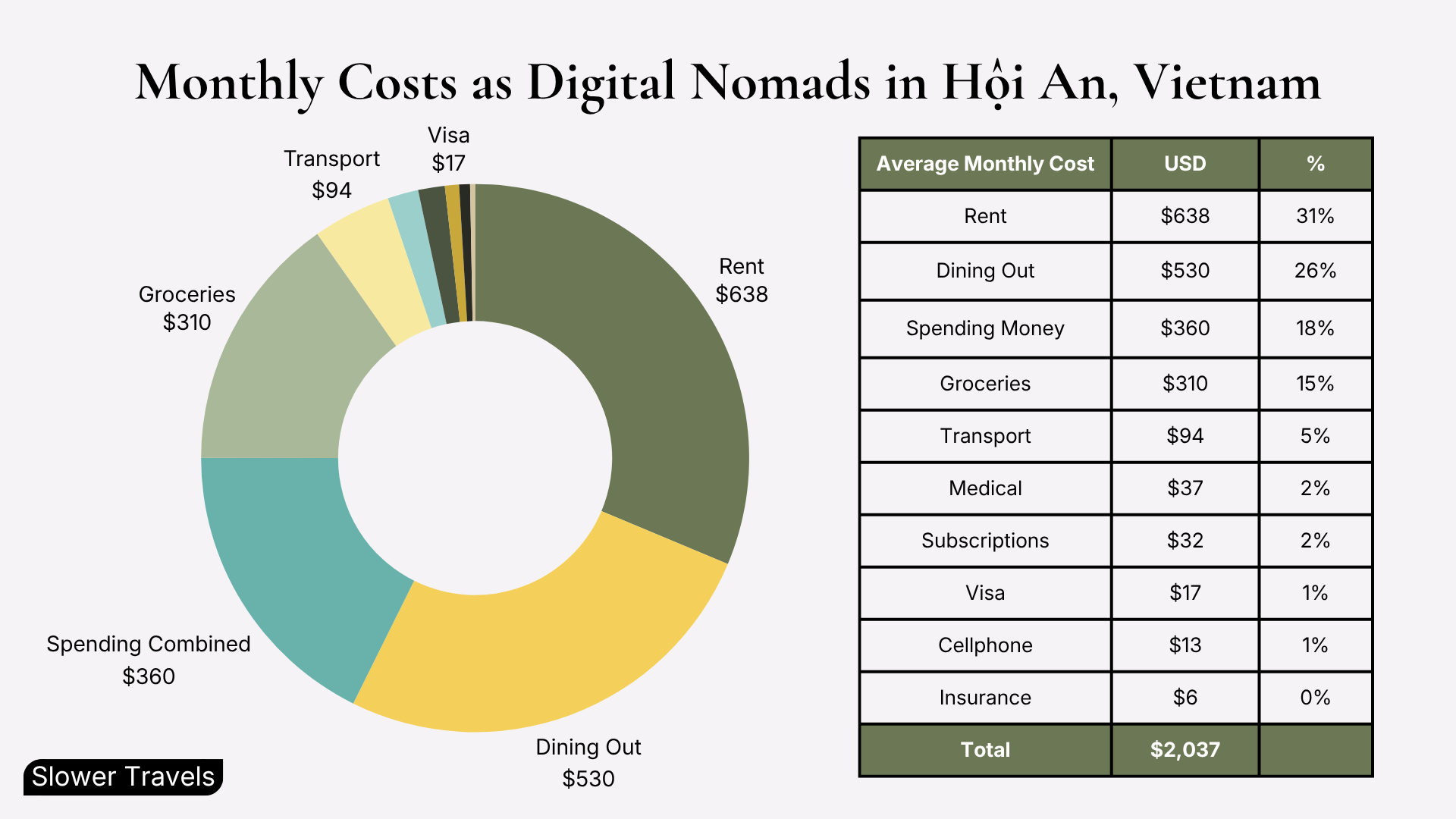
Rent — $638/month
Rent was our biggest expense in Hội An, and our experience across three different places gave us a more nuanced picture of the town than we'd have got from staying in one spot.
We started at Secret House Boutique in Cẩm Châu, then moved to Lastanta in Trà Quế, before finishing our stay back in Cẩm Châu at Present Home. The first two were hotel-room-sized. One more of a boutique hotel and one like a homestay. They were perfectly comfortable and in wonderful locations, but after two weeks of cramped living conditions, working from home on top of each other, we were ready for more space.
Present Home was the turning point. A full kitchen, a generous open floor plan, and enough room to actually breathe. And we didn’t compromise on the rice paddie views. It made a real difference to our day-to-day quality of life. If you're planning a longer stay in Hội An, it's worth paying a little extra for space. A hotel room is fine for a week; it's a different story when you’re looking for accommodation designed for longer stays.
There are plenty of digital nomads living in Cam Thanh, a little further out than where we stayed. I think the rent is much cheaper out there, but they may look for longer-term rental agreements.
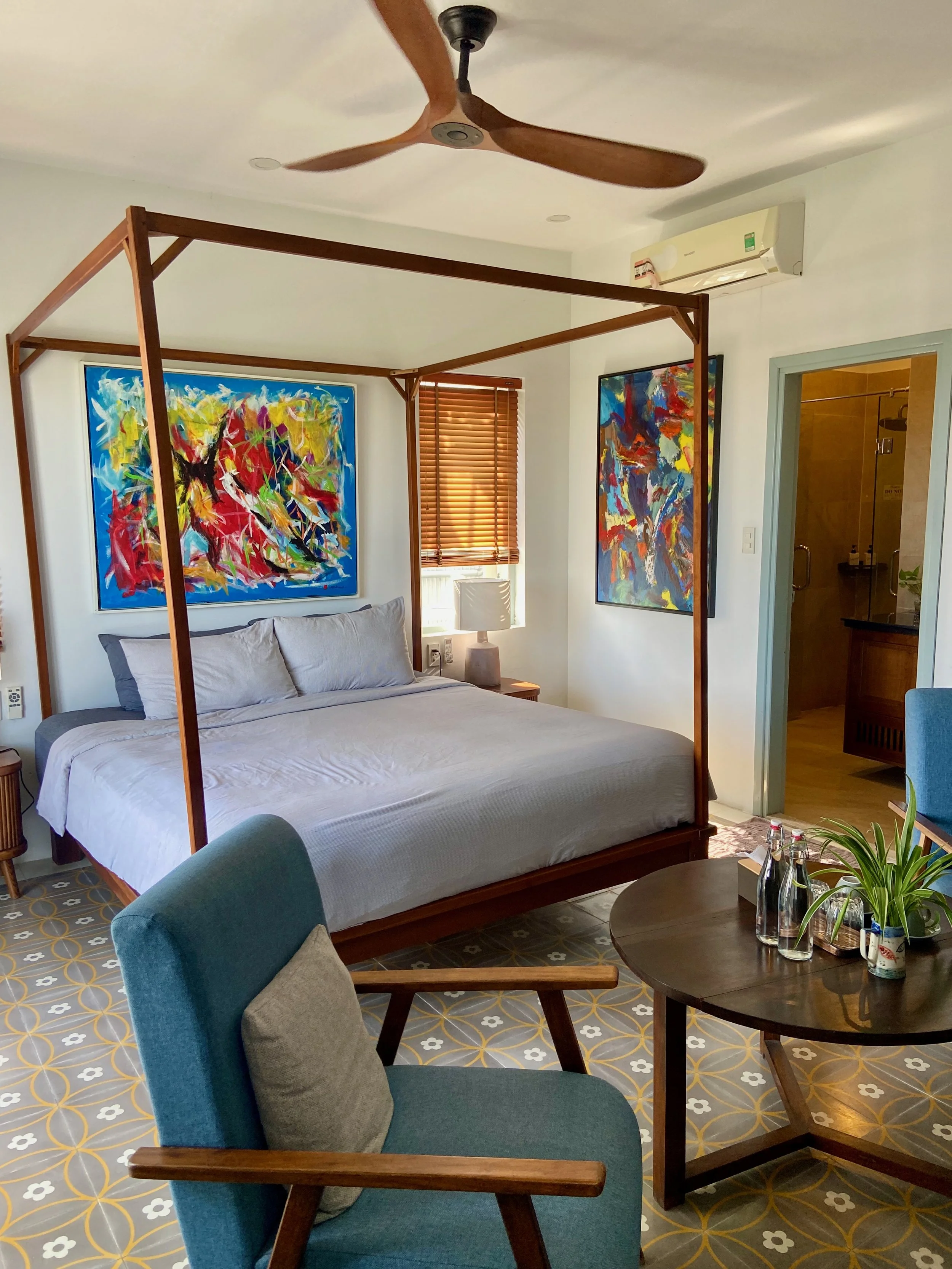
Room at Secret House.
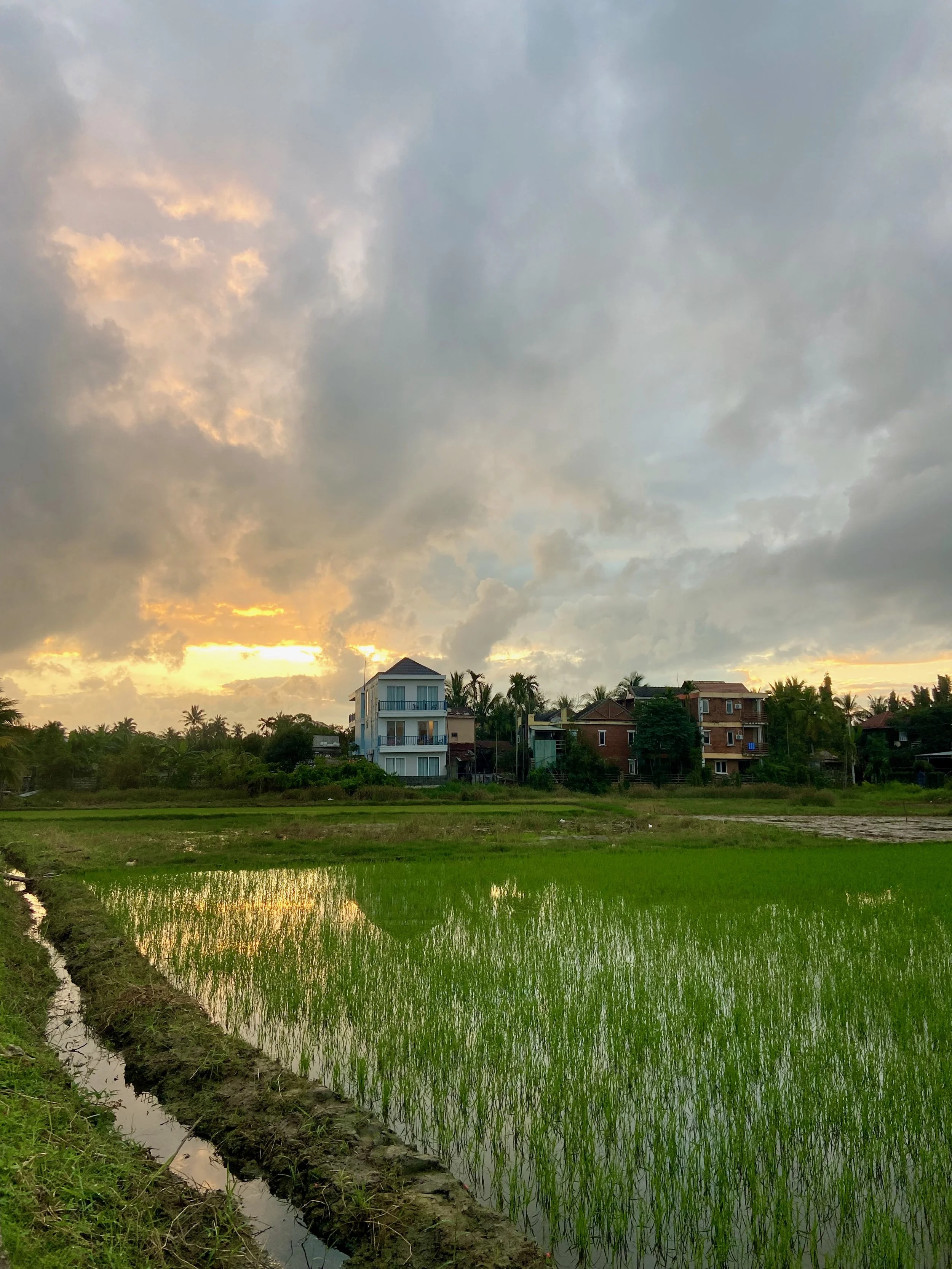
Present Home overlooking the rice.
Dining Out — $530/month
Food was our second-biggest expense, and honestly, we have no regrets about it. Hội An is a genuinely wonderful place to eat. We loved it so much, we wrote a whole separate post about vegetarian eating here.
Vietnam is one of the cheapest places to eat out in Southeast Asia, so $530 for two people eating lunch and dinner out every day (as well as regular coffees out and about) actually reflects how well we ate rather than how much we spent. We weren't holding back.
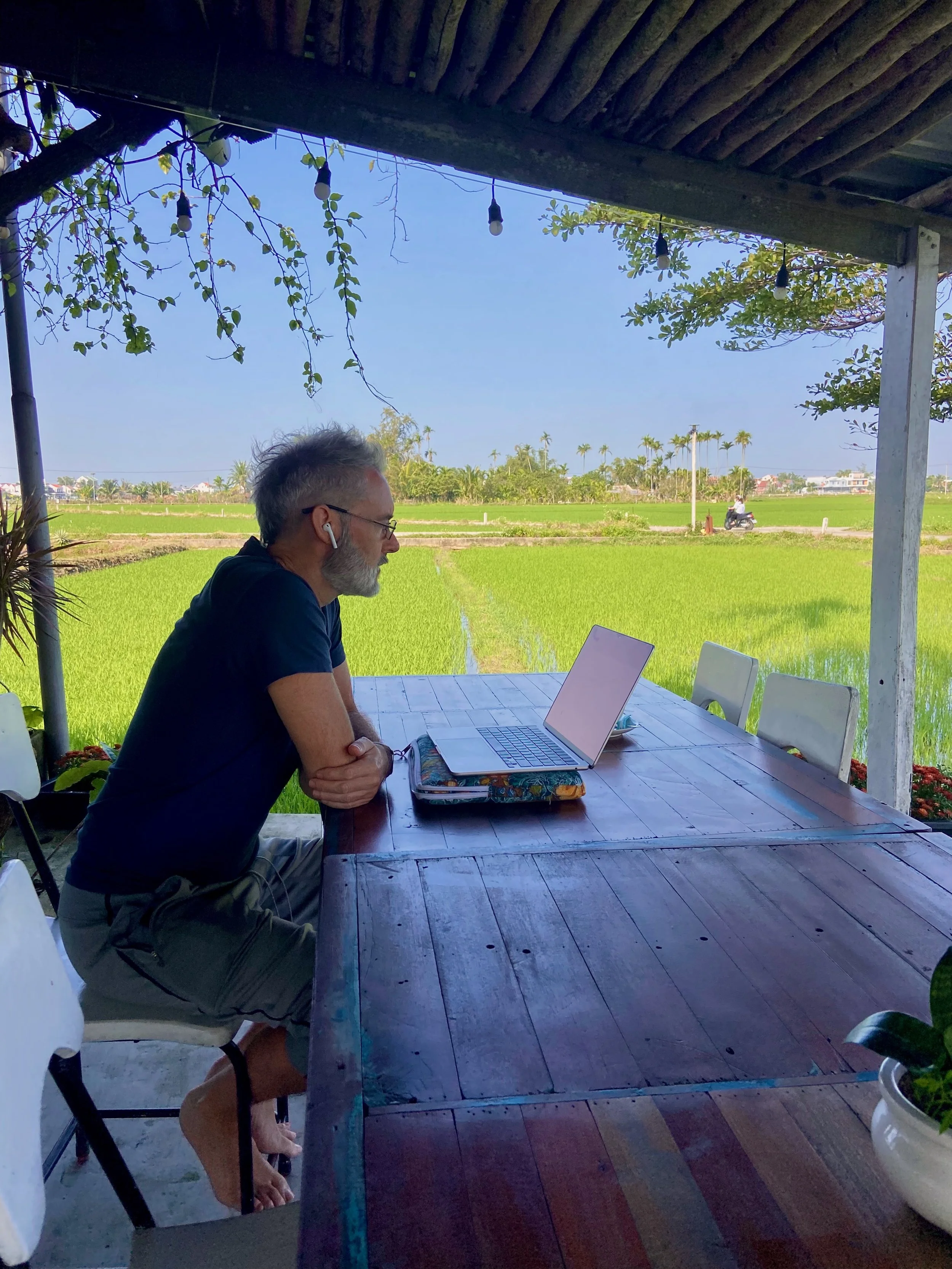
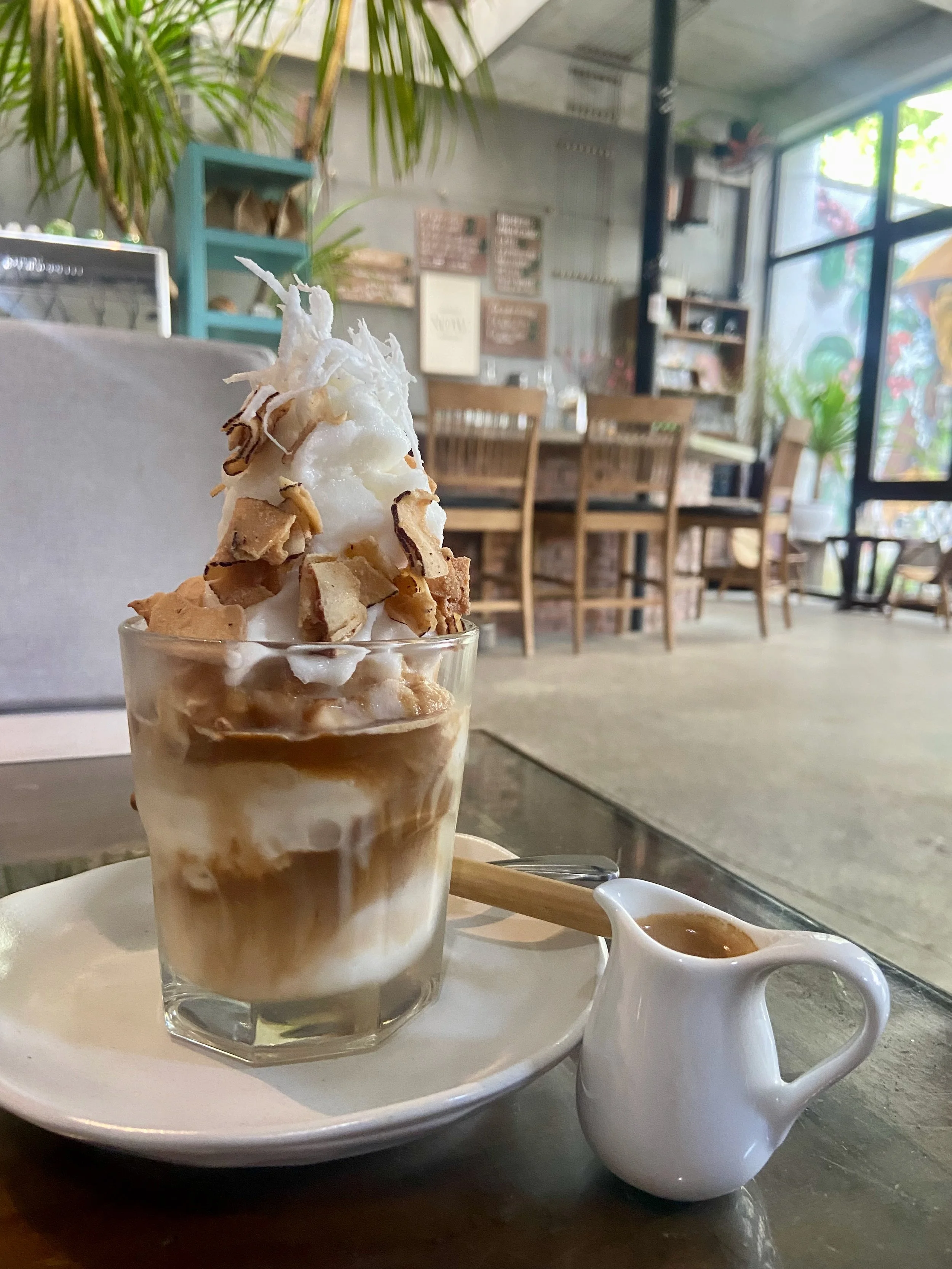
Even having coffee out regularly didn’t really push our expenses higher than at other places we’ve stayed. Vietnam has such a brilliant café culture that it became a natural part of our working day — popping out for a Vietnamese iced coffee, finding a tucked-away spot to work from for a few hours, or simply breaking up the afternoon when the walls of the apartment started closing in. Being able to include this without blowing our budget in Vietnam was such a treat. And have you tried Vietnamese coconut coffee? It’s honestly the best.
For solo travellers, dining out will likely come in around $265/month at a similar pace to us.
Spending — $360/month
This category covers everything we did and bought beyond the basics — alcohol, souvenirs, gifts for people back home, and activities.
Hội An is a wonderful place to spend money in the best possible way. Kie got a shirt tailored (a Hội An rite of passage, honestly), we picked up lanterns, and we found plenty of beautiful things to bring home for people we love. The Old Town is genuinely dangerous for anyone who likes beautiful objects.
We also kept up with fitness and self-care — Kie joined the HealthFit gym, and we both took yoga classes at Om Day Studio, which quickly became a favourite part of our weekly routine.
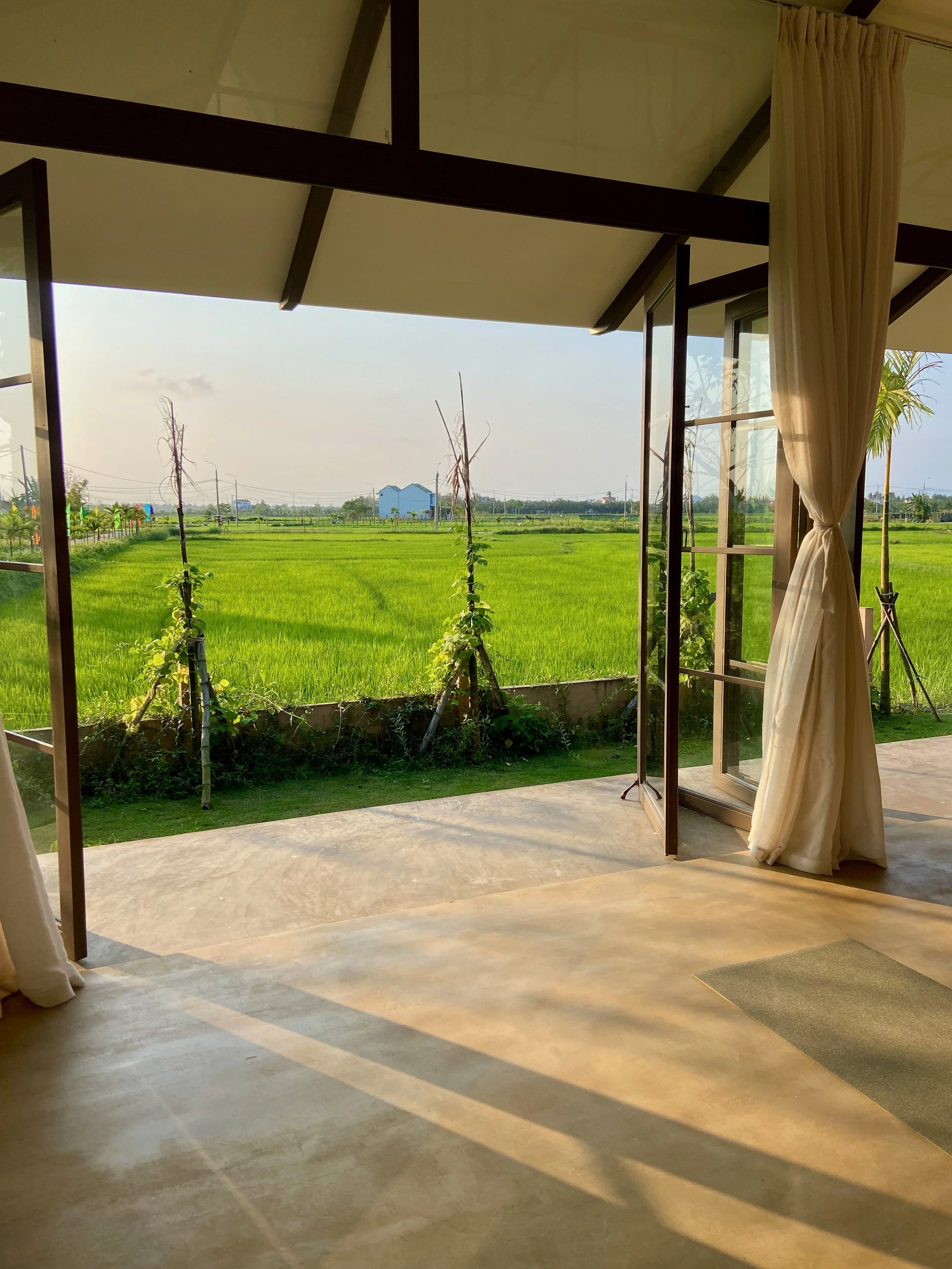
The view at Om Day Studio
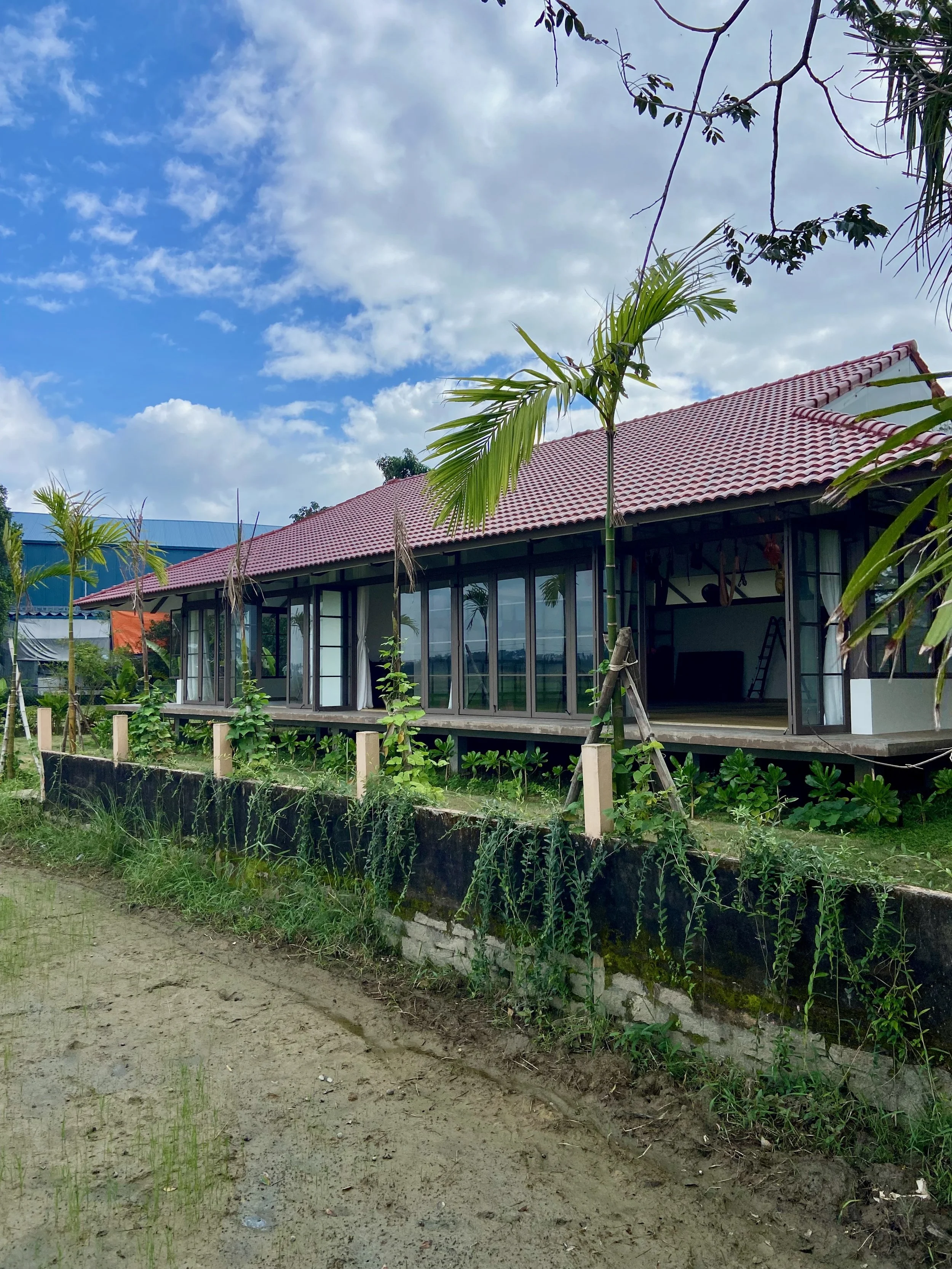
Om Day Studio, before the rice grows
On the activities front, we went to the Lune Circus, which was a highlight of our time in Vietnam — if you get the chance, don't hesitate. The creativity, athleticism and cultural talent on display were breathtaking. We also did a coffee workshop at Tropical Cafe, which felt very on-brand given how much time we spent in cafés. Tania picked up some running clothes because the rice paddy lanes (and an incredible run club community) are just too inviting.
For solo travellers, you’ll likely halve this one, but it does depend on your own habits and interests. As a rough guide, budget around $180/month if you're keeping it fairly relaxed.

Groceries — $310/month
Groceries covered breakfast, snacks, and the kind of fresh tropical fruit that makes you wonder why you ever lived anywhere with a winter. Vietnam's markets are spectacular for this — we were picking up fresh fruit regularly, and it never got old.
We don't tend to cook much beyond breakfast, but we do like to keep snacks in the house. And of course, more coffee. Also, during Tet (the Vietnamese New Year celebration), many restaurants are closed as staff spend time with their families.
For solo travellers, budget around $155/month for a similar approach.
Transport — $94/month
Transport was refreshingly cheap in Hội An, and a genuine pleasure compared to getting around Lombok. Grab bike taxis, push bikes, and good old-fashioned walking covered most of our needs — something that simply isn't an option in Lombok, where you really need your own wheels to get anywhere.
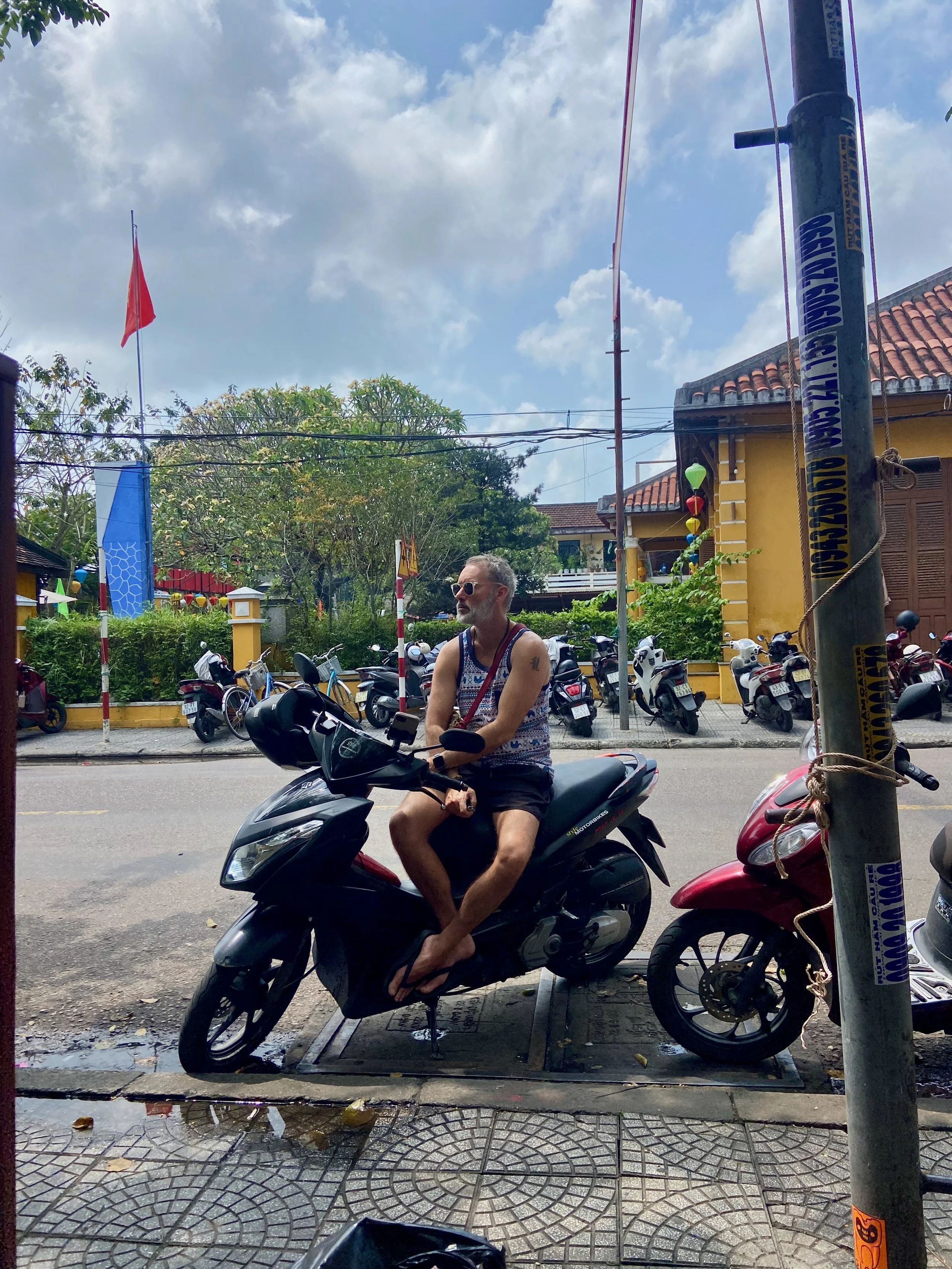
For the last two weeks, we hired a motorbike, which gave us the freedom to explore a little further afield and scratch that itch for the open road. Even with that added cost, transport stayed one of our lowest expenses for the month.
For solo travellers, some costs, like Grab bikes, would naturally come down, but most people opt for a hired scooter during a longer stay, so that part of the expense stays roughly the same.
Medical — $37/month
This was a mix of small pharmacy purchases over the stay and a couple of dental visits — two cleans and some fillings. Dental care in Vietnam is excellent value compared to back home, so if you've been putting off a check-up, a longer stay in Southeast Asia is a genuinely good time to get it sorted.
For solo travellers, halve this to around $18/month, though dental work is obviously a one-off variable.
Subscriptions — $32/month
This covers our Apple subscription, which includes TV, music, and storage. We’re quite mindful not to keep signing up for subscriptions, as they can add up quickly.
For solo travellers, this one stays the same as it's a fixed cost.
Visa — $17/month
This is the cost of the 90-day Vietnamese e-visa, split across two people — so roughly $8.50 per person per month. It's straightforward to arrange online before you arrive, which makes the whole process painless.
If you're planning to stay longer than 90 days, you'll need to factor in visa runs. A few popular options are the bus to Laos or Cambodia, or using it as an excuse to spend a few days in Bangkok — we have a guide to making the most of a quick stopover there if you need one.
Solo travellers, your visa cost will be around $8.50/month.
Cellphone — $13/month
We went with Viettel for our 90-day credit, which turned out to be one of our lowest phone costs across all our destinations. You'll need your passport to set it up, and a translator app helps to navigate the process in-store.
Our advice: get an eSIM sorted before you arrive to cover your first few days, then head to a Viettel shop once you're settled to set up the 90-day credit properly. It's worth the small effort for the savings over a longer stay.
For solo travellers, budget around $6.50/month.
Insurance — $6/month
This is our New Zealand life insurance, which we maintain wherever we are in the world. It's a fixed cost that follows us everywhere.
We don't currently use travel insurance — it's a personal risk decision that works for us, but it won't be right for everyone. If you're looking for travel and health cover as a digital nomad, SafetyWing is the most popular option in the nomad community and is worth looking into before you go.
For solo travellers, our life insurance costs are obviously personal, but if you're going the SafetyWing route, budget accordingly on top of this.
Final Note
Hội An is an easy yes for digital nomads, and we'd encourage anyone considering it to stay longer than the standard two-day itinerary. Most visitors pass through, spend their time in the Old Town, and leave without ever seeing the town as a living, breathing place beyond its touristic centre. The rice paddies, the neighbourhood cafés, the quiet morning streets and the beach — these are the things that made us fall in love with it.
We absolutely loved our time here and are already planning to come back. At just over $2,000/month for two people, it represents genuinely good value for the quality of life on offer. If you're weighing up your next base in Southeast Asia, put Hội An near the top of the list.
I hope you found this breakdown helpful in your planning. Let us know in the comments if this aligns with what you're expecting to spend — and if you've already spent time in Hội An, we'd love to know how your costs compared.


Every way to cross from Bali to Lombok: fast boats via Padang Bai, Sanur and Nusa Dua, the public ferry, and flights, with honest advice on which operator and route to book.