
Ho Chi Minh City to Da Nang Train: What It’s Really Like on the Overnight Sleeper
Last Updated: March 2026
This post may contain affiliate links, meaning we get a commission if you decide to purchase through our links at no cost to you. This helps fund Slower Travels without costing you a cent!
Taking the train from Ho Chi Minh City (Saigon) to Da Nang is more than just a way to get from A to B. Just like a walking tour, it’s an experience in itself that slows you down, puts you alongside local travellers, and lets you see a side of Vietnam you’ll miss entirely if you fly.
We took the overnight sleeper train north after finishing a house sit in District 7, Ho Chi Minh City, and for us, it was the perfect fit for how we like to travel: unrushed, grounded, and connected to the journey as much as the destination.
Here’s exactly what the Ho Chi Minh City to Da Nang train is like, what to expect onboard, and whether it’s worth it for you.
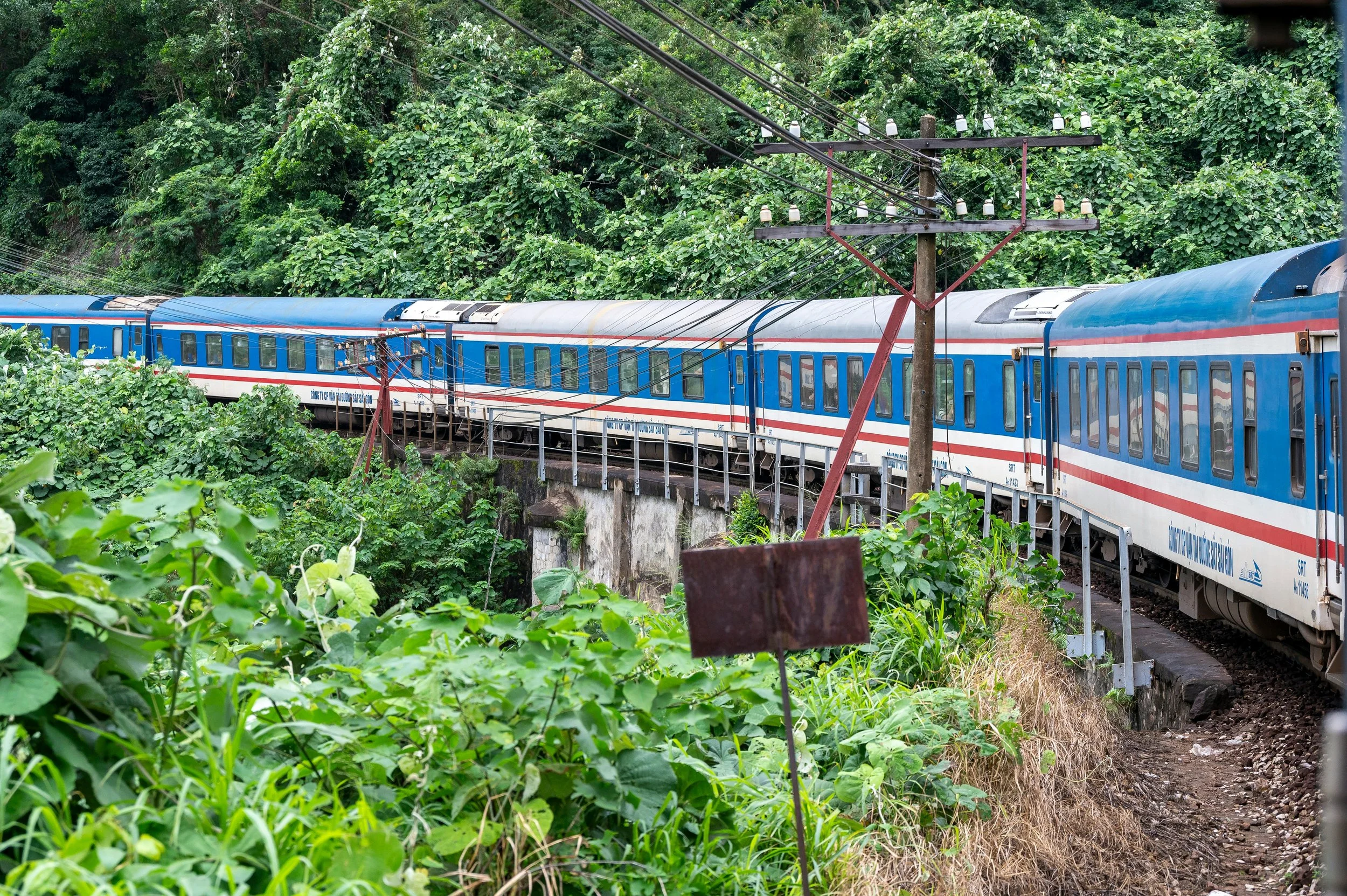
Why Take the Train from Ho Chi Minh City to Da Nang?
We chose the train for two main reasons.
First, we wanted to see more of the countryside. We’d spent a month in Ho Chi Minh City, but wanted to dive deeper into Vietnam. Flying skips over so much, and long bus journeys can feel disconnected. The train lets Vietnam unfold slowly outside your window once daylight breaks: lush green fields, small towns, rivers, and stretches of coastline.
Second, it fits our slow-travel ethos. Travel isn’t just airports and arrivals; it’s the in-between moments too. This journey felt like part of the trip, not dead time.
It was also our first overnight train in Vietnam (though not our first sleeper train overall as we’d previously taken one in Thailand), and we were genuinely excited, especially to have a proper cabin rather than open bunks.
Choosing the Right Train and Departure
All long-distance trains between Ho Chi Minh City and Da Nang run on Vietnam’s Reunification Express, named one of the world’s best train journeys by Lonely Planet.
The trains are labelled SE1–SE8. The numbers indicate direction: odd-numbered trains travel north (towards Hanoi), while even-numbered trains head south (towards Ho Chi Minh City). Not all SE trains are equal though.
SE1 / SE2 are generally considered the premium services, often using newer carriages and offering the most comfortable sleeper options, including two-berth cabins.
SE3 / SE4 are popular overnight trains, slightly faster and well-suited to long distances, with good sleeper layouts and regular stops in places like Da Nang, Hue, and Nha Trang.
SE5 / SE6 run during the day, with extra stops and better views if you’re not planning to sleep.
SE7 / SE8 offer additional day and night options but can be more variable depending on the carriage.
We chose an overnight northbound SE service, departing Ho Chi Minh City at 7:30pm and arriving in Da Nang around 12:30pm the next day. That timing worked well as we slept through most of the journey and arrived with daylight to spare.
Our recommendation: If you’re booking the Ho Chi Minh City to Da Nang train, aim for an overnight SE2 or SE4 service, book early if you want bottom bunks, and you'll be able to sleep through the longest stretch of the journey.
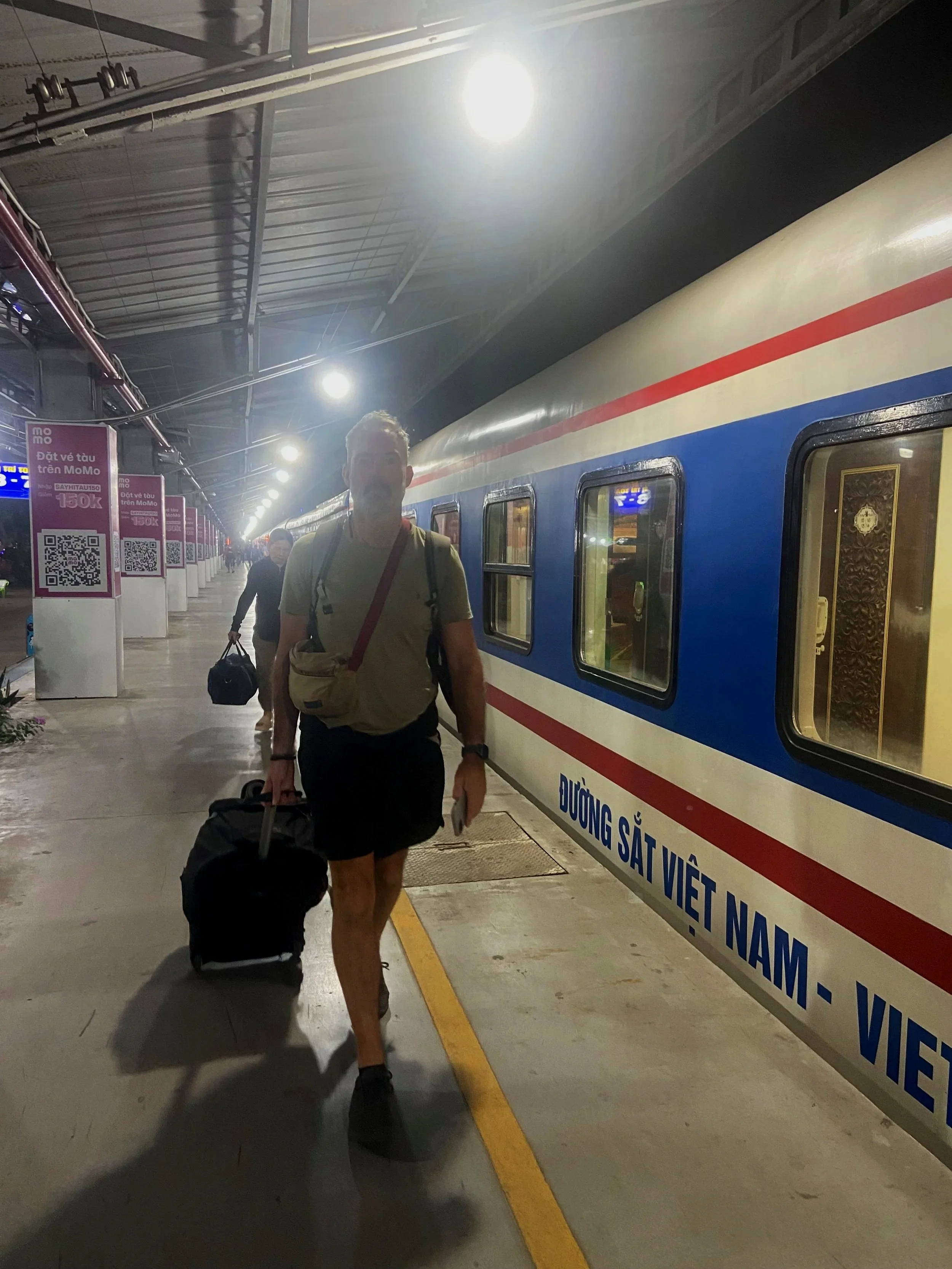
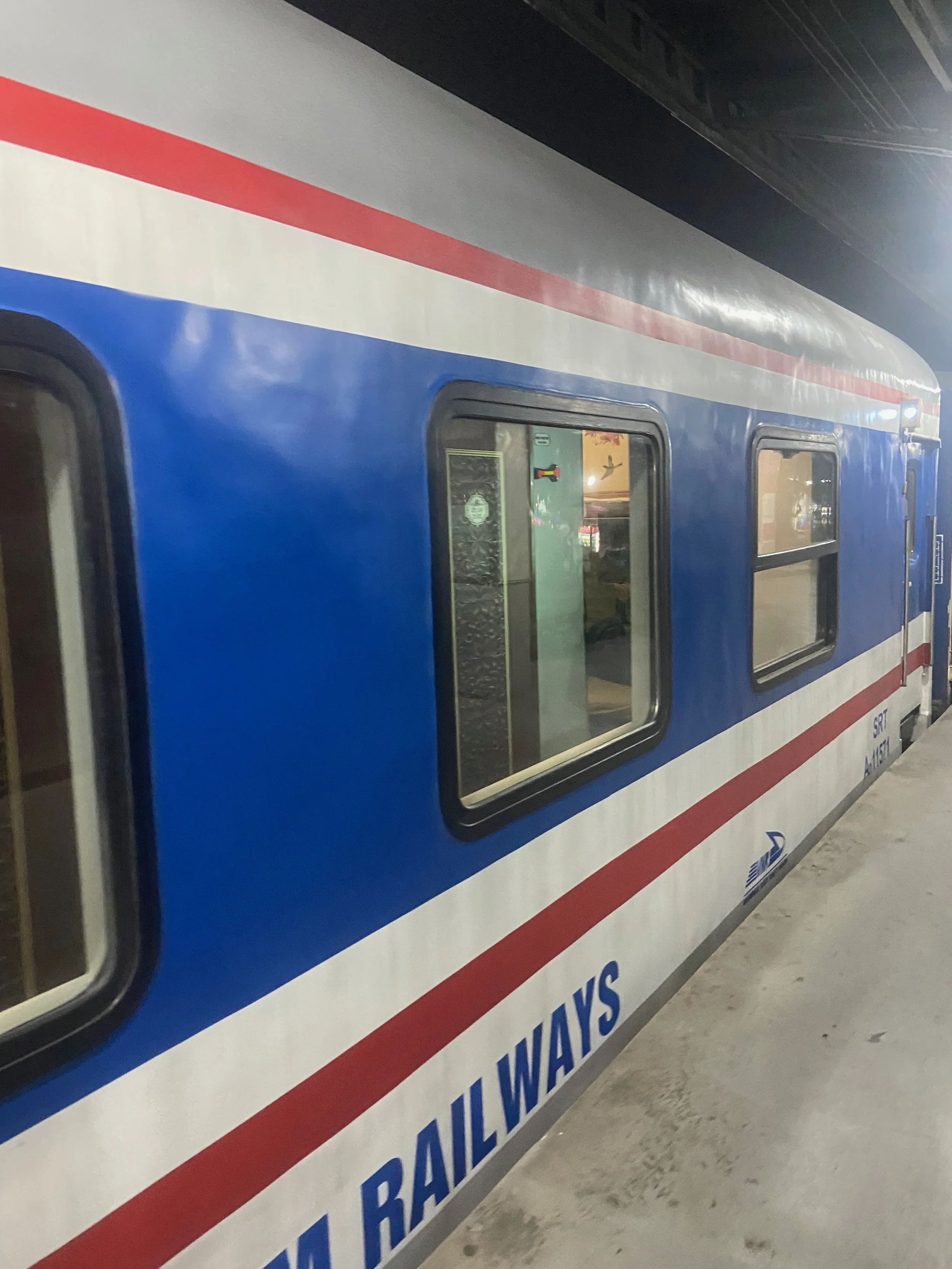
Booking Tickets: Simply and Easily
We booked our tickets through 12go.com, and based on what we saw onboard, we’d do the same again.
In our cabin, there was a woman travelling with her mother and husband, who had booking issues. They’d thought they booked three beds in a cabin together, including two bottom bunks, but ended up with three top bunks across two different cabins. I believe they booked directly with the train company.
We used 12go.com and had no problems. We got our bottom bunks, we were in the same cabin, and it was all super straightforward.
We booked a while in advance to secure bottom bunks. Top bunks would have been manageable (the lights do switch off) but being able to easily get up and out of bed when we wanted was much nicer.
Cost: We paid $100 euros for the two tickets, which is roughly $60 USD per person. This was for two beds in a 4-bunk cabin for an 18-hour overnight journey, which felt like good value.
Departing Ho Chi Minh City: What the Station is Like
The train departs from Ga Sài Gòn.
We arrived fairly early, partly because we’d finished sightseeing and partly because we’d read there was only one power outlet per cabin (true). The station was a good place to relax, charge devices, and have dinner before boarding.
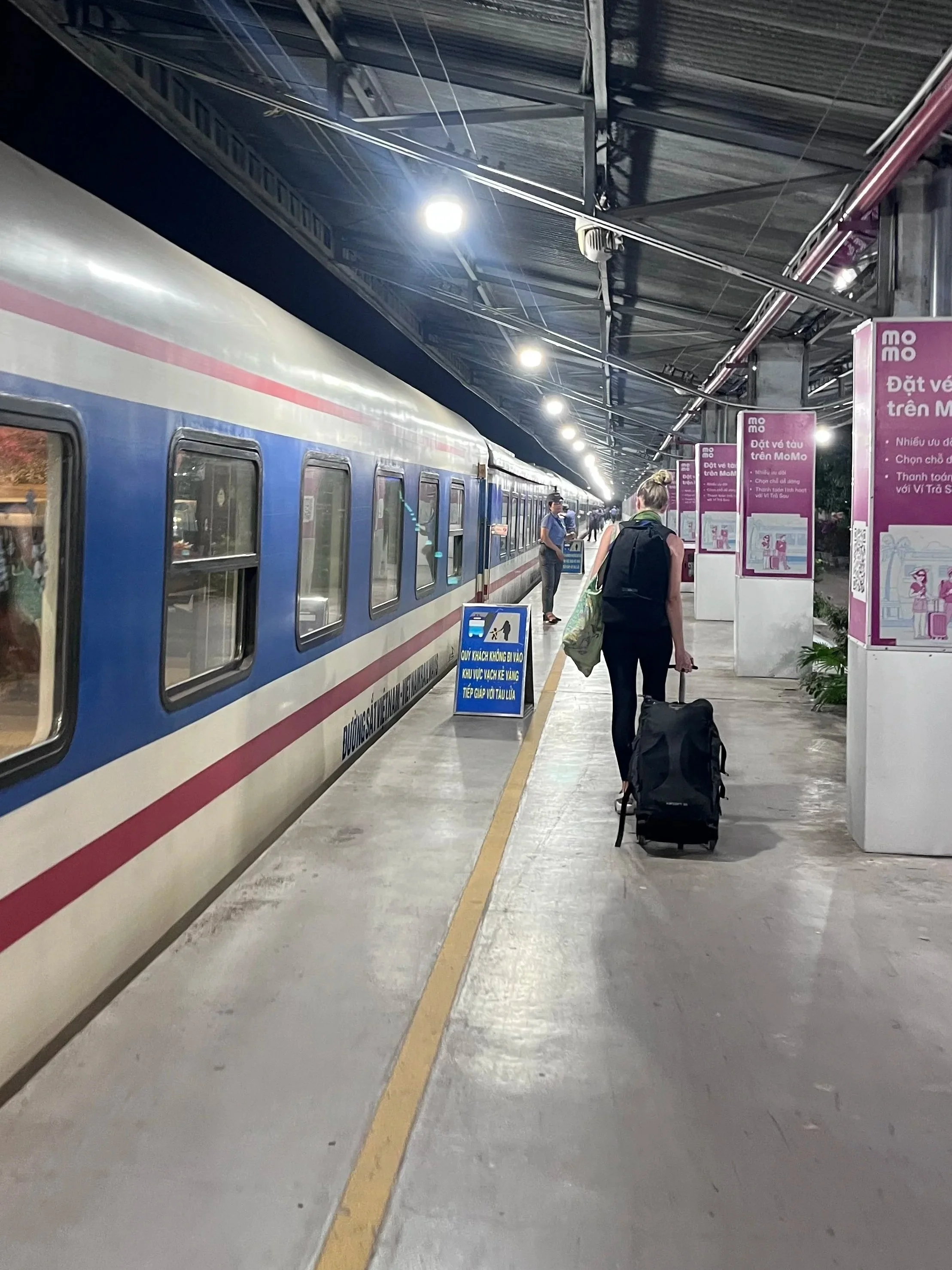
The station itself felt calm and straightforward. There’s only one main platform, so it’s not chaotic or confusing. Things got busier once the train arrived and people started boarding, but signage was clear and staff were around to help.
We had our tickets on our phones, so no printing required, which made everything easy.

Inside the Sleeper Cabin (Four-Berth, Second Class)
We booked a four-berth sleeper cabin, which for us was the sweet spot between comfort and cost.
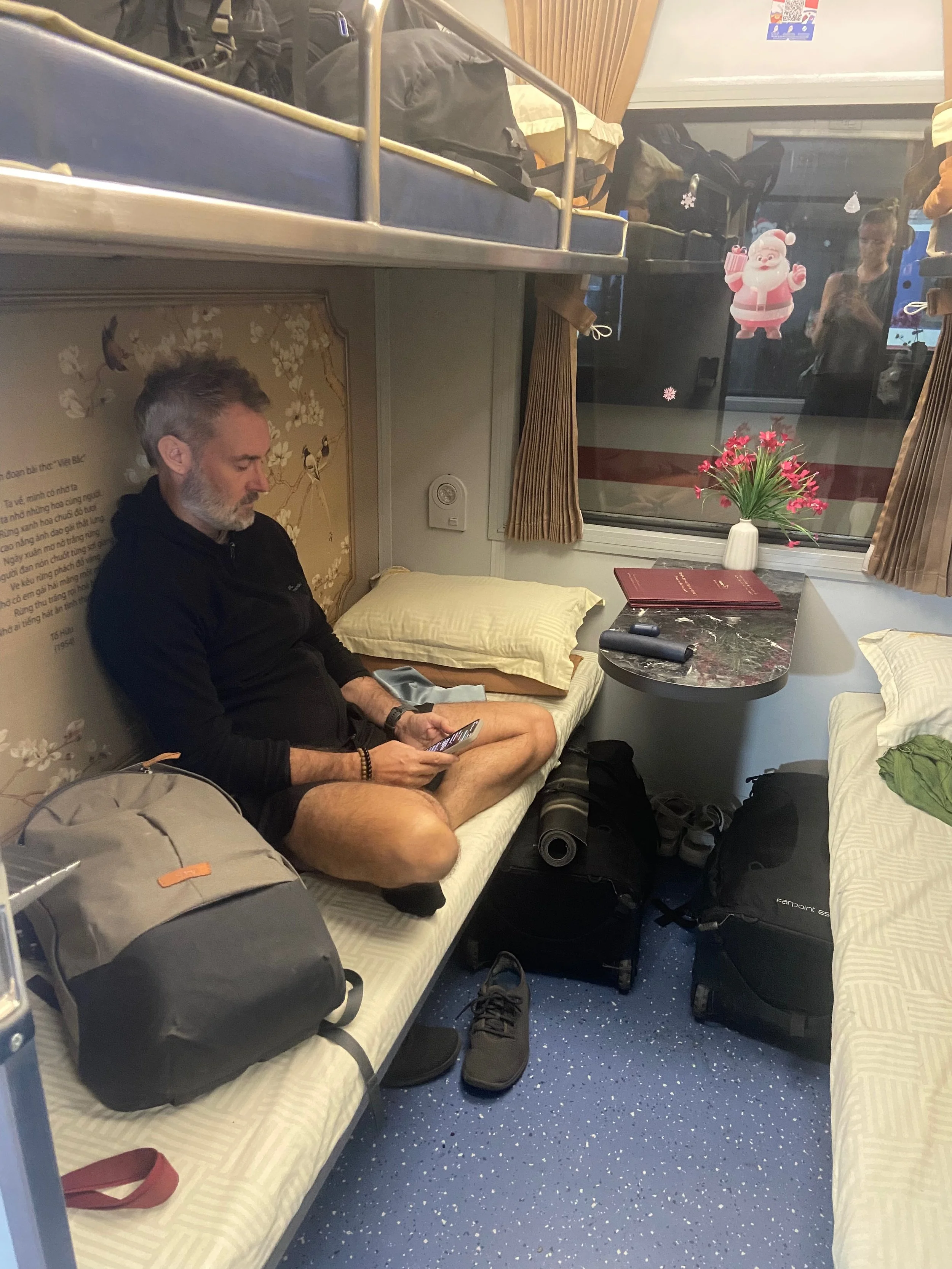
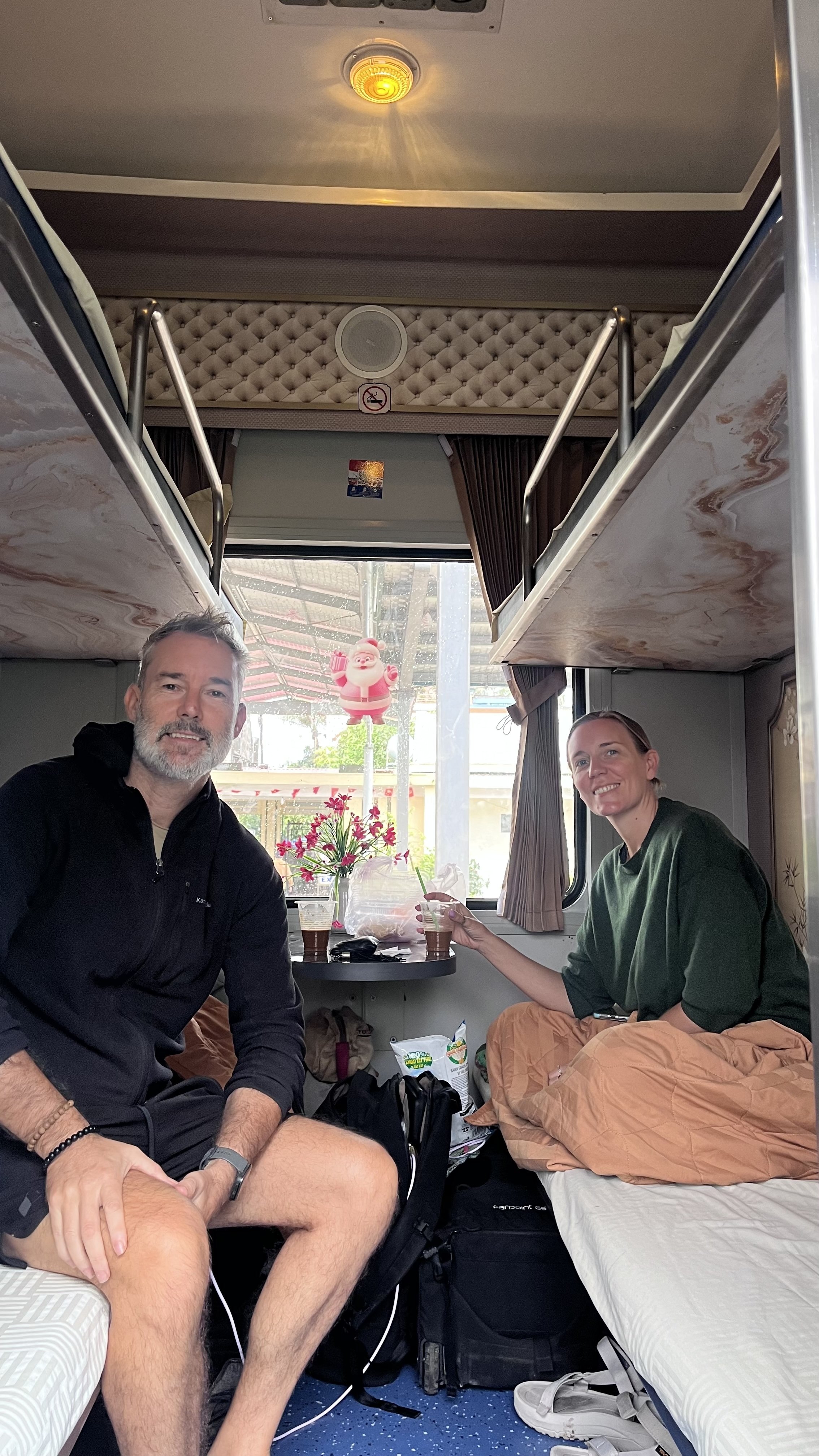
Each carriage has a long hallway down one side, with private cabins opening off it. Inside the cabin, there are two bunks on each side, facing each other. The door can be latched shut, blocking out hallway noise and light. We really appreciated the darkness, especially compared to the Thai sleeper train we’d taken before.
The beds were ready when we boarded: a folded blanket, a pillow, and clean sheets. The mattress was thin but surprisingly comfortable (actually more comfortable than the Thai sleeper) and I didn’t wake up stiff.
There was air-conditioning throughout the night. It felt cool, but with the blanket and long pants, it was comfortable rather than cold.
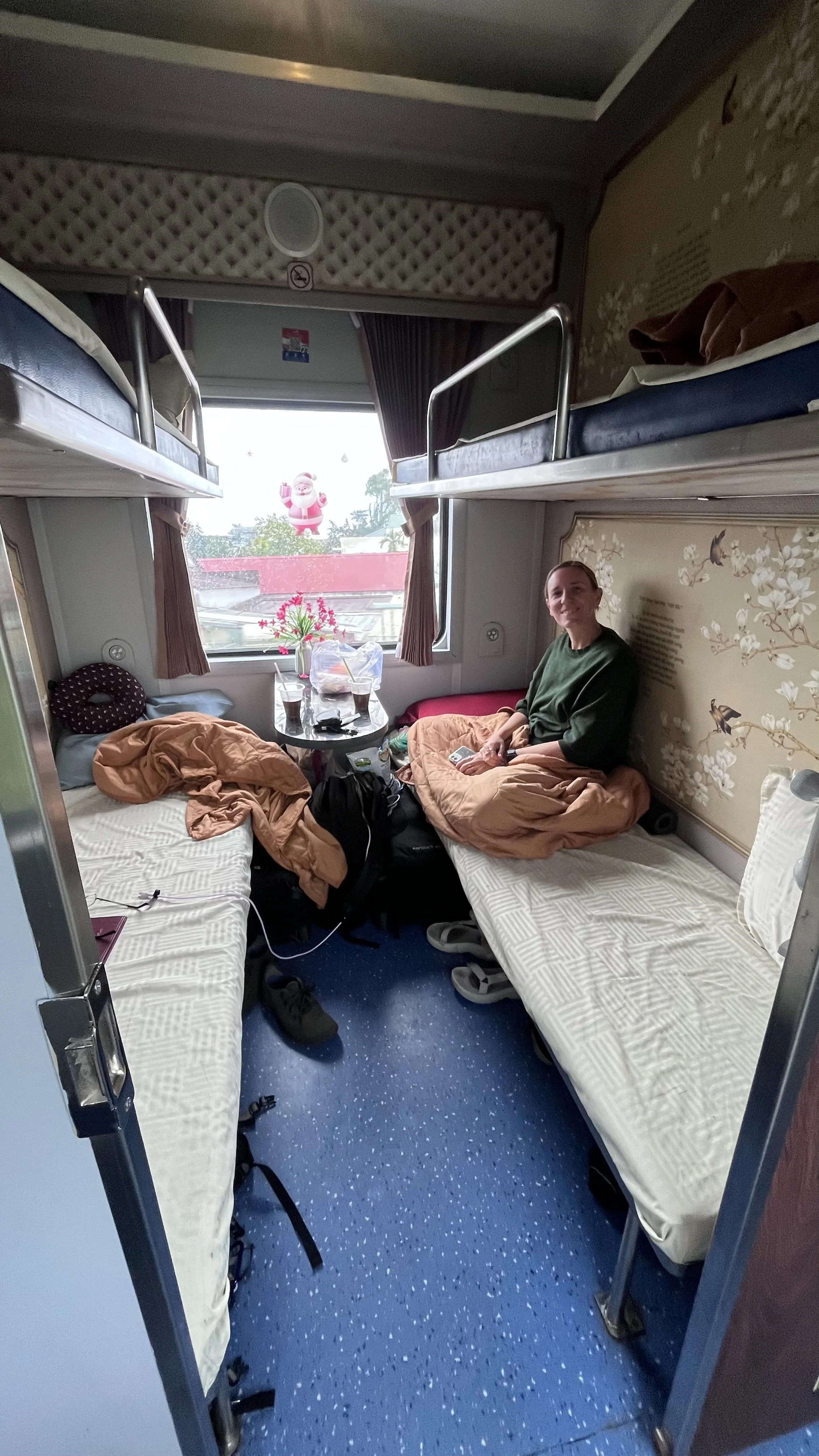
Sharing a Cabin: The Reality
This is probably the biggest question people have. Yes, there’s always a bit of luck involved with who you share a cabin with. Are they considerate? Will they get on or off during the night?
We were lucky. Our cabin mates were lovely; quiet, respectful, and interesting to chat with in the morning as the countryside rolled past. They stayed in the cabin the whole journey, so no one was coming or going overnight.
If this worries you, you can reduce the risk by booking a smaller cabin or ensuring you and your travel partner book bunks on the same level (both bottom or both top). That makes it feel more like shared space rather than two separate tiers.
Would we book a shared cabin again? Absolutely.
Luggage, Storage, and Security
This was one of the best parts.
There’s plenty of space under the bottom bunks for large backpacks or suitcases, so you’re not lifting heavy bags overhead. Our bags were stored directly under our beds, which felt secure and practical.
Because of that setup, we felt completely comfortable sleeping with our belongings nearby, and there was no worry about someone getting off with our luggage.
Food, Drinks, and What to Bring
There is a dining car, but from what I saw, all the meals contained meat. Coffee was available, and we stopped by the dining car once for one, which was a nice break.
Staff also walked through the train selling snacks and drinks, but things sold out quickly. At some stops, local women jumped on briefly selling iced coffees, which was fun to see.
Before boarding, we ate dinner at the station. It was nothing special, but fine.
For breakfast, we’d brought pot noodles, assuming there wouldn’t be vegetarian breakfast options (there weren’t). There was boiling water available on the train, but no cold water tap.
In hindsight, we wished we’d brought:
Tea bags or instant coffee
Instant oats
More fruit or snacks
A bánh mì for breakfast (they sold out onboard)
Toilets and Cleanliness
The toilets were Western-style, easy to use, and regularly cleaned throughout the journey. There was toilet paper, but we’d still recommend bringing tissues just in case.
Each carriage had one toilet and a separate sink area, making it easy to brush your teeth or wash your face in the morning without feeling rushed or awkward.
Overall, far better than we’d expected.
The Journey Itself: What it Feels Like
The full journey took around 18 hours, departing at 7:30pm and arriving in Da Nang at 12:30pm the next day, right on time.
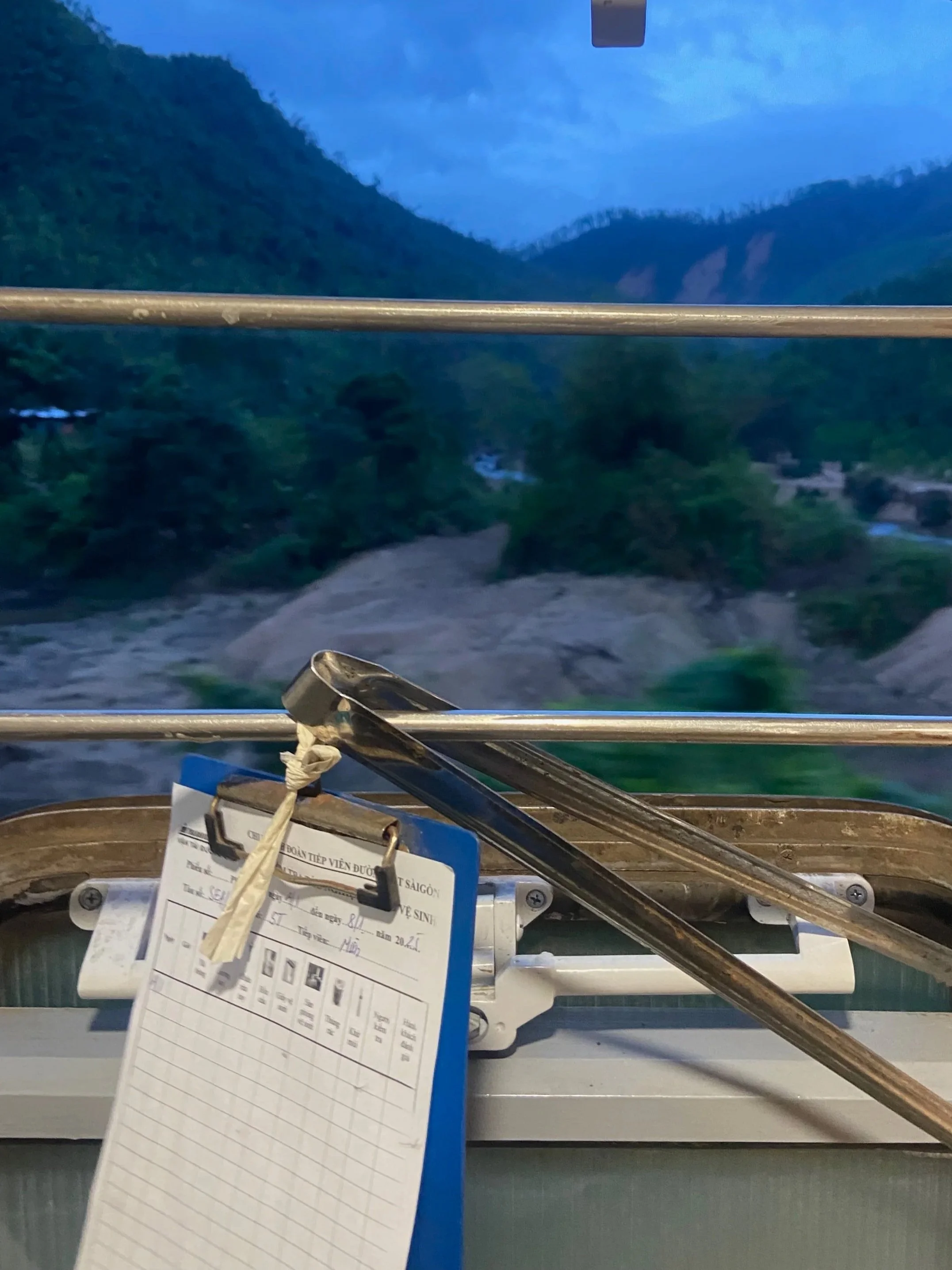
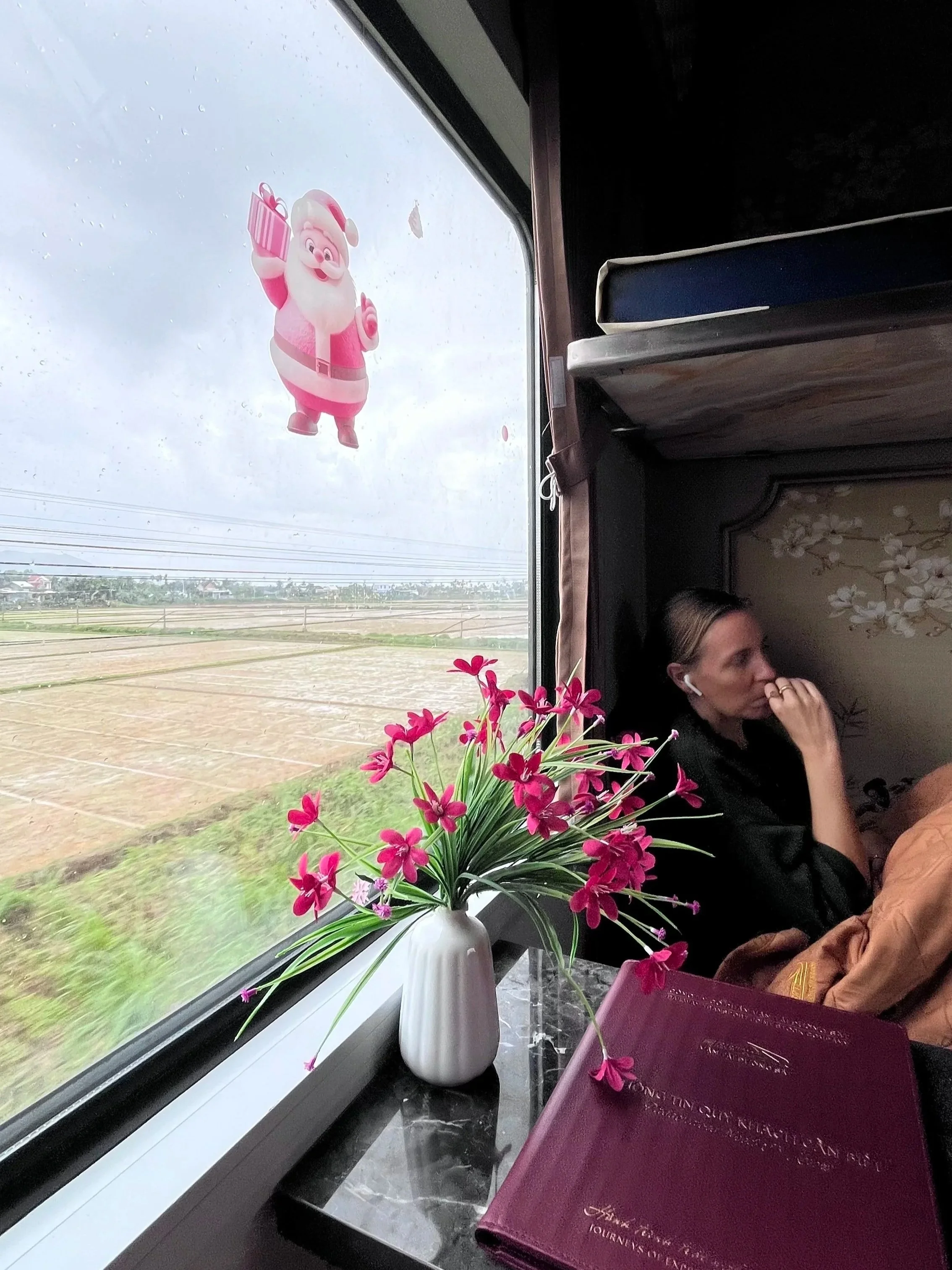
Because it’s mostly overnight, a lot of the trip is spent sleeping. We watched city lights slide past Ho Chi Minh City in the evening, then woke to lush, rain-fed countryside that looked intensely green.
The announcement that we were approaching Da Nang was very clear (there was even a little song!) so there was no stress about missing our stop.
Would I want to take the train all the way to Hanoi (around 33 hours)? Probably not. But for this distance, it felt just right.

Arriving in Da Nang and Getting to Hội An
Da Nang station is small and easy to navigate.
We weren’t staying in Da Nang, though; we were heading out of town to spend two months in Hội An. We’d organised a driver through our hotel in Hội An, who met us with a sign. It was about a 30-minute drive to Hội An, slightly cheaper than Grab, and meant we didn’t have to deal with waiting or being hassled by taxi drivers.
After 18 hours on a train, that simplicity was worth it.
Spending time in Hội An? Here’s our top recommendations for everything to eat (as a vegetarian).
Who This Train Journey Is (and Isn’t) For
This journey suits:
Slow travellers
People who enjoy trains as part of the experience
Anyone wanting to see more of Vietnam beyond airports
Travellers comfortable with shared spaces
It might not suit:
Very light sleepers
People who need absolute privacy
Would we do it again? Yes. And next time, we’d choose the same four-berth cabin, or maybe splurge on a two-berth if we were feeling rich.
Practical Tips Before You Go
Things to bring on the train with you:
Tissues for the bathroom
Extra snacks and fruit
Tea bags or hot drinks
Something simple for breakfast
One thing we’d change next time: bring more food than you think you’ll need.
FAQs: Ho Chi Minh City to Da Nang train
How far is Da Nang from Ho Chi Minh City?
Da Nang is around 960 kilometres north of Ho Chi Minh City.
Is Da Nang near Ho Chi Minh City?
Not particularly. It’s a long distance, which is why flying is common. The train makes that distance feel more manageable by turning it into an overnight experience.
How long does the train take?
The overnight sleeper takes around 18 hours, depending on the service.
Is the overnight train comfortable?
Yes, especially in a four-berth or two-berth cabin. It’s far more comfortable than many people expect.
Is this part of the Reunification Express?
Yes, this route runs along Vietnam’s main north–south railway line, often referred to as the Reunification Express.



A real-life monthly budget for two people living in Ho Chi Minh City, including a housesit. Honest figures covering rent, dining, transport, visa and more.