
Why The FIRE Movement Wasn’t Right For Us
This post may contain affiliate links, meaning we get a commission if you decide to purchase through our links at no cost to you. This helps fund Slower Travels without costing you a cent!
If you have ever looked up your FIRE number and felt your stomach drop a little, this post is for you.
The figure is not wrong. The maths is sound. It is just very, very large, and when you divide it by your current savings rate, the resulting timeline can feel less like a plan and more like a life sentence.
We felt exactly the same way. But instead of abandoning the idea of financial freedom altogether, we kept going — running different numbers, dreaming up different versions of life, and asking whether there was a version that felt genuinely exciting rather than just responsible.
Almost four years later, we are living in Southeast Asia in a way we would not trade for anything. This is how we got here, and why FIRE — for all its logic — was not the path that made sense for us.
We did the maths properly. Not in a vague, back-of-the-envelope kind of way, but with a full spreadsheet, formulas and scenarios mapped out. This is something we have always done together. In our first year of dating, we used to go for long walks, dreaming up different ways we might live our lives, then come home and build spreadsheets to see if any of it was actually possible.
When we started looking into the FIRE movement, we approached it the same way. We worked out how much we would need each year to live, then applied the standard FIRE calculation — multiply your annual expenses by 25, based on withdrawing roughly 4 percent each year without touching the underlying capital.
That gave us a clear number to aim for. From there, we calculated how long it would take us to reach it given what we were currently saving.
The answer was years. Many of them.
One of our many beach planning sessions
What does it actually take to reach FIRE?
For us, reaching that number would have meant tightening everything.
Travel would have been off the table for a while. We probably would have taken on flatmates. Spending would have needed to be more controlled and more deliberate. None of this is inherently bad — for some people it works well — but for us it felt like putting our lives on hold.
We were 36 and 41 at the time. Waiting another ten years to start living the way we wanted felt like too much of a compromise. Unlike someone in their mid-twenties with a long runway ahead, we were at a point where the decisions felt weightier. We were not reckless people looking for an excuse to avoid responsibility. We were methodical planners who had run the numbers and decided that ten years was too high a price for the life waiting at the end of it.
Is FIRE worth pursuing in your late 30s and 40s?
I do think FIRE can work later in life, especially for people who are highly motivated and willing to make significant changes. For us though, it felt late — not in a technical sense, but in terms of how we wanted to spend our time.
We did not want to wait until 65 to really live, and waiting until our late forties did not feel much better. Time had started to feel more valuable than optimisation. If the timeline had been two years rather than ten, we might have approached it differently. But ten years felt like too long to delay the things that actually mattered to us.
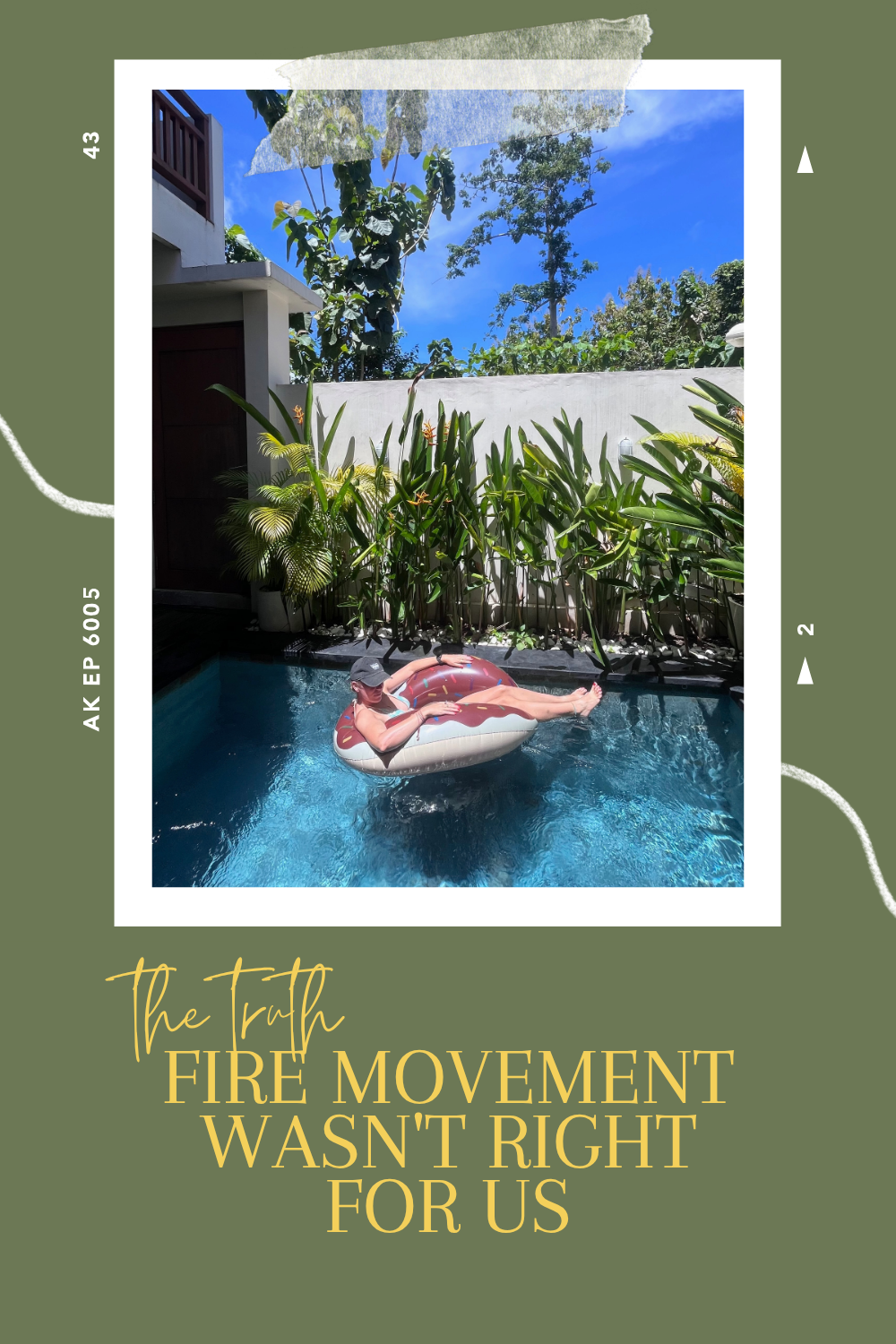
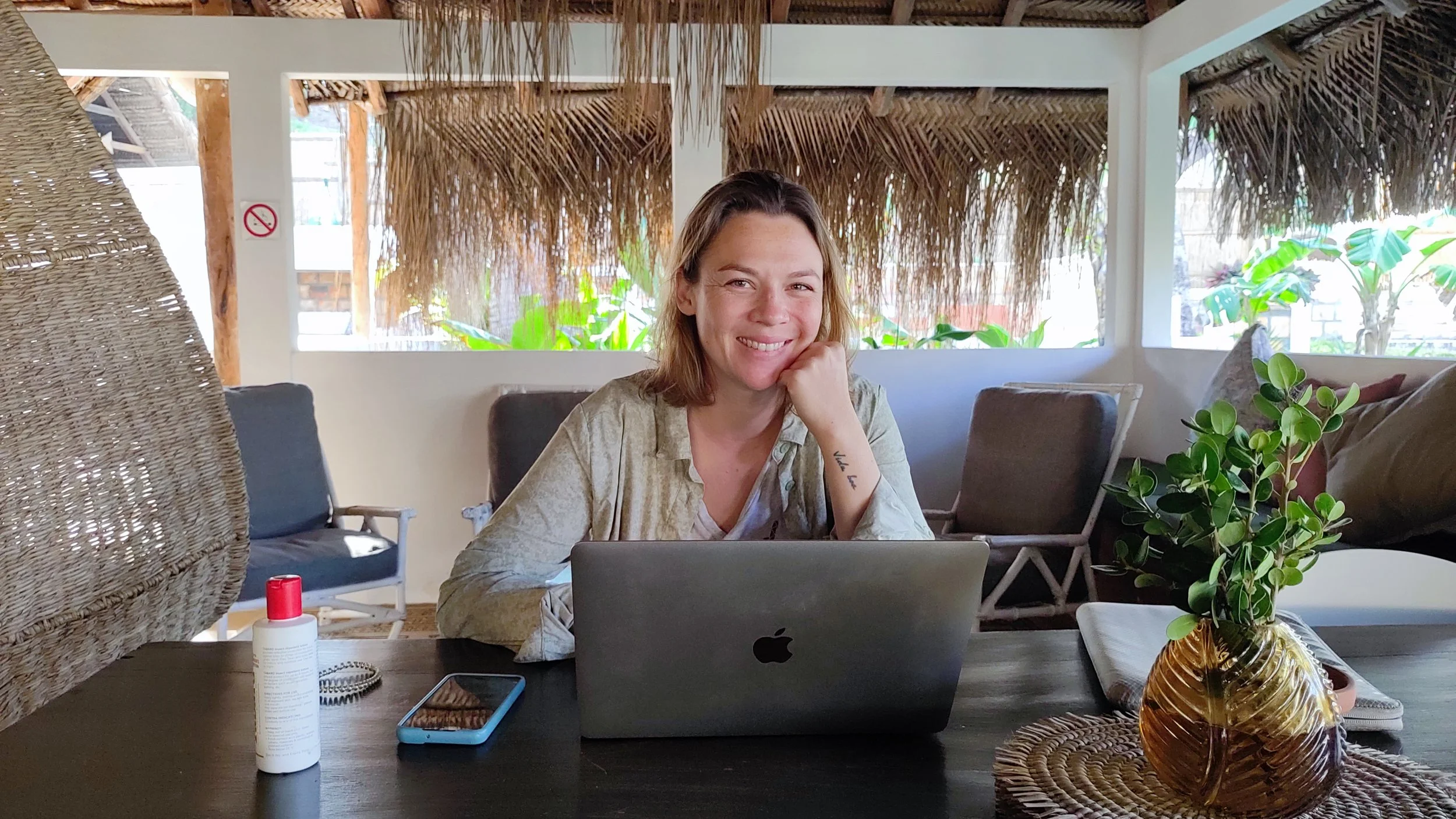
Living the digital nomad dream in Bali
What kind of lifestyle does FIRE require?
Around that time, we were watching two very different types of content.
One was FIRE-focused, mostly from the US, where people were documenting how they were aggressively saving and investing in order to leave traditional work behind. The other was people already living as full-time digital nomads in Southeast Asia.
The contrast was striking.
The FIRE content often centred on minimising expenses as dramatically as possible. People were eating the cheapest food they could find, selling most of what they owned, and finding ways to monetise every spare moment — including renting out their homes on weekends to claw back a little extra.
The digital nomad content showed a different version of life. Still intentional and considered, but more balanced. People were working, earning, and actually living at the same time. They were not deferring everything for later.
We could see the logic behind the FIRE approach. We just could not see ourselves in it.
What is a realistic alternative to FIRE?
Instead of continuing to ask how we could stop working altogether, we started asking a different question: what do we actually need to feel free?
We went back to the spreadsheet and built a new model. This time, we calculated how much we would need to live for three years as digital nomads if we earned nothing at all — a worst-case-scenario fund.
We based the figure on real data. At the time, there were plenty of YouTubers sharing detailed cost-of-living breakdowns from Southeast Asia, and we used those as our baseline. They pointed to roughly $30,000 NZD per year for a comfortable lifestyle — and that was before COVID, when costs were even lower than they are now. We added some wiggle room, rounded up to a clean figure, and landed on $100,000 NZD as our target.
That number felt manageable. More importantly, it felt within reach.
It also gave us a clear psychological boundary. If everything went wrong — if we could not find clients, if the work dried up, if we hated it — we still had three years to live, travel and figure things out before we needed to come home.
If you want to understand what a realistic monthly budget in Southeast Asia looks like now, our cost-of-living series breaks it down city by city.
Do you need to be fully financially independent to travel?
For us, the answer was no.
We planned to keep working as we left New Zealand, taking on freelance work in our respective industries. That gave us a level of comfort that FIRE did not. We were not relying solely on a fixed pool of money. We had the ability to earn, adapt and respond if things changed.
That said, it was not completely without trade-offs.
Location independence sounds freeing — and it is — but it does occasionally close doors. A few years in, I was offered a marketing role at an organic food company I had long admired. The role was interesting, and the company was doing work I genuinely cared about. But they needed me in the office three days a week and wouldn't budge, even when I asked for two days. I walked away from it. It was the right decision for the life we had built, but it was not a costless one.
Even so, when we have talked about returning to a more conventional lifestyle, it has never felt like a worthwhile exchange.
What actually happens when you take this approach?
What we did not fully anticipate was how many opportunities would open up.
We found freelance clients we never imagined working with. We discovered different ways of earning. We came across investment opportunities that would not have been on our radar if we had stayed on a more traditional path.
We also learned what we actually need in order to feel content.
There is a balance to it. We need to work enough to support ourselves and maintain a sense of security. We also need time to enjoy our days, explore, rest and build things that matter to us. Leaning too heavily in either direction throws everything off.
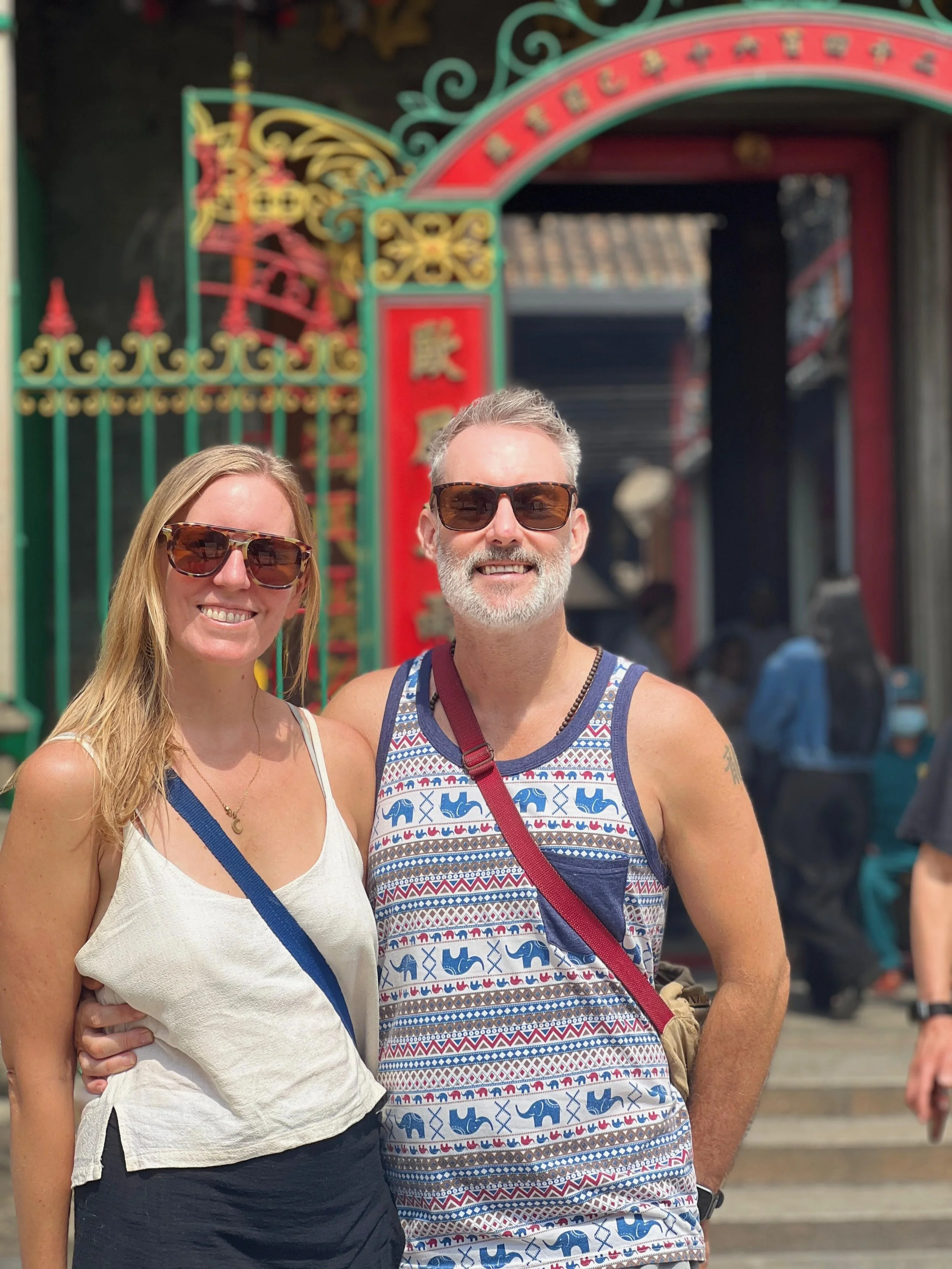
We love exploring new locations like Hoi An
How do you maintain financial security while living this way?
The short answer is that we think about it differently now, not less.
We are not working towards a single FIRE number anymore. Instead, we focus on building across multiple income streams — freelance clients, investment properties, and various investment accounts that we continue to contribute to. No single stream has to carry everything, which makes the whole thing more resilient.
We are still thinking about retirement. We still run numbers and model scenarios. We just stopped assuming that financial freedom required us to stop working first. The goal is still to reach a point where work is entirely optional — we are just getting there by a different route, and living well along the way.
What does FIRE get right?
I still believe in the underlying principles.
FIRE encourages people to look closely at their spending and ask whether it actually aligns with what makes them happy. It challenges the assumption that you have to follow a conventional path — working full-time until your mid-sixties before you are allowed to enjoy your life. Those are ideas worth taking seriously.
But the movement can also make freedom feel binary. Either you hit the number, or you are not free. That framing stopped feeling useful to us.
Almost four years in, we work part-time, on our own schedules, in jobs that give us purpose. We are not doing nothing, and we do not want to. We earn, we invest, we travel, and we are still building towards long-term security. It does not look like the FIRE spreadsheet we built back in New Zealand. But it looks a lot like the life we were dreaming about on those long walks.

There are four run clubs and a walk club operating in Kuta, Lombok. Here's the full guide to days, start times, and how to get involved.