
Best Asian Food: A Guide to Must-Try Dishes by Country
This post may contain affiliate links, meaning we get a commission if you decide to purchase through our links at no cost to you. This helps fund Slower Travels without costing you a cent!
Food is one of the most powerful ways to experience a place. A single dish can tell you about a country's history, its geography, its trade routes, and the people who have called it home for generations. It connects you to culture in a way that no museum or guidebook quite can — and more often than not, the best meals happen not in fancy restaurants but at street stalls, family tables, and night markets where recipes have been passed down for centuries.
We asked our network of travel bloggers and writers to share their favourite dishes from across Asia — from the herb-filled flatbreads of Armenia to the steaming bowls of ramen in Japan, the fiery curries of India, and the delicate crepes of Vietnam. These are the dishes that stayed with them long after they came home. The ones they dream about. The ones that made them fall a little bit more in love with a place.
Here's what they said.
Best Dishes in East Asia
East Asia is a continent of culinary contrasts — from the clean, umami-rich broths of Japan to the bold, fermented flavours of Korea, the delicate craft of Cantonese cooking, and the endlessly inventive night market culture of Taiwan. What unites the region is an extraordinary attention to technique, whether that's the hours-long braising of beef, the precise poaching of chicken, or the art of a perfectly hand-pulled noodle. These are dishes with history and depth, and every bowl tells a story.
Best Dishes in China
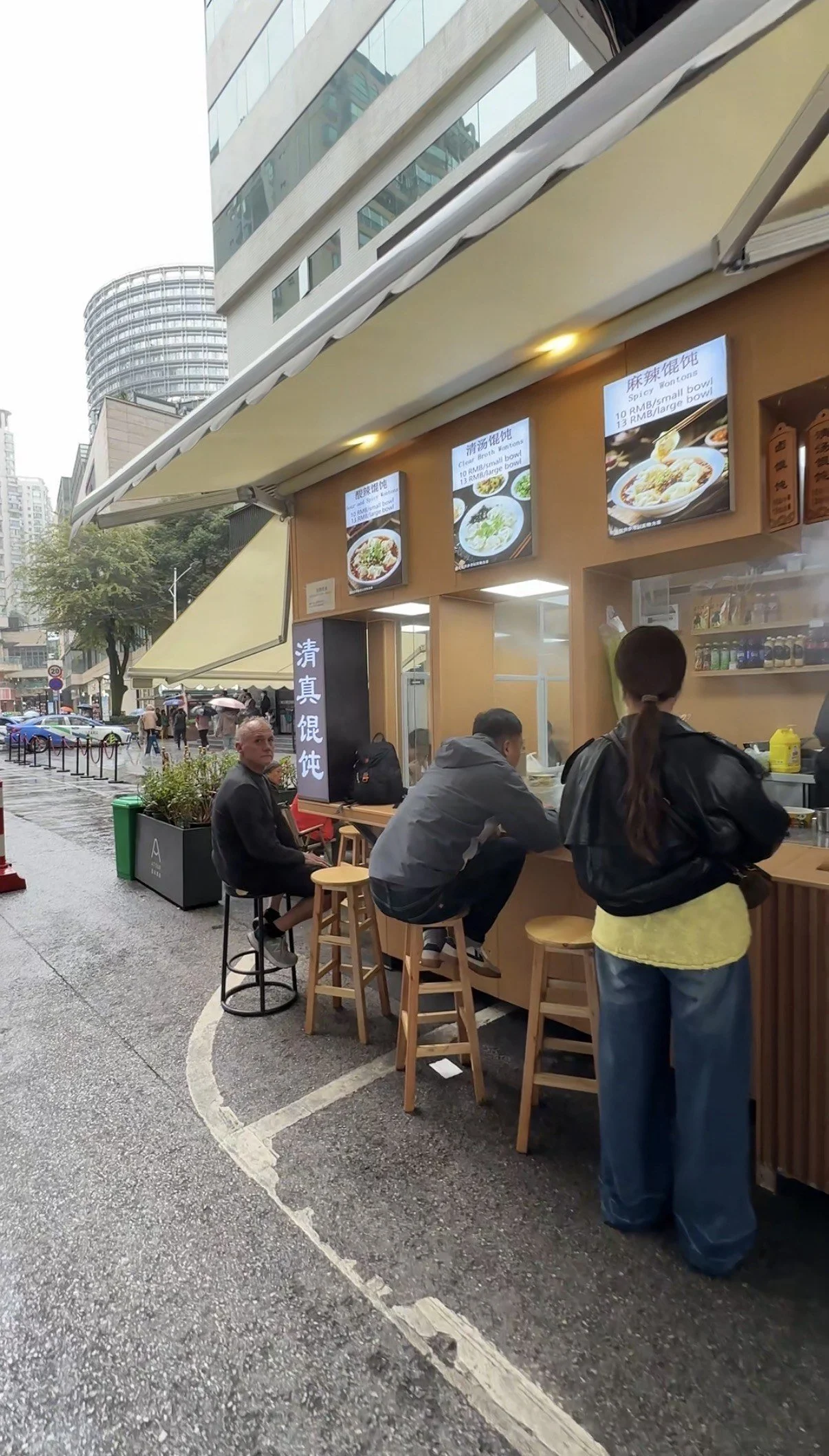
Wonton Broth Soup in China
Shared by Shannon from The Savvy Tourist
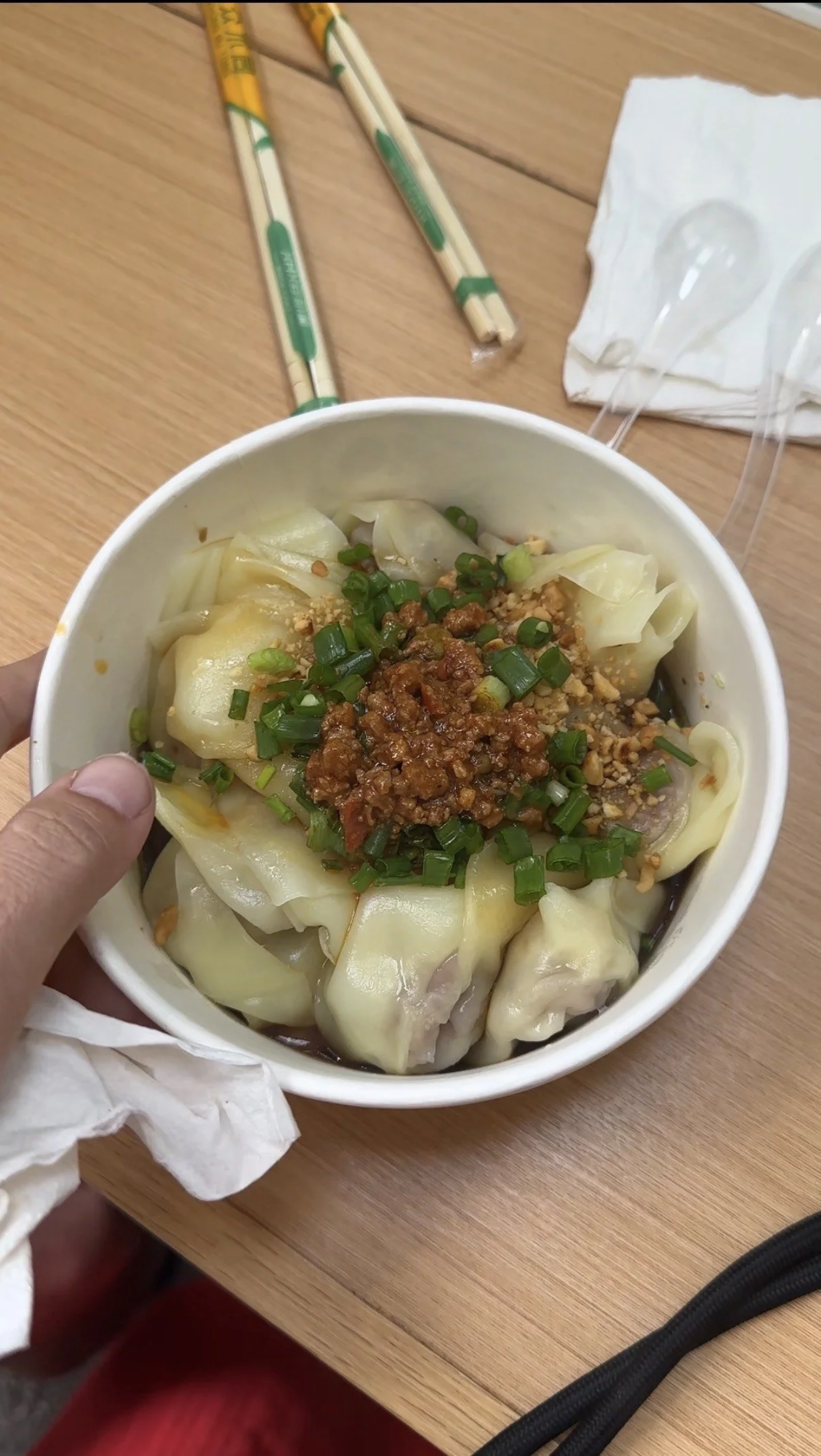
If there’s one dish in China that shows how powerful simplicity can be, it’s wonton soup. No fuss, just handmade silky wontons in a clear, savoury broth, finished with a little seasoned mince, chillies, sometimes nuts, and usually costing only a couple of dollars.
You’ll find this soup everywhere in southern China, especially across Guangdong Province, but what surprised us most was how far it travels. We ate it regularly as far west as Yunnan Province, and it became a go-to throughout Shenzhen, Guilin, Chongqing, and Yunnan.
It’s a staple in food courts, hole-in-the-wall shops, and casual local eateries, with prices typically between 10 and 20 RMB, making it one of the best-value meals you can find.
What makes it addictive is the variety. You can often choose your wonton style and flavour: classic clear broth, sour and spicy, full chilli heat, braised versions, or bowls topped with minced meat and nuts. Add a drizzle of chilli oil if you’re feeling brave and you’re set.
The broth is light but deeply savoury. The wonton skins are silky and thin. The filling is juicy without being heavy. It’s the kind of soup you finish and immediately consider ordering another, not because you’re still hungry, but because it’s just that good.
It’s cheap, comforting, and shockingly delicious.
Peking Duck in China
Shared by Chelsea from Adventure of Chels.
One of the best dishes to try in Asia is the Peking Duck in Beijing, China.
Peking Duck is a dish that originated in Imperial China. While it's believed that roasted duck was served before then, this is when the recipe first became known. It started as a royal delicacy and was often served within the Forbidden City. It's much more accessible today and is considered a famous dish in China.
Peking Duck is meticulously prepared over multiple days. The process includes drying out the duck and then glazing it in a syrup. The duck is then roasted until the skin is crisp and the meat is tender. It's then (usually) cut into thin slices and topped with a sauce. The taste of the meat is juicy and tender, and it's typically served with thin pancakes (wrappers) and vegetables.
A Peking Duck dinner will typically cost between ¥100 and ¥400+. A popular place to go is Siji Minfu, though the wait can be rather long since it's well known. Da Dong Roast Duck is another option to consider.
Enjoy the Peking Duck in Beijing, China!
Best Dishes in Hong Kong
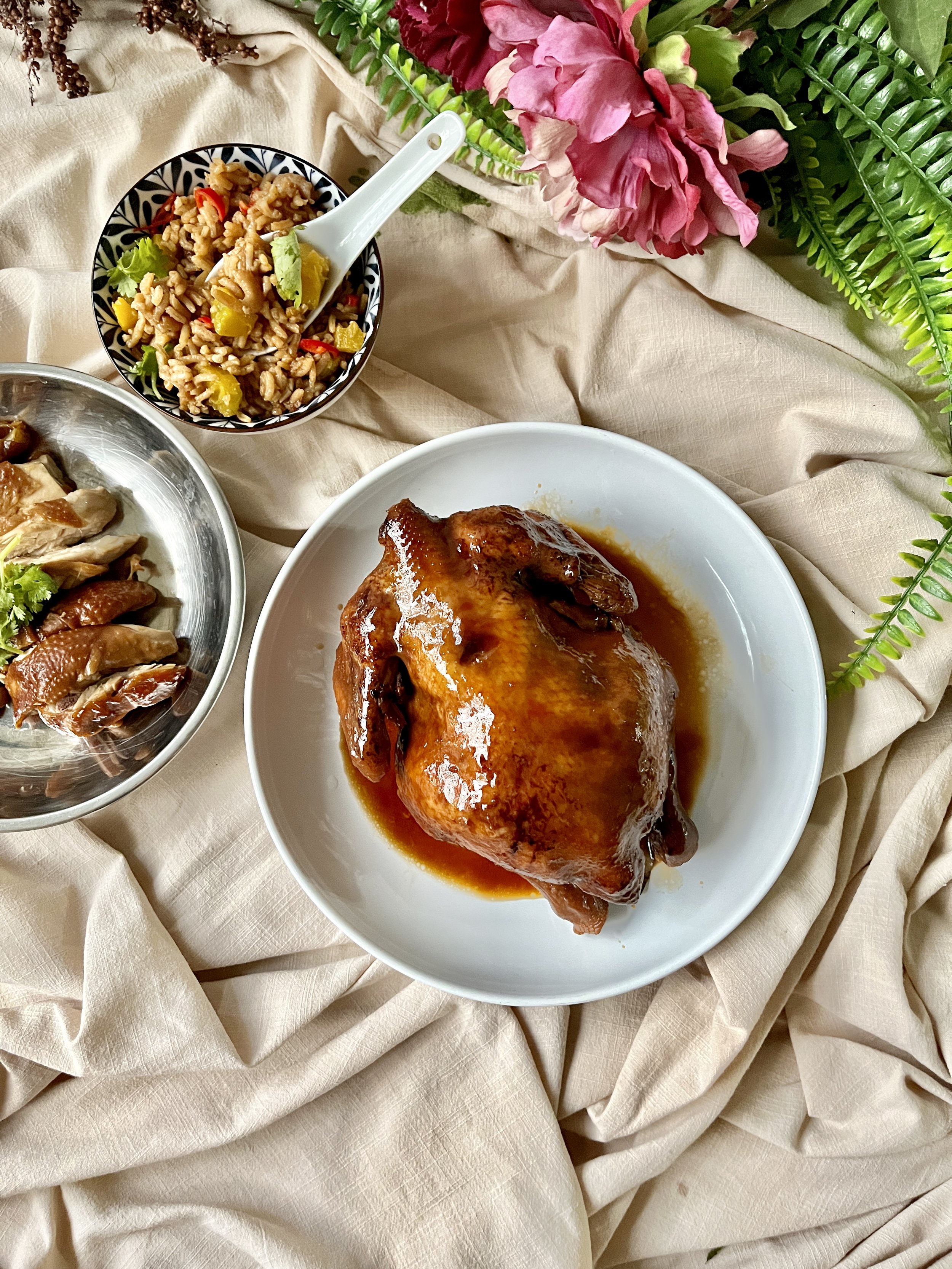
Cantonese Soy Sauce Chicken in Hong Kong
Shared by Zhen from A Love Letter to Asia
Cantonese Soy Sauce Chicken (See Yao Gai) can be found everywhere in Hong Kong, from home kitchens to street stalls and many fancy restaurants, such as The Chairman. It involves poaching chicken in a fragrant soy sauce marinade (both light soy sauce and dark soy sauce), with sugar, ginger, scallions, and popular Chinese spices such as star anise and cinnamon- you can use up almost half a bottle of light soy sauce! The result is juicy, silky, aromatic chicken.
Shortcuts abound on the Internet, but the traditional way (which the best restaurants still use) is to poach the chicken in the soy sauce marinade several times- the entire process can take up to 2 hours and 30 minutes, as shown in this recipe by Greedygirlgourmet. Quicker ways, usually seen in home cooking, involve braising part of the chicken to speed up the process (thighs or drumsticks are more popular in Asia).
At restaurants, Soy Sauce Chicken is often served with rice (and sauce), and you can choose from several popular Cantonese meats with the rice: Soy Sauce Chicken, Char Siew (BBQ Pork), Roast Duck, Roast Goose, and Roast Pork Belly. This assortment of meats is called “Siu Mei” in Hong Kong.
Best Dishes in Japan
Curry in Japan
Shared by Zhen from TJ Takes the Train
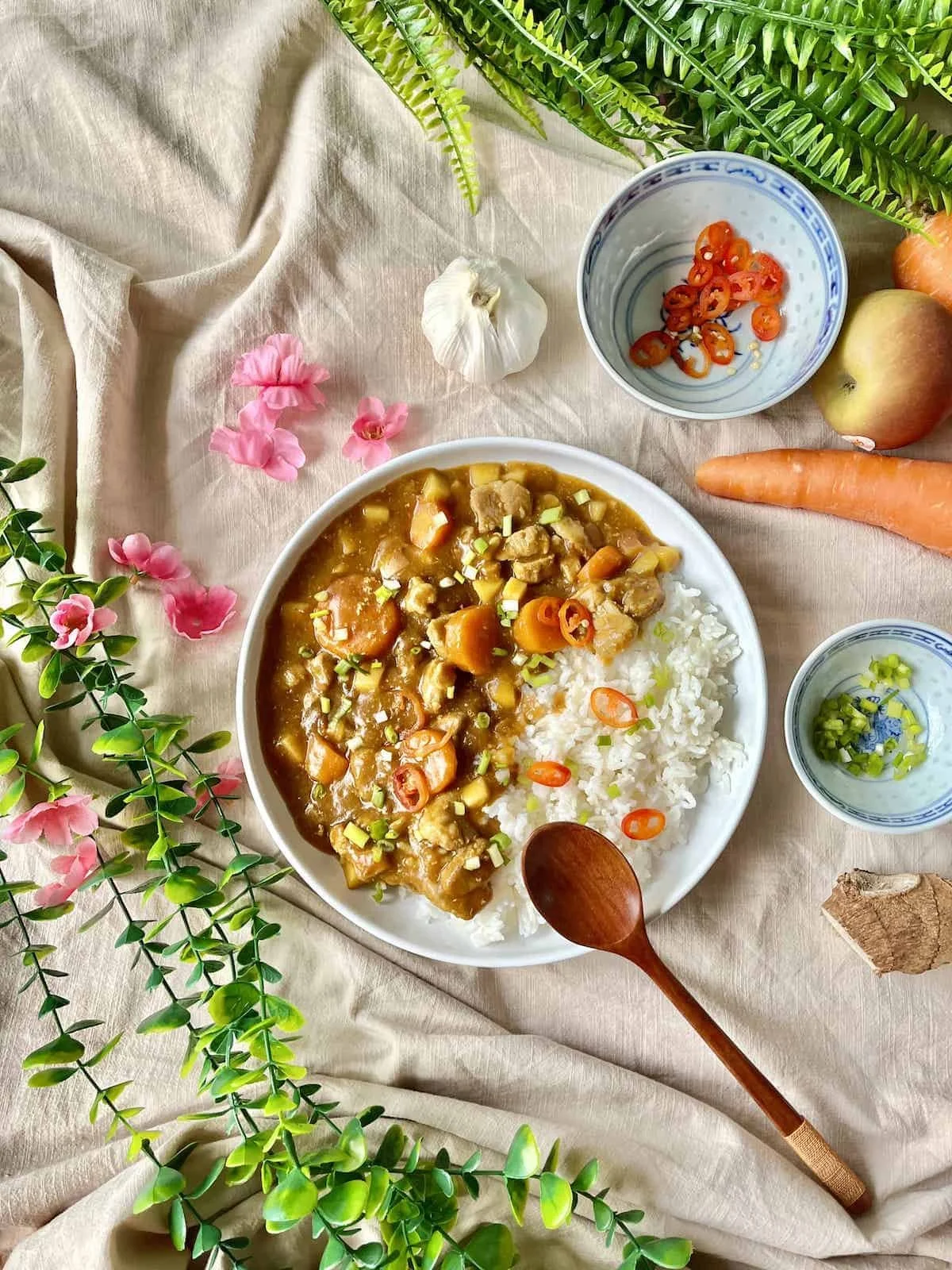
Japanese curry (Kare raisu) is one of the most comforting and beloved dishes in Japanese home cooking - it’s a warming and cosy dish made easy to prepare at home thanks to the ubiquitous Japanese curry roux cubes (thickened curry powder) that you can find even in overseas Asian supermarkets. Or make your own with this recipe. The curry has a rich flavour and mellow heat so that everyone can enjoy it (there are usually options to choose exactly how spicy you want it to be; otherwise, it’s never as spicy as South East Asian or Indian curries).
In fact, this dish is so easy to make that many college students make it! Curry was introduced to Japan in the late 19th century via the British, who had adapted Indian curry into a thicker, stew-like dish. It is popular, you can find it in school lunches and casual eateries- sometimes served over fried pork katsu.
Japanese curry is usually cooked with onions, carrots, potatoes, and a protein such as chicken or pork. A secret Japanese tip for preparing this dish is to add apples to sweeten it naturally. Still, every household or restaurant will have its own secret trick- some even involve adding chocolate or coffee!
Okonomiyaki in Japan
Shared by Joey Cobain from Joey is a Traveller
Trying Okonomiyaki is a must on your visit to Japan. It’s a savoury pancake that’s also nicknamed Japanese Pizza.
In Hiroshima, Okonomiyaki chefs first cook a thin layer of batter, then add yakisoba noodles, shredded cabbage, and a fried egg. Next, they add popular toppings like oysters, squid, pork belly, or cheese. The Okonomiyaki is flipped multiple times while it cooks on a hot griddle.
In the end, the chefs put bonito flakes, green laver, and Okonomiyaki sauce on top of the Okonomiyaki. The customer usually gets a small plate and a spatula to cut the Okonomiyaki into small pieces, then eats it with chopsticks.
Since it’s a popular food with locals and tourists alike, there are many Okonomiyaki restaurants in Hiroshima where you can try this iconic Japanese dish. While it’s usually not vegetarian, the staff at Okonomiyaki Yakeppachi restaurant was happy to prepare a veggie Okonomiyaki for me. It was super yummy, and I loved watching the chef cook it right in front of me!
You can try Okonomiyaki in Osaka as well. The difference from Hiroshima-style Okonomiyaki is that the ingredients (flour, dashi broth, eggs, shredded cabbage, and toppings) are mixed into a batter before cooking on a hot griddle, so there are no layers. Besides, noodles are not a part of the Okonomiyaki recipe from Osaka.
Miso Ramen in Japan
Shared by Latifah from Lyon Trip
One of the best things you can do for yourself when visiting Japan is to grab Miso Noodles. I am obsessed with the rich, savoury, umami flavour that’s concentrated in a single bowl. Ughh… food coma in a bowl. If you didn’t know, miso is essentially fermented soybean paste.
Originally from Sapporo, Hokkaido miso noodles are one of Japan’s major regional ramen styles. These are typically served with medium-thick noodles and topped off with corn, butter, bean sprouts, pork, scallions, and egg. The flavour profile is savoury, slightly sweet, and mostly nutty.
My top recommendation is to savour it during the cold weather (winter) for a warm, cosy meal. I was blown away by the rich umami and slight tanginess from the lemon's citric notes. Also, look for bowls topped with corn and butter, which is local to Hokkaido’s produce.
Most shops use meat‑based broths unless they clearly label vegan or vegetarian. Vegan miso ramen is not traditional in Japan, but it does exist at some modern or speciality plant-based restaurants. For plant‑based travellers, Lyon, the gastronomy capital of France, has a growing vegan food scene. There’s plenty of vegan food in Lyon, which includes some great Asian options.
Best Dishes in Mongolia
Tsuivan in Mongolia
Shared by Patricia Vidal of Spanish Nomad
Any traveller roaming around Mongolia will sooner or later see Tsuivan on the menu and may wonder what that is. Tsuivan is the country’s version of noodle stir fry, and in my humble opinion, the dish that best represents Mongolia. Its basic ingredients - wheat noodles, meat and a few veggies - manifest the simplicity and practicality of Mongolian cuisine, but also transpire their nomadic tradition.
First, we have the noodles. The first time I saw tsuivan, it reminded me of fettuccine. Long and flat pasta. Except they make it fresh on the spot with just flour, water and oil. Flour is a humble, widely available ingredient that's easy to store in any pantry, whether in an apartment or a Mongolian ger.
Next, an assortment of Mongolian vegetable staples: potatoes, onions, carrots, and cabbage. These are ideal crops in Mongolia because of their short growing season and their ability to sustain the harsh climate. So, again, these ingredients have always been easy to find in Mongolia.
The last ingredient is meat, either beef or, more traditionally, mutton. The key to flavour is in the fat, which is not removed from the meat, which gives Tsuivan its distinctive touch that is common in Mongolian dishes, the “gamey” flavour of Mongolian livestock. Fat is highly appreciated in Mongolian cuisine, and the cherry on top of tsuivan is fat mutton tail. Sheep is the most common herd animal in Mongolia and has a higher fat content, making it a highly calorie-dense food to nourish your body during extreme cold.
Tsuivan is a great dish for travellers for a few reasons: it’s not overwhelming for hesitant palates (meat ratio is low), it is readily available from Mongolian restaurants in Ulaanbaatar to the countryside, and it is a gastronomical exploration of Mongolian culture.
Best Dishes in South Korea
Bibimbap in South Korea
Shared by Ketki Gadre from Explore with Ecokats
If you ever find yourself in Korea craving something warm, familiar, and deeply satisfying, Bibimbap is the answer, which is why it’s often called soul food. While it may not exactly remind you of home, it has an uncanny way of making everything feel better after the first few bites. The best part is that it is vegetarian in South Korea and can be consumed by vegetarians and vegans.
Bibimbap is a dish in which steamed rice forms the base, topped with an orderly spread of vegetables like spinach, bean sprouts, carrots, mushrooms, and zucchini, and sometimes crowned with a fried egg. A generous dollop of sweet, spicy gochujang and a trickle of sesame oil bring everything together, adding depth and warmth.
Traditionally, Bibimbap was a clever way to use up leftovers at home, but in restaurants, it becomes a wonderfully interactive experience. The vegetables and sauce arrive separately, laid out like banchan (Korean side dishes), waiting for you to take charge. The real pleasure lies in mixing everything yourself, adjusting the spices, piling on your favourite veggies, and unapologetically ruining that Instagram-perfect presentation. Each spoonful tastes slightly different, and that constant variation is exactly what keeps Bibimbap endlessly comforting and impossible to get bored with.
Best Dishes in Taiwan
Beef Noodles in Taiwan
Shared by Nick Kembel from TaiwanObsessed
Beef noodles (牛肉麵 or niu rou mian) are one of the most famous dishes from Taiwan and an absolute must-try for visitors.
The dish tells the story of one chapter in Taiwan's history. After the Chinese Civil War ended in 1949, the KMT army (which had lost to the communists) and thousands of soldiers fled from all over China to Taiwan.
They brought their culinary traditions, including wheat noodles from Northern China, spicy beef dishes from Sichuan province, and delicious soups from Guangdong and Shanghai.
These elements all came together in KMT veteran communities in Taiwan in the 1950s, and thus a new dish, Taiwanese beef noodles, was born.
Today, the classic bowl of beef noodles comes with super chewy noodles, chunks of beef, tripe, or tendons, which have been slow-braised in soy sauce and spices for hours, a brownish-red and slightly spicy broth, perhaps some veggies, and optional toppings of green onions, pickled mustard greens, and spicy sauce.
There’s also a version with stewed tomatoes for more umami and another in a clear broth.
Several beef noodle shops in Taipei, the country’s capital, are so good that they have received Michelin Bib Gourmand awards. You can’t go wrong with any of the ones I list in that link!
You can also learn how to make the noodles yourself in classes like this.
Stinky Tofu in Taiwan
Shared by Sam Dawson of Relentless Roaming
Ok, yes, the name probably doesn’t make you want to rush and try it (and neither will the smell!), but if you give it a go, you’ll be pleasantly surprised!
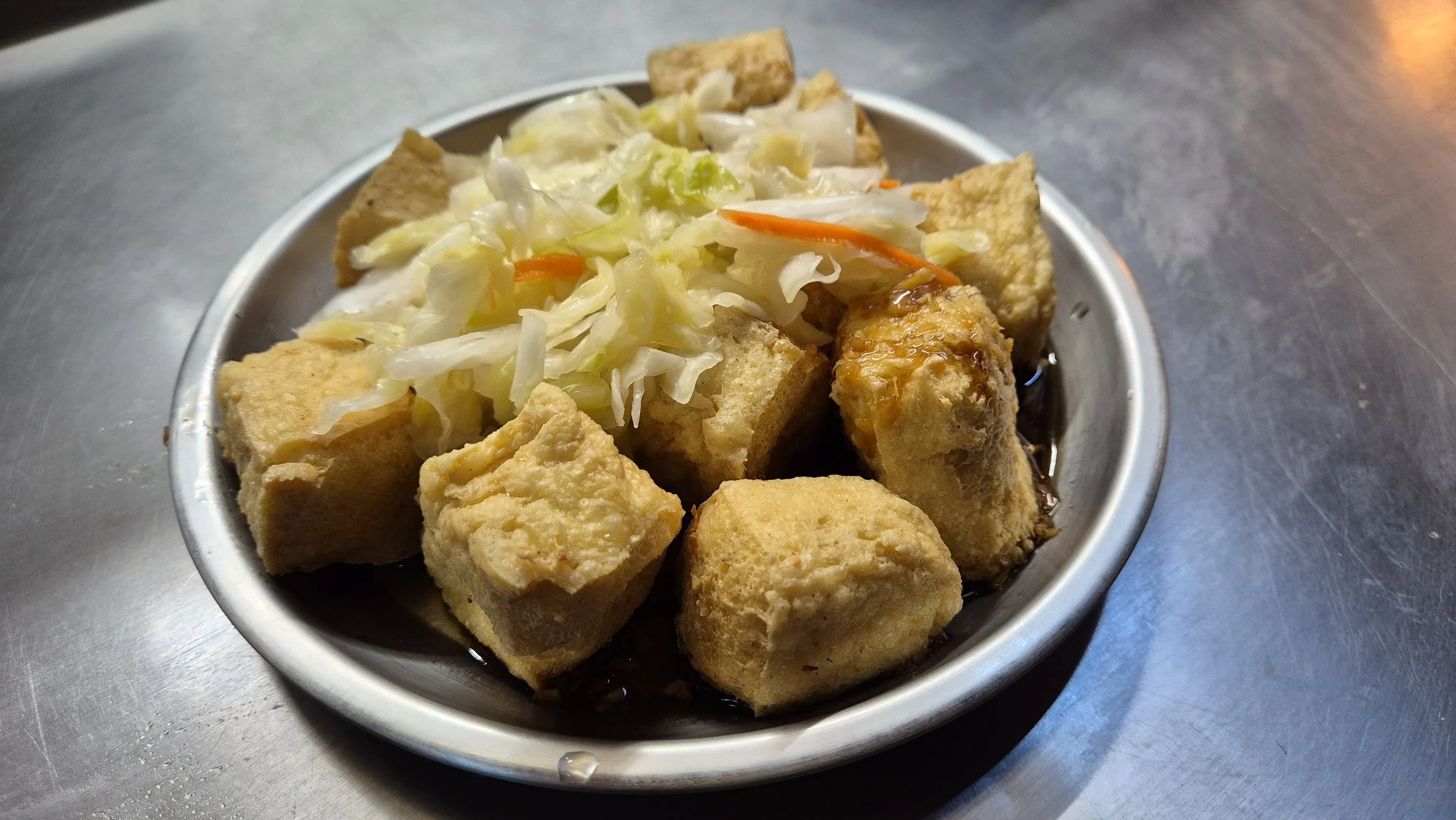
When travelling through Taiwan, you’ll know where the stinky tofu vendors are well before you see them. I would describe the pungent stench as a mix between blue cheese and bins that have been sitting in the sun for too long. And I know what you’re thinking: VILE! But the most common way to prepare stinky tofu is to deep-fry it. And by deep-frying the tofu, the smell largely dies away. Seasoned and served alongside pickled cabbage to balance out the richness, you’ll likely forget that this was even stinky in the first place.
But why does it stink?! Because of the fermentation process. The traditional ferment starts with an animal-based lactic acid; nowadays, you can find plenty of vendors who use a vegetarian/vegan-friendly ferment. Fermentation gives tofu a richer, savoury, umami flavour and a thicker texture.
Every single night market in Taiwan will have at least one vendor selling stinky tofu; it’s a favourite amongst the locals! Some of our favourite night markets are Nanjichang in Taipei and Ruifeng in Kaohsiung.
Sesame Noodles in Taiwan
Shared by Lizzie from Anxious and Travelling
Taiwan’s cuisine is a unique blend of indigenous, Japanese, European and several different Chinese influences, making an evening or two spent sampling street food in its night markets a must-try part of any visit.
While you might eventually tire of eating grilled corn, scallion pancakes or fried sweet potato balls, we never tired of eating the many types of sesame noodles on offer.
From warm, earthy Ma Jiang Mian to creamy Tan Tan Men, brought to Taiwan during the Japanese colonial period, you could easily eat a version of sesame noodles three or four nights in a row and have a totally different dish each time.
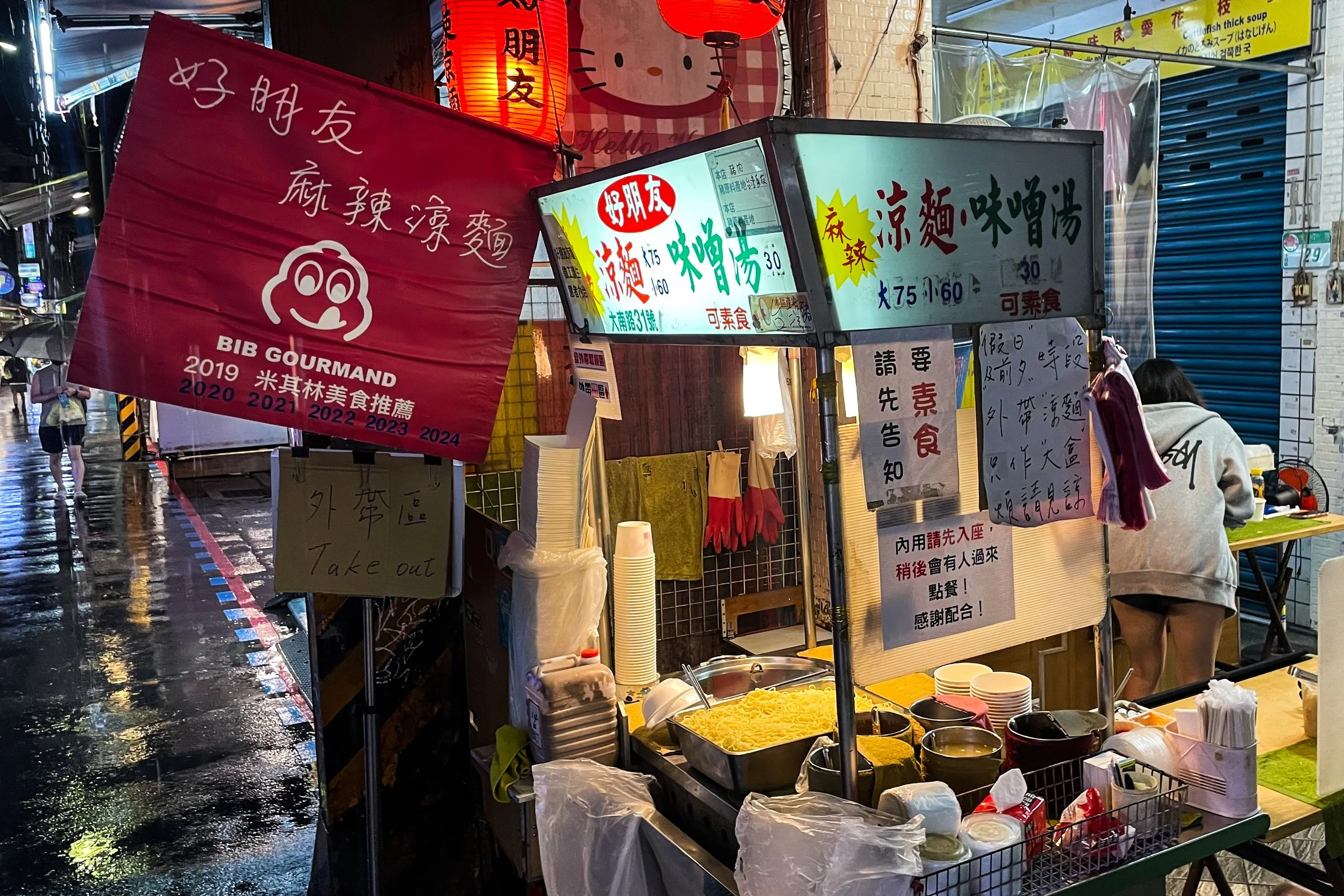
By some distance, though, our favourite sesame noodles in Taiwan are found at Good Friend Cold Noodles in Shilin Night Market, Taipei.
You might read guides that say Ma Jiang Liang Mian, the name for cold noodles, is the same as Ma Jiang Mian, except for the temperature. And in many places, the reviews would be right.
But Good Friend Cold Noodles takes the hearty sesame flavour and elevates it to another level, with a gentle lemon note and fresh vegetables cutting through the savoury sesame, before a sharp hit of chilli leaves you itching for another bite. For only 60 NT$ (around £1.40) per portion, and with a choice of a vegetarian or non-vegetarian option, there’s no reason not to.
On a hot day, these light but flavour-packed noodles [GU1] are the perfect refreshment.
A Michelin Bib-Gourmand recommendation for the past six years, you might find a little bit of a queue at peak times. But trust us, it’s well worth the wait.
Best Dishes in Southeast Asia
Southeast Asia is arguably the most exciting food region on earth. Across eleven countries, you'll find cuisines shaped by trade routes, colonial histories, river systems, and an extraordinary abundance of herbs, spices, and fresh produce. The food here is rarely subtle — it's bold, aromatic, and built on the balance of sour, sweet, salty, and heat. From the street food stalls of Hanoi and the hawker centres of Penang to the night markets of Chiang Mai and the riverside cafes of Phnom Penh, eating your way through Southeast Asia is one of travel's great pleasures.
Best Dishes in Cambodia
Fish Amok in Cambodia
Shared by Annmarie at The Northbound Archives
Fish Amok is arguably Cambodia’s most unique and famous Khmer dish, making it a must-try if you visit the country. This traditional fish curry features a light, mousse-like texture reminiscent of custard or a soufflé.
The curry's flavour profile is aromatic and fragrant, with a coconut cream base. It’s not spicy. Instead, it has delicate citrusy notes coming from lemongrass, galangal and lime, plus more earthy flavours from turmeric root, garlic and shallots, which add depth. If you’re a fan of Thai curries, you’ll most likely enjoy fish amok too! It’s also great for people like me who don’t have a high spice tolerance.
The fish used in this dish is usually a freshwater species, often a more meaty one. It’s steamed with all the other ingredients in a banana leaf and served like that, too. Since the fish is cooked with the herbs, the curry doesn’t have a strong fishy flavour.
This popular dish was served to royalty during the Khmer empire in the 9th century, but these days you’ll find it on the menu of most Cambodian restaurants catering to tourists. I recommend ordering a side of rice with it and a fresh coconut to drink.
When I was in Cambodia, I tried fish amok at a Le Prestige cafe in Phnom Penh, which is very close to the riverside promenade. I had a good experience there and recommend it!
Best Dishes in Indonesia
Gudeg from Yogyakarta in Indonesia
Shared by Yulli from Mid Size Woman
Indonesia is known for its wide variety of food. Every region has its own traditional dish, and that is what makes Indonesian cuisine special. From spicy food to sweet dishes, each city has its own character. I used to live in Yogyakarta, and for me, food is one of the strongest memories of that city.
When people talk about Yogyakarta, they often mention Borobudur Temple or Prambanan Temple. They are just two of the many unique sights in Yogyakarta.
But if you have lived there, you will know that Yogyakarta also has a very famous traditional dish called Gudeg. Gudeg is considered the original dish of Yogyakarta, and you will see it almost everywhere in the city.
What surprised me the most when I lived in Yogyakarta was that Gudeg is often eaten for breakfast. Early in the morning, you can already find Gudeg stalls open, with locals lining up before starting their day.
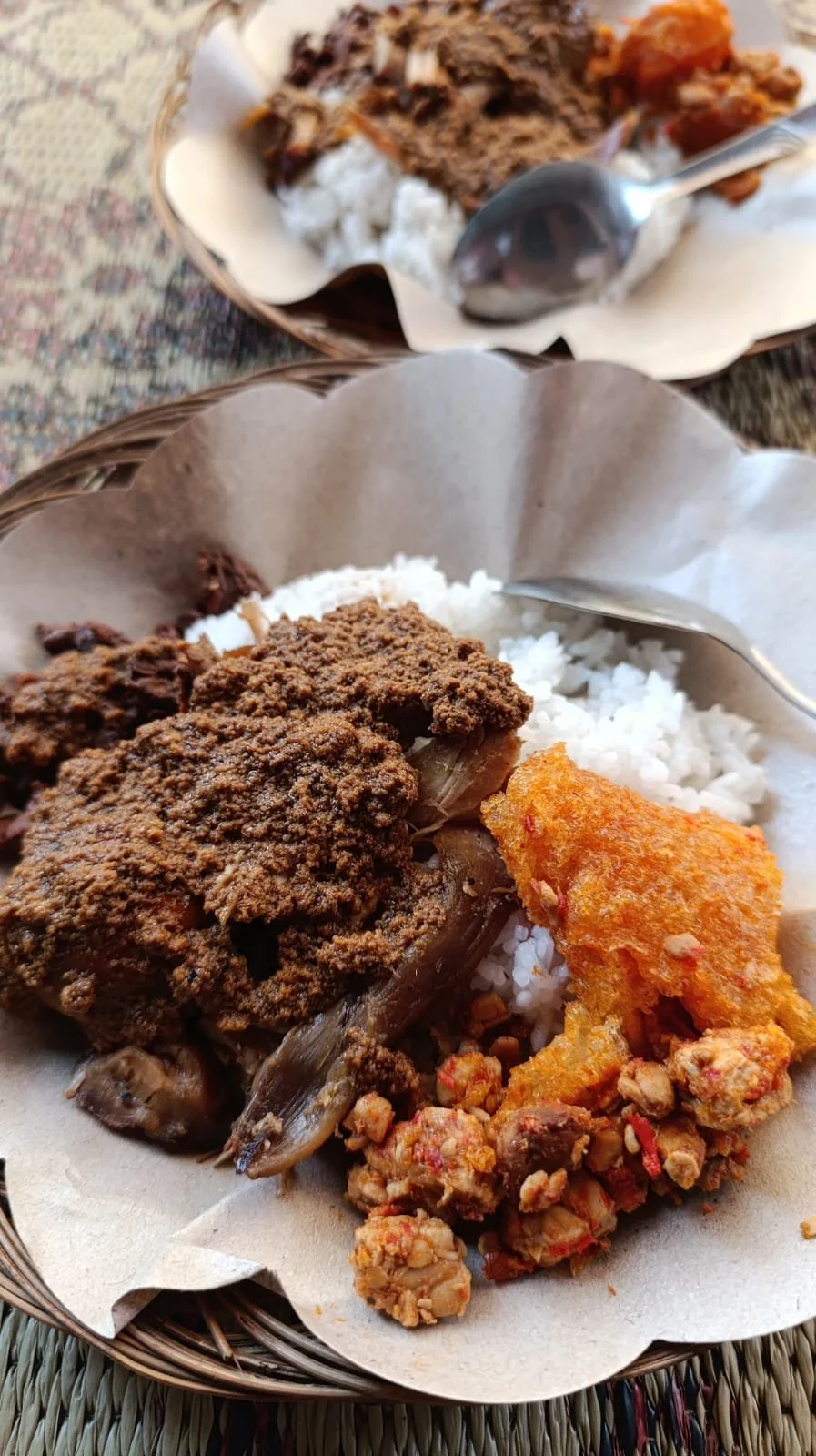
Gudeg is made from young jackfruit cooked slowly for many hours with coconut milk, palm sugar, and local spices. This long process gives Gudeg its dark brown colour and very soft texture. A full plate of Gudeg is usually served with rice, chicken cooked in coconut milk, boiled egg, tofu, tempeh, spicy sambal, and krecek, a spicy cow-skin dish that balances the sweetness.
Gudeg has a dominant sweet taste, yet it remains rich in other flavours. It is sweet, savoury, and a bit spicy all at once. The cooking process takes many hours. Yes, just like rendang, but they are completely different dishes. For me, Gudeg feels like Yogyakarta itself: warm, calm, and unforgettable.
Best Dishes in Laos
Laap in Laos
Shared by Lizet Wesselman from A Wanderfood World
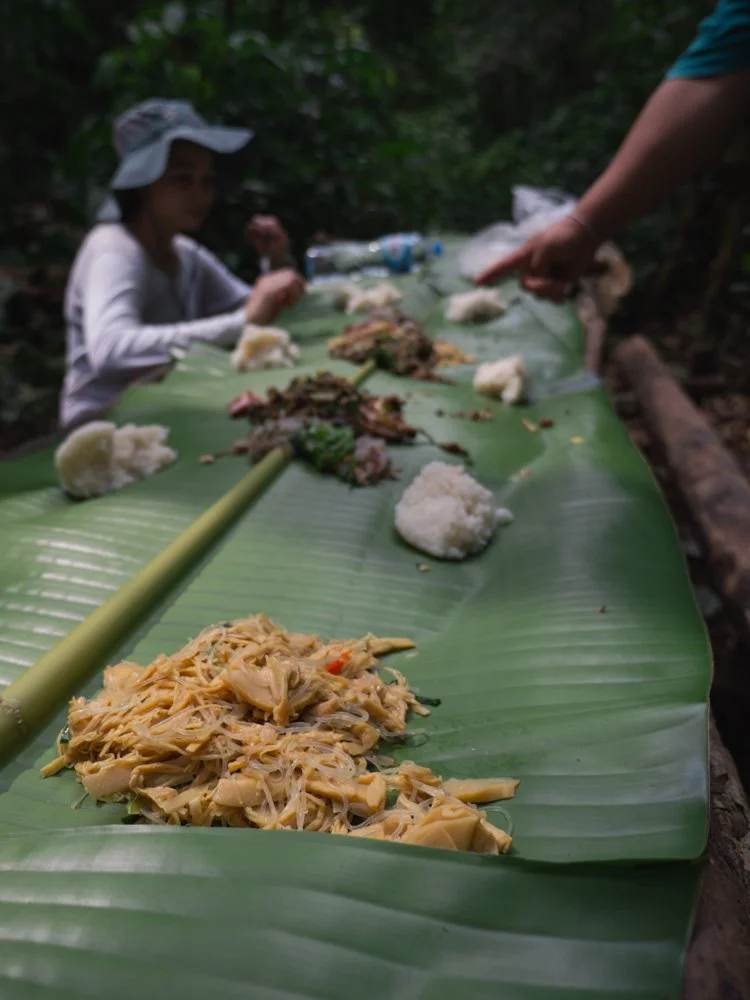
The national dish of Laos suits everyone. It comes in many different forms, both vegetarian and with meat or fish. It's called Laap and is a refreshing, but filling salad dish. Before you think, "I didn't come all the way to Laos to eat a salad", I'll reassure you, it's nothing like that salad you have in mind. They cut meat or vegetables into tiny pieces and mix them with thin, chopped noodles. They cool it until it's really chilled enough to be called a salad, and then it's ready to eat. Lao people eat many of their meals with sticky rice as their cutlery. So grab some sticky rice, mould it into a flat piece, and use it to pick up the Laap.
The local special would be one with fish from the Mekong River, or one with water buffalo, the animal you will come across daily in Laos. If it feels wrong for you to eat an animal you regularly run into, you can choose one of the vegetarian options as well, like Laap with bamboo. The spiciness level depends on who makes it and which one you choose. Heavy meat ones are generally a bit spicier than veggie ones. Pro tip: Buy small portions of Laap at the morning market so you can try a few different versions at once during a picnic.
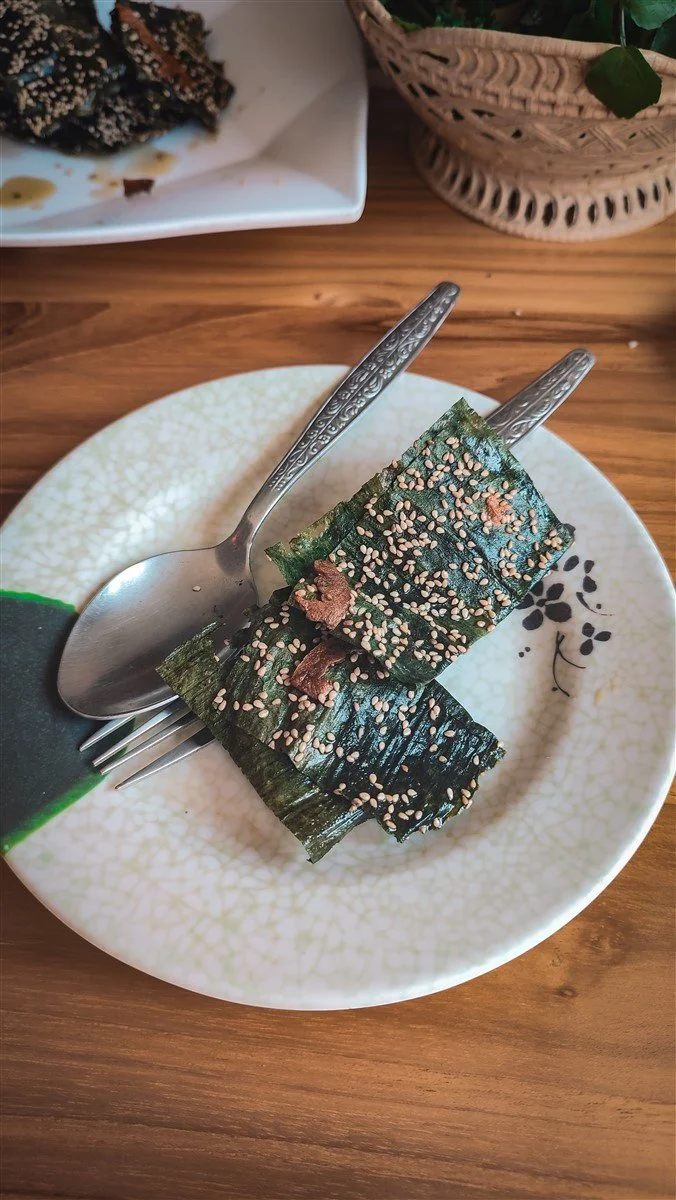
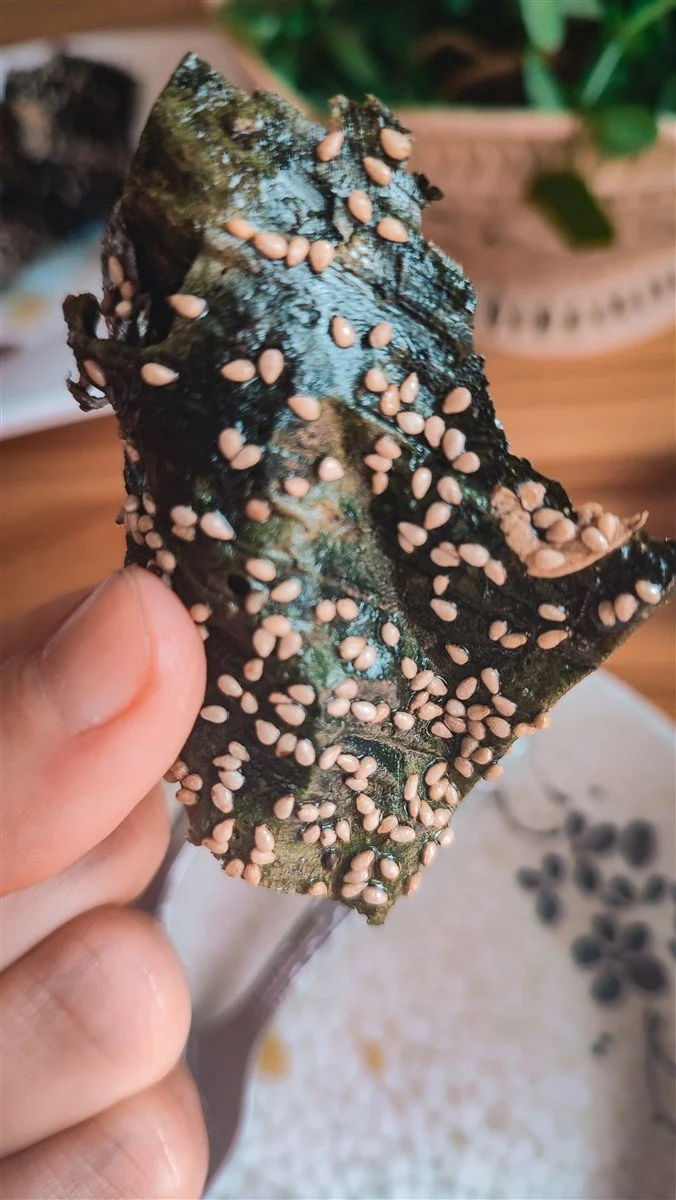
Mekong Seaweed Crackers from Luang Prabang in Laos
Shared by Annelies from Travelers & Dreamers
If you are travelling to Laos (or another Southeast Asian country that the Mekong runs through), then you can't miss out on trying Mekong seaweed crackers. Mekong seaweed crackers are a popular crispy snack in Laos, Thailand, Cambodia, and Vietnam, but I found them especially abundant in Luang Prabang, Laos.
The seaweed is harvested from the Mekong, spread into thin sheets, and dried in the sun until papery. It's then topped with garlic, chilli flakes, and sesame seeds before being fried to achieve a satisfying crunch.
The seaweed used in Mekong seaweed crackers is (logically!) sourced from the Mekong River. Seaweed is known for its natural umami flavour and is a good source of nutrients such as iodine and iron. Furthermore, it's an excellent snack for vegans travelling through Laos, as it contains B12 and Omega-3 fatty acids.
You can find Mekong Seaweed Crackers at many local restaurants in and around Luang Prabang, and they are mostly served as an appetiser, comparable to what potato chips are in Western countries. However, my favourite place to try them was Phonheuang Cafe. This small Laotian restaurant is located on a quiet corner of Kounxoua Road and serves, aside from Mekong Seaweed crackers, terrific Bo bun, curries, and spring rolls at competitive prices!
Laab Spicy Pork Salad in Laos
Shared by Allen from Live Less Ordinary
Most travellers arrive in Laos overland from Thailand or Vietnam, and the food reflects those strong regional ties. Lao cuisine blends elements of Northern Thai (Lanna), Isaan and Vietnamese cooking, with the occasional nod to the old colonial influences of France. While many dishes will feel familiar if you’re coming from either side of the border, there’s still plenty to look forward to, especially the local staple of Laab. While also well known from Thailand’s Isaan region, this fiery minced pork salad originated in Laos and is considered the National Dish of Laos. The most common version uses minced pork that’s lightly cooked, then tossed with shallots, fresh coriander, mint and plenty of chillies. The flavour is simple but perfectly balanced with the saltiness from fish sauce and the zesty sourness of lime. There are also regional variations, and in some places you may find laab made with raw meat, though I’d personally avoid it. Like most Lao dishes, Laab is commonly served with fresh herbs and veg as well as sticky rice (khao niao) for soaking up the juices of the fiery pork salad. Perfected with a cold Beerlao and sunsets on the Mekhong River.
Best Dishes in Malaysia
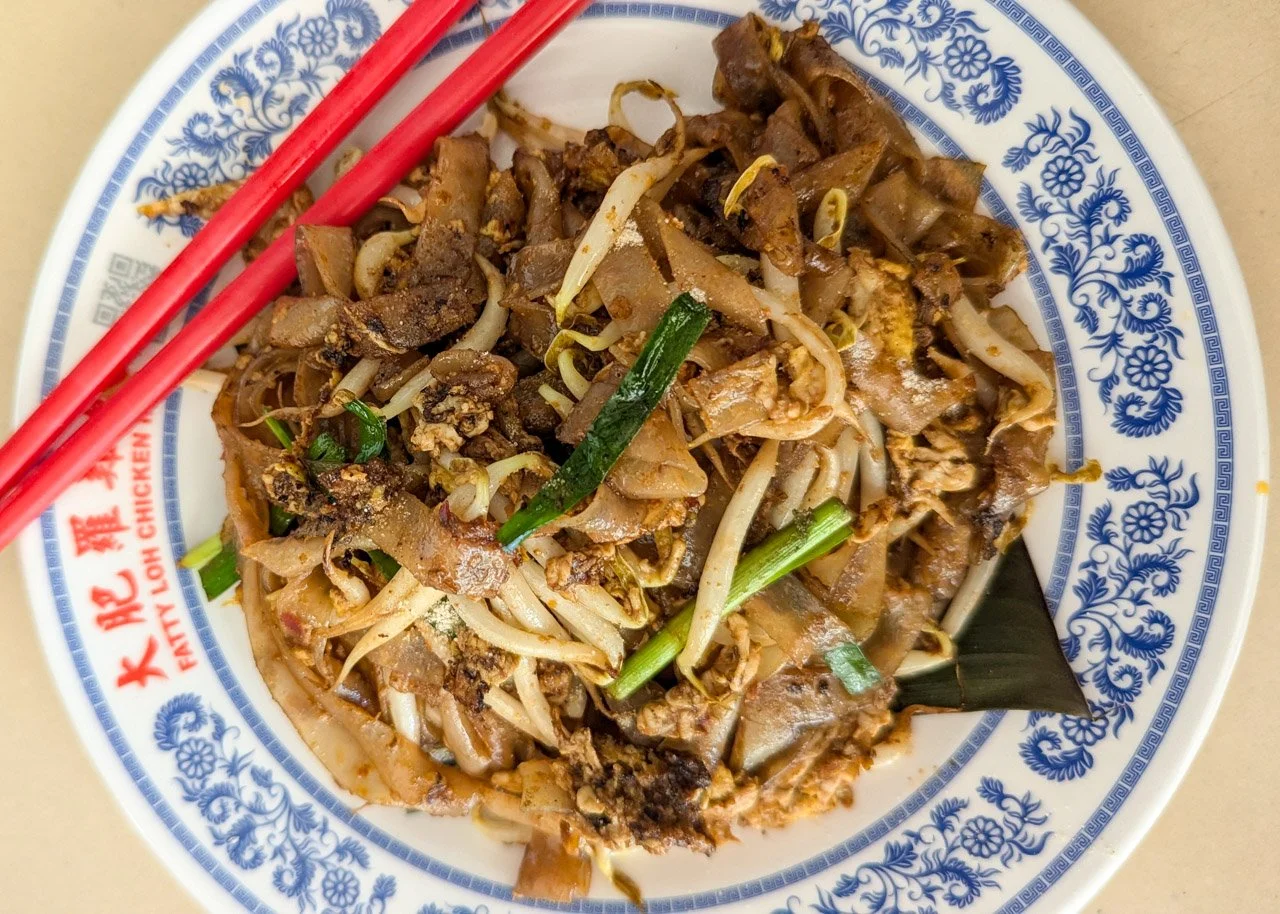
Char kuey teow from Penang in Malaysia
Shared by Jenny from On Penang
If you needed to describe Penang's personality in one dish, you'd surely choose Char Kway Teow. Spicy, exotic, created from contrasting influences, and utterly unforgettable, this seemingly simple meal is enjoyed and revered by locals and visitors alike, making it one of the best dishes to try in Penang.
Its most noticeable feature is the smoky taste, created by cooking the flat rice noodles over an extremely high heat in a charred wok. The simple preparation and cooking methods have long made it a popular meal for street vendors and hawkers to serve, and it's also found in the many food courts around the heritage streets of George Town.
As with all the best regional dishes, Penang has taken the original recipe and added its own flavours and ingredients, creating one of the island's signature dishes. Slightly sweeter than the versions you might find in other parts of Malaysia and Southeast Asia, each kitchen adds its own unique twist, passed down through the generations, but they all typically share the most common ingredients: flat rice noodles, soy sauce, garlic, and chilli paste.
Although Char Kway Teow can be enjoyed on fine china at one of the city's best restaurants, for us, the perfect version of the dish is from a hawker stall, served on a paper plate on a plastic table, savouring the flavours and enjoying a meal that captures something of what makes the island so special.
Nasi Lemak in Malaysia
Shared by Jill from Jillonjourney.com
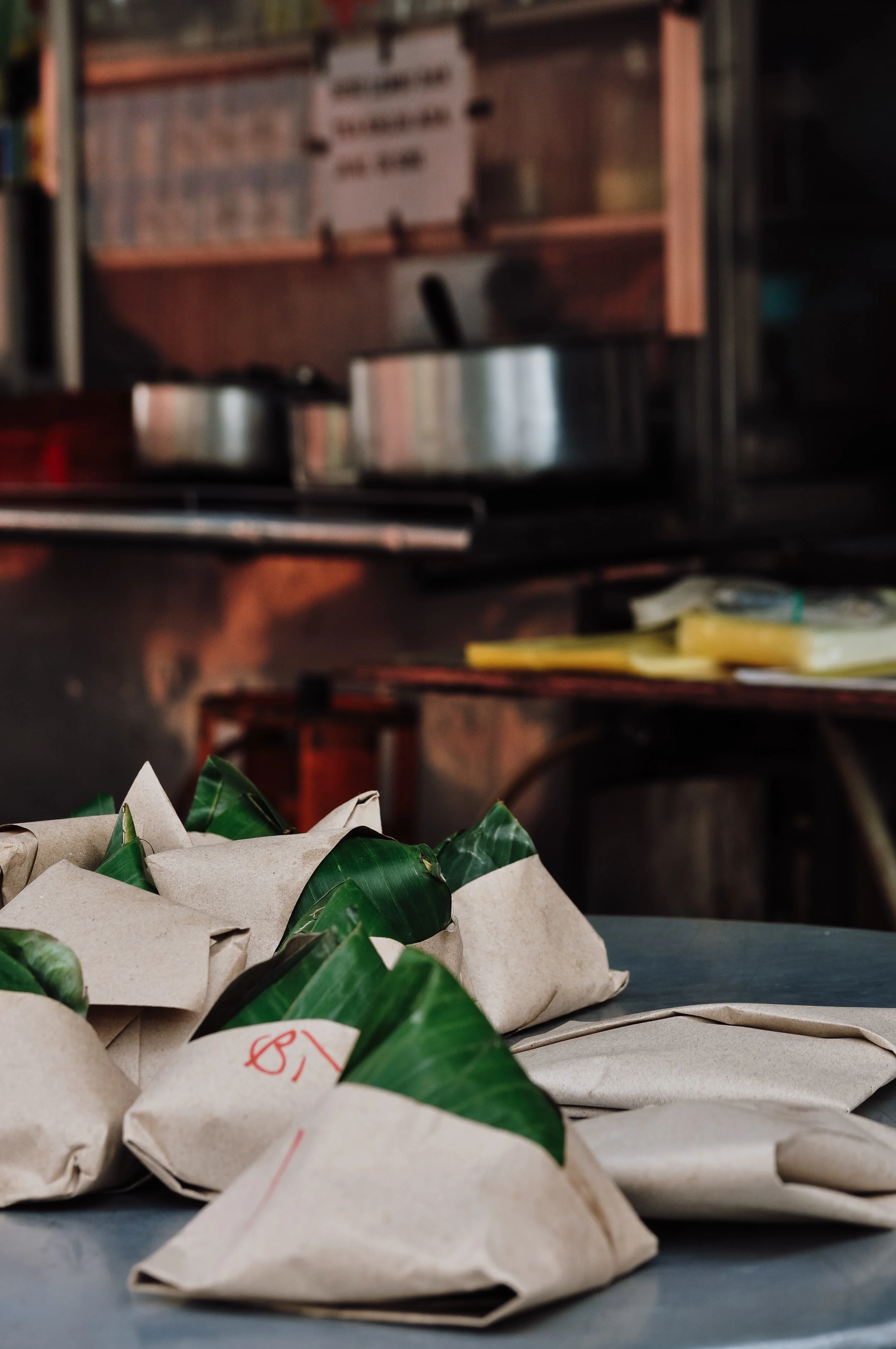
Having roots in Malaysia, I grew up with the smell of fried Sambal in my nose, and Nasi Lemak has been one of my favourite dishes ever since.
It’s the simplicity that makes it one of Malaysia’s national dishes, and it’s usually eaten for breakfast – but honestly, you can eat it any time of the day.
Nasi Lemak consists of rice, sambal (chilli paste) and a variety of sides. The classic version comes with peanuts, crunchy Ikan Bilis (anchovies) and half a boiled egg. But you can also find versions with chicken (Ayam) or vegetarian options.
The rice is cooked in coconut milk, giving it a creamy flavour. And the home-made sambal and fried sides are the perfect addition.
Although it’s a rather simple dish, it’s a Malaysian classic that you have to try on your Malaysia itinerary. You can find it almost everywhere. Just look out for the little pyramid-shaped packages of banana leaves that you can buy for as little as 5 Malaysian Ringgit at many street food stalls.
I have never been disappointed by a portion of Nasi Lemak – neither in a street food stall, nor in a restaurant. But if you ever get the chance to try homemade Nasi Lemak, e.g. during a homestay in Malaysia, I’m sure this is where you’ll truly fall in love with the dish.
Best Dishes in Myanmar
Mohinga in Myanmar
Shared by Aanika from Kaleidoscopic Footprints
The first time I had mohinga was at home on a cold winter day. It was home-cooked by my parents’ colleague, who identifies as ethnically Zomi, and it was both hearty and deeply satisfying without feeling heavy. Later, when I learned that mohinga is considered Myanmar’s national dish, it immediately made sense. In Myanmar, mohinga is eaten for breakfast, sold at roadside stalls and small tea shops, and prepared in homes across the country.
I already had a soft spot for Burmese food, especially Shan noodles (sometimes described as the Bolognese of Burma for their tomato-based meat sauce) and lahpet thoke, the iconic tea leaf salad, but mohinga felt different. It was quieter, more grounding.
The texture was soft throughout, and the spice level remained mild despite the presence of chilli flakes. The turmeric-coloured, fish-based broth clung gently to thin rice noodles, creating a rich yet balanced base. Slices of boiled egg melted slightly into the warm soup, adding both substance and creaminess.
I opted to leave out some traditional garnishes, like raw, sliced onions and fresh herbs like cilantro, but when ordering mohinga in Myanmar, these are often offered on the side so diners can adjust the bowl to their taste. A few squeezes of lime, in my case, added a bright, tangy lift.
What truly completed the bowl were the pe-kyaw, the split chickpea fritters typically served alongside mohinga, which were light, slightly crunchy, and subtly nutty.
Light, slightly crunchy, and subtly nutty, they were irresistible. Dipped into the broth or crumbled directly into the noodles, they added contrast and texture, making each bite more engaging. I could have eaten an entire bag of them on their own.
It’s the kind of dish that makes sense after a long morning of walking or on a cool, rainy day: simple, filling, and deeply rooted in everyday life.
Best Dishes in the Philippines
Chicken Adobo in the Philippines
Shared by Matt from Matt's Next Steps
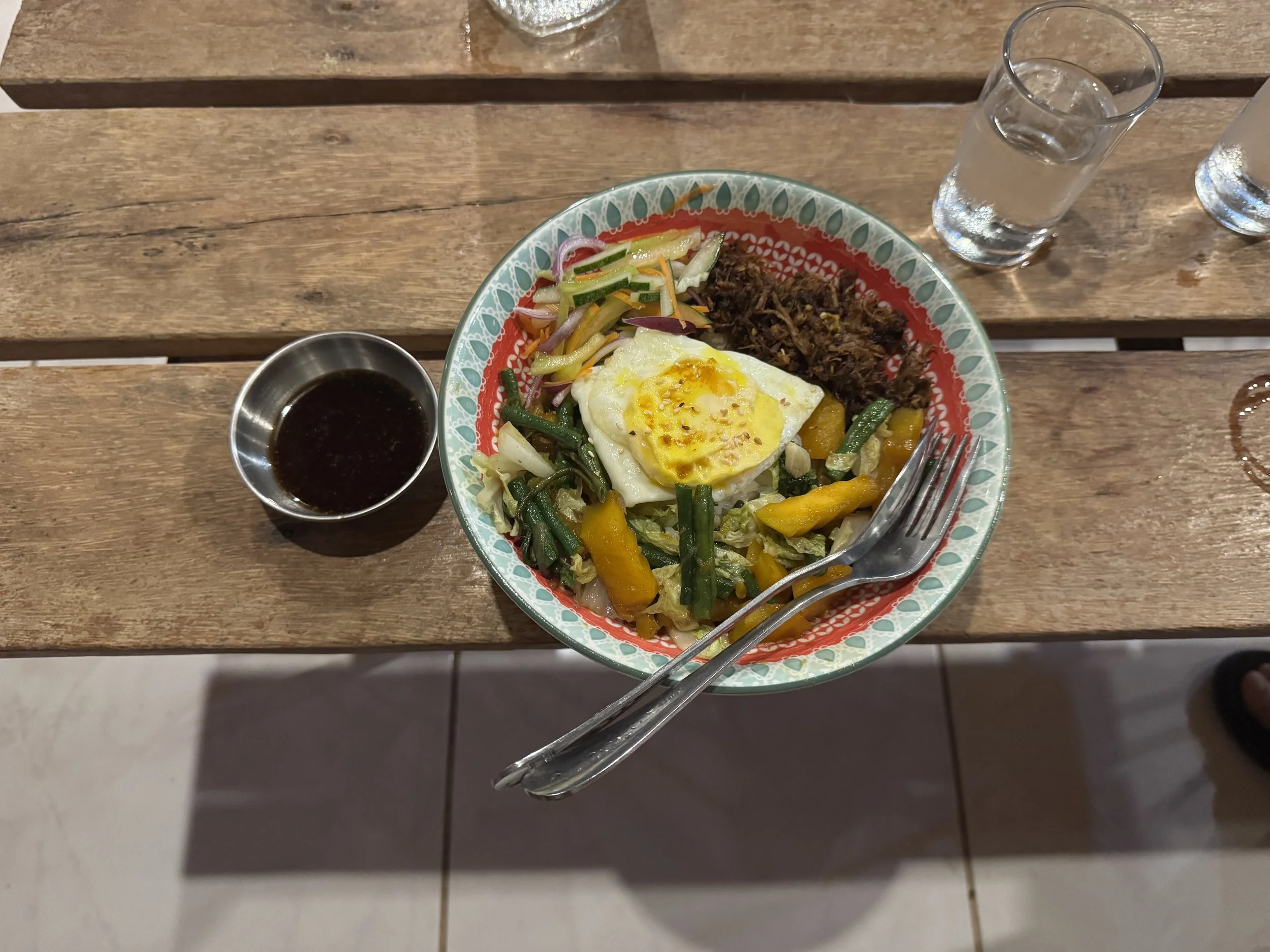
If there’s one dish that truly defines Filipino cuisine, it’s chicken adobo (their national dish). Found everywhere from flashy restaurants to roadside stalls to family kitchens all across the country, adobo is less about a fixed recipe and more about tradition. Simplified, the dish is made with chicken gently simmered in soy sauce, vinegar, garlic, bay leaves, and black peppercorns (plus any other ingredients) until tender, creating a rich, tangy sauce. Usually it's served with plain rice, but it can vary.
What makes chicken adobo so special is its balance. The vinegar cuts through the saltiness of the soy sauce, the garlic adds depth, and the slow cooking allows the flavours to soak deep into the meat. Honestly, the first time I tried adobo, it reminded me of a slow-cooked casserole crossed with teriyaki chicken! Some versions are brothy and spooned generously over rice, while others are cooked down until the chicken is slightly caramelised and almost sticky. Having travelled around the Philippines from Manila to El Nido and, more recently, Siargao, I've begun to notice regional twists, from coconut milk–based adobo in the south to recipes with extra garlic or a touch of sugar for sweetness. I also think this means you can't go too wrong when making it yourself!
You’ll find great adobo almost anywhere in the Philippines, so there's no particular region that shines brightest. However, my one tip is that the best adobo is rarely found on a menu. Instead, the magic lies within family recipes! So always get involved with the local people (they're amazingly friendly), and you might end up getting an invite to try the best adobo of your life!
Best Dishes in Singapore
Kueh Pie Tee in Singapore
Shared by Petra Udomprasert from Polyglot Petra
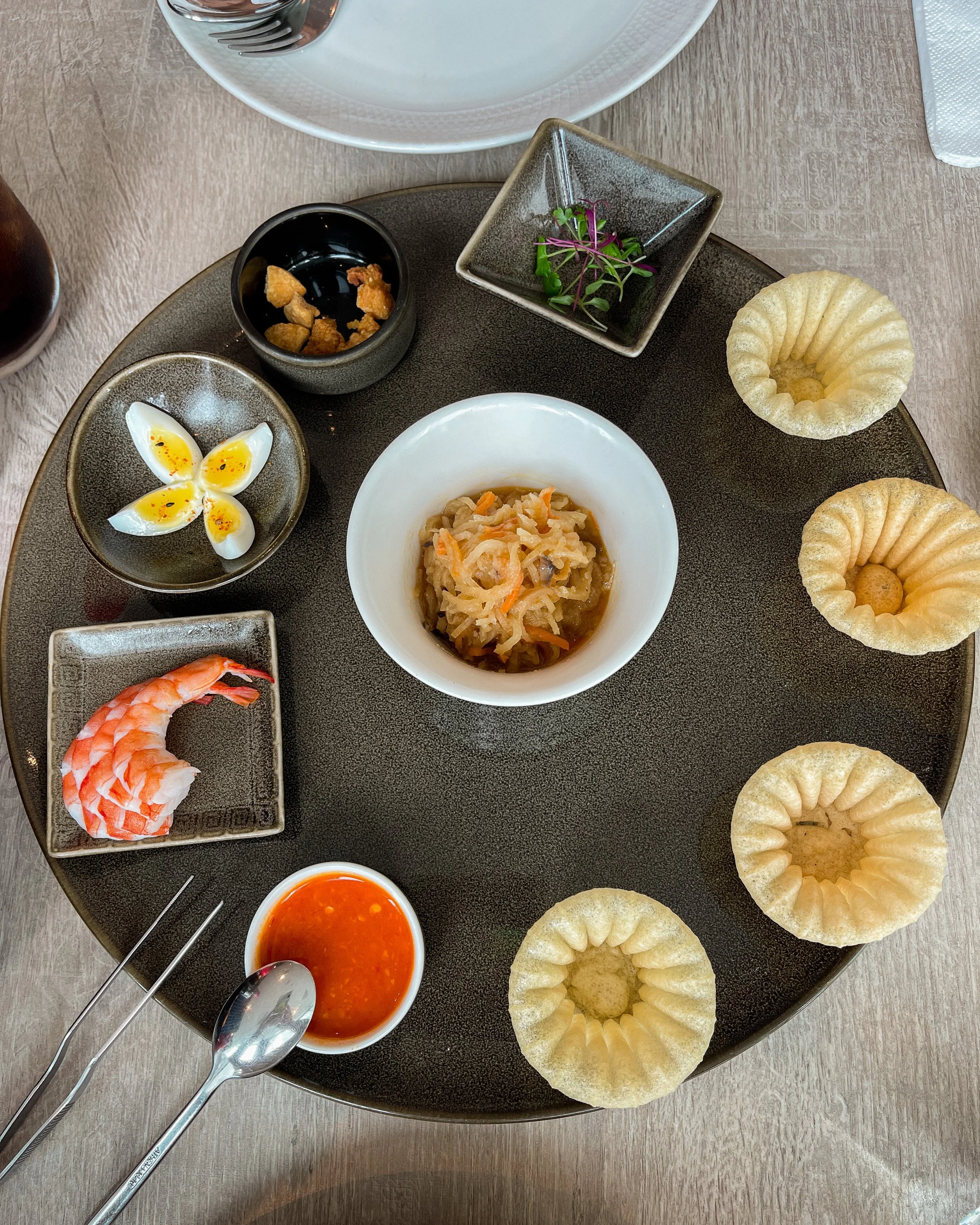
Among the diverse dishes of the Singaporean food scene, Kueh Pie Tee seems the most underrated, and also the most ambiguous. Nobody really knows where it came from, but there are several versions of its history that, when put together, make sense.
To understand its origin, we first need to talk about the word Peranakan. Derived from the Malay word “anak,” which means “offspring,” Peranakans refer to descendants of Chinese immigrants, or the “Straits-born” Chinese, sometimes a hybrid of Chinese and Malay.
Since they are served in Peranakan hawker stalls and restaurants, most people think Kueh Pie Tee is a Peranakan invention. However, historians suggest that these snacks were a British influence on Peranakan culture, mirroring the tea snacks served at celebrations.
The shells are made of deep-fried batter, mixed with carbonated water to make them crispier. Fillings are usually jicamas or carrots. I’ve seen versions that add shrimp and other vegetables as well. They’re extra delicious with a good chilli sauce.
While you can get these at most hawker stalls, I recommend trying a DIY, fancier version at Bonding Kitchen on Orchard Street.
Laksa in Singapore
Shared by Aanika from Kaleidoscopic Footprints
One of my favourite noodle soup dishes is laksa, which was love at first taste. Bold? Bursting with flavour? Creamy? Sign me up!
The broth is typically made with coconut milk or a sour fish base combined with chilli paste. It certainly helps that I am a huge fan of using galangal and lemongrass in just about everything, which gives laksa its unmistakable aromatic depth.
Laksa is a Peranakan noodle soup from the Malay Archipelago, with famous regional versions such as Singapore’s Katong laksa and Malaysia’s Penang asam laksa. Katong laksa features a rich coconut milk broth with chilli paste and is usually served with cut noodles, making it easy to eat with just a spoon. Penang asam laksa leans more toward the sour and spicy side and is fish-based, with tamarind giving it a sharp and refreshing edge.
Laksa is widely available at hawker centres, food courts, and neighbourhood kopitiams, making it an easy and affordable dish to sample while sightseeing. It’s filling enough to be a full meal, yet light enough to keep exploring afterwards.
When I’m not travelling, my go-to packaged version is Prima Taste Singapore Laksa La Mian. Among instant options, it comes closest to restaurant-style laksa in both flavour and texture, making it a good introduction if you’re new to the dish or a comforting reminder if you’ve already fallen in love with it.
Best Dishes in Thailand
Red Curry in Thailand
Shared by Sharon from The Roads Beyond
Thailand has so many delicious dishes (and definitely one of the best cuisines in the world!), but you can’t say you know Thai cuisine if you don’t know one of the country’s most iconic dishes: red curry.
Red curry is made with a super-concentrated red chilli paste. This is diluted with coconut milk, and that sauce can be served, for example, with vegetables or tofu. It’s usually accompanied by rice.
There are two styles of red curry: one with quite a lot of coconut milk (my favourite), creamy, served in a bowl, and another one more like a “stir-fry” that comes on a plate. But whichever one you order, remember to ask for it “not too spicy.” Yes, even if, like me, you love spicy food and can eat a lot of heat! If you eat it in a restaurant in a touristy area, there probably won’t be a problem, and even if it’s spicy, it’ll be manageable. But if you eat it somewhere less touristy, more remote, or more frequented by locals, and you don’t ask for “not too spicy,” it might be too much.
This dish is very popular, and you’ll find it in the vast majority of restaurants. On the other hand, a fun and unique thing to do in Chiang Mai or another big city like Bangkok is to take a local cooking class, and many of them will include it. If not, whether in a good restaurant or at a small food stall at a night market, you’ll almost certainly try a delicious one.
Khao Soi from Chiang Mai in Thailand
Shared by Katherine Novak from PricelessPassport.com
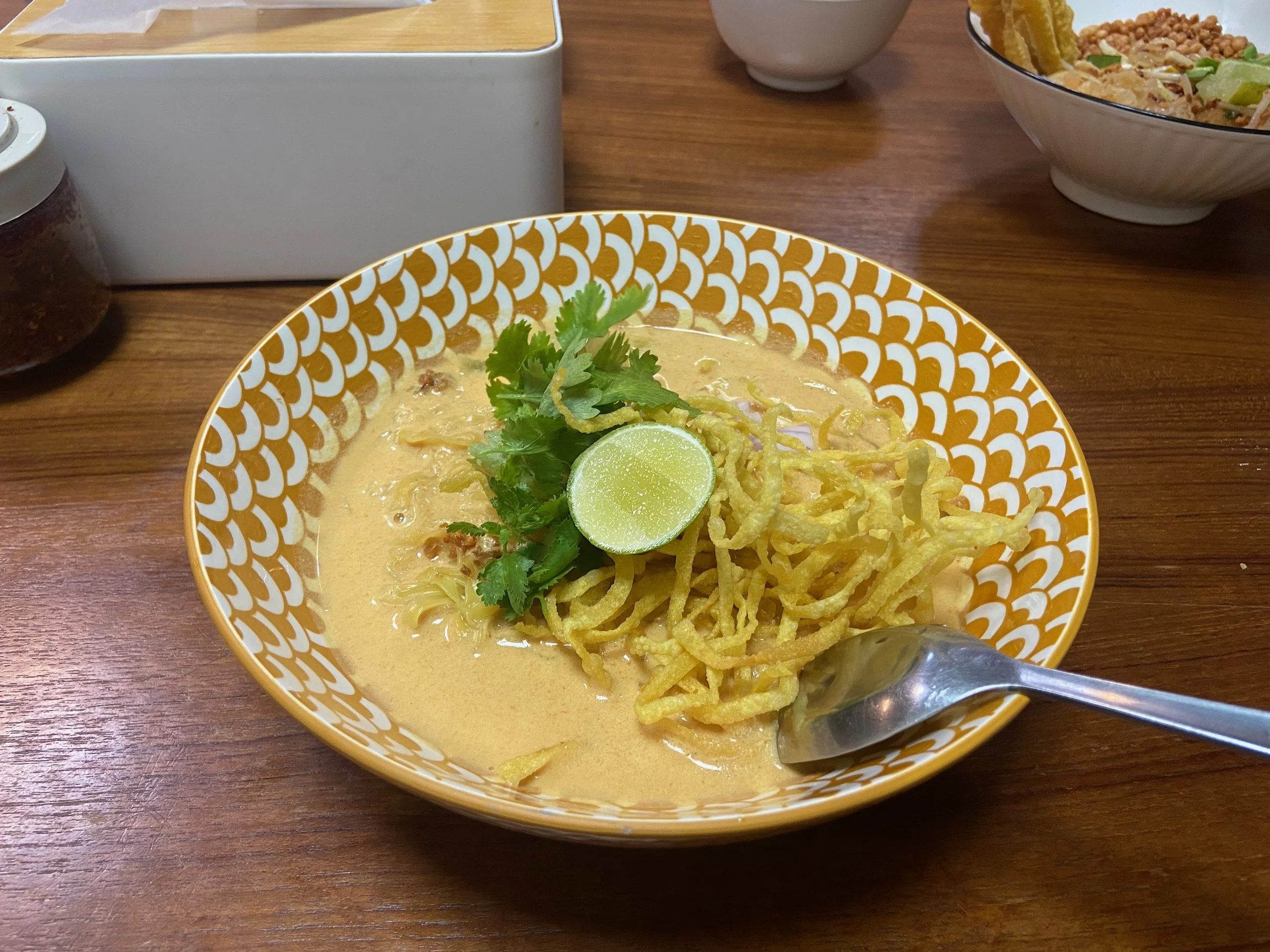
I admittedly think Pad Thai is overrated. Thailand’s true best dish, in my humble opinion, is khao soi. If you ever find yourself in Chiang Mai, Thailand, you have to give this famous Northern Thai speciality a try!
Khao Soi is a rich, creamy, spicy coconut-based curry soup with egg noodles and chicken. There are variations with other proteins as well, like pork or beef, but chicken is the most common. It packs a flavorful, hearty punch, perfect for a rainy evening or before a night of drinking.
You can find khao soi at many restaurants in Chiang Mai, but I love it at the Anusarn Night Market or the famous Sunday Market. There are so many clean, affordable markets in Thailand with stalls serving freshly prepared food that lend a more authentic feel to the experience of eating khao soi. Plus, it will only set you back roughly 70 Bhat, which is less than $2.50 USD!
The vendors are so kind and generous as well. Halfway through eating my bowl of khao soi, I went back to the stall at the Anusarn Night Market to add more lime and spice, and the vendor noticed I was low on broth and topped me off for free without me asking. Street food in Thailand is where it’s at!
If you are not a fan of Thai spice, you can always ask for “Mai Pet”, which means “No Spice”, or “Pet Nid Noi”, which means “Less Spicy”. If you’re feeling brave, the spice really does add to this mouth-watering dish.
Mango Sticky Rice in Thailand
Shared by Sophia Steiner from The Always Wanderer Travel Blog
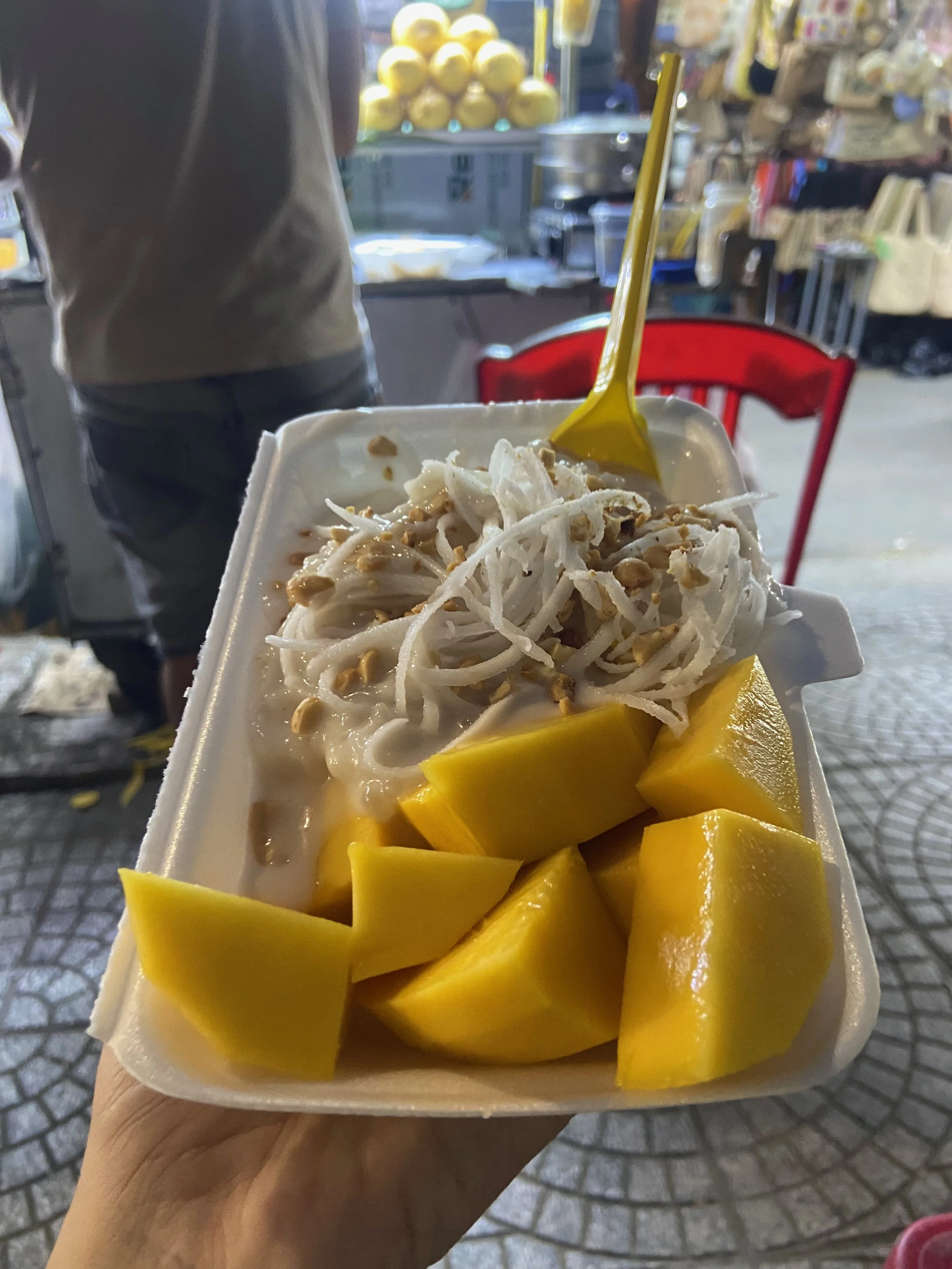
Mango sticky rice is, without doubt, the most famous dessert in Thailand. You’ll find it everywhere across the country, from street food stalls to restaurants, from Pai in Northern Thailand to Phuket in the south. It’s popular for a simple reason: it’s delicious, comforting, and loved by locals and visitors alike.
The dish, called khao niao mamuang, might be best eaten during Thailand’s mango season from March to June. During this time, mangoes are at their best, and mango sticky rice becomes a real seasonal highlight. I have been to Thailand both during mango season and off-season; however, mangoes were still widely available, and mango sticky rice was plentiful. I did not notice any difference in taste. It will be available regardless of when you choose to visit Thailand.
I believe the best mango sticky rice I’ve ever eaten was on the beautiful, authentic island of Koh Yao Noi.
The preparation is simple. The sticky rice is steamed, then mixed with warm, sweetened coconut milk. It’s served with half or a whole ripe mango, usually sliced on top or beside the rice. Then you get sweet coconut milk sauce on the side, which you can pour over the whole thing. On top, you usually find sprinkles of crunchy roasted mung beans.
I spent two months in Thailand and tried mango sticky rice everywhere. The taste doesn’t vary much by region. Sometimes the rice is dyed blue using butterfly pea flowers for colour, but it does not change the taste. It’s best eaten while the rice is still warm.
When visiting Thailand, mango sticky rice is a must-try dessert: it’s popular for a reason.
Tom Yum Kung in Thailand
Shared by Petra Udomprasert from Polyglot Petra
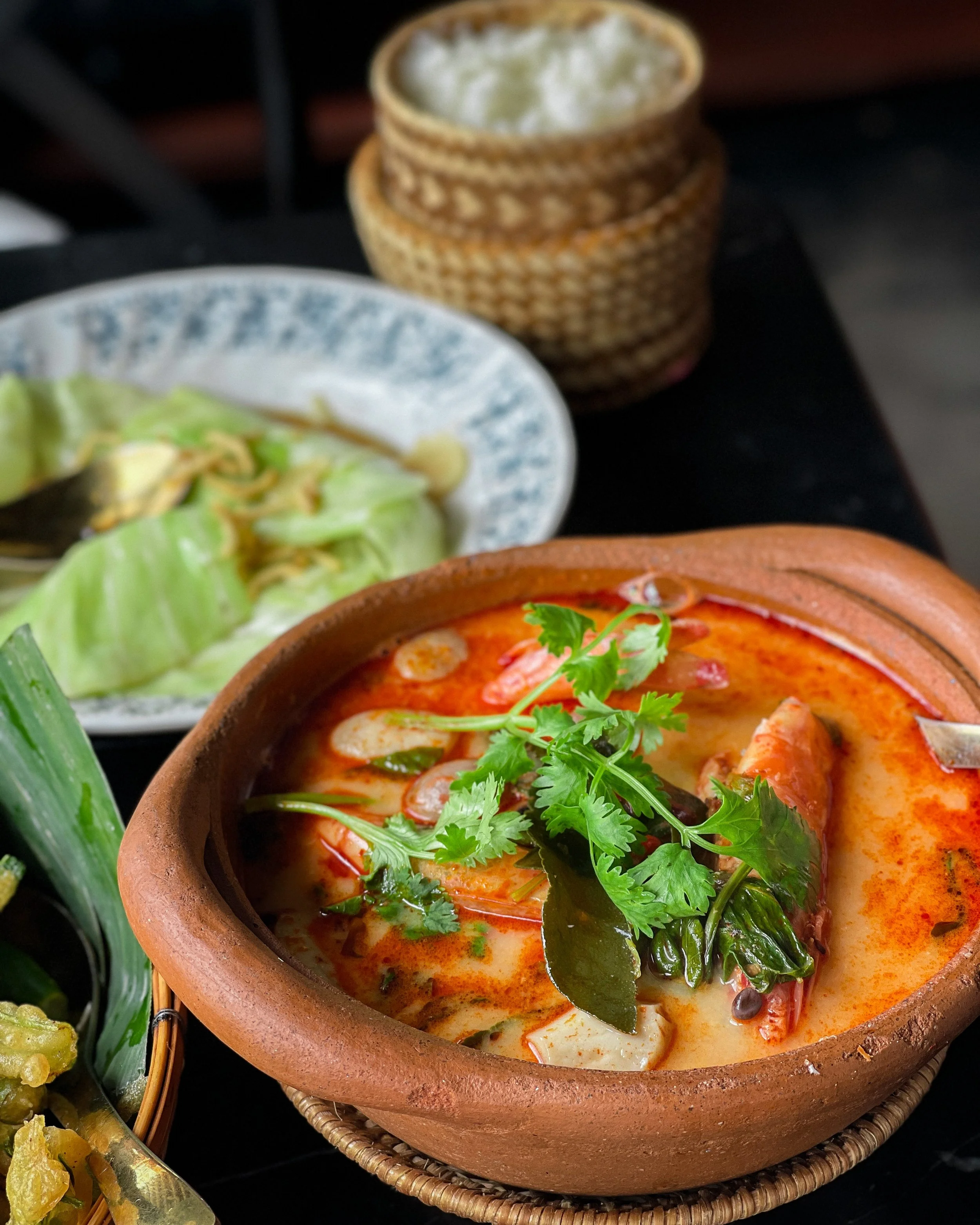
You can’t ever leave Thailand without trying this spicy shrimp soup. Why? It’s the Thai national dish, also recognised by UNESCO as an intangible cultural heritage! Forget the more famous Pad Thai, which, ironically, has a Chinese influence; Tom Yum Kung has all the flavours characteristic of true Thai cuisine, masterfully balancing salty, sour, and sweet, not to mention the added spiciness and herbal aromas.
The dish's name consists of two parts. Tom Yum refers to the Thai spicy herbal soup, usually made with lemongrass, kaffir lime leaves, galanga, chilis, tomatoes, shallots, and a generous portion of Thai chilli paste. Kung is simply the Thai word for “shrimp.” The use of river prawns in the dish reflects Thai culture, dating back to the 14th century, when citizens of Ayutthaya lived along the river and fished for a living.
The soup is usually cooked two different ways at most restaurants, with coconut milk (Nam Khon) or without (Nam Sai). The best restaurant to try this is called Savoey, which has multiple branches across Bangkok. I recommend the one at Tha Maharaj, near the Grand Palace.
Pad Thai in Thailand
Shared by Charlotte Russell from The Travel Psychologist
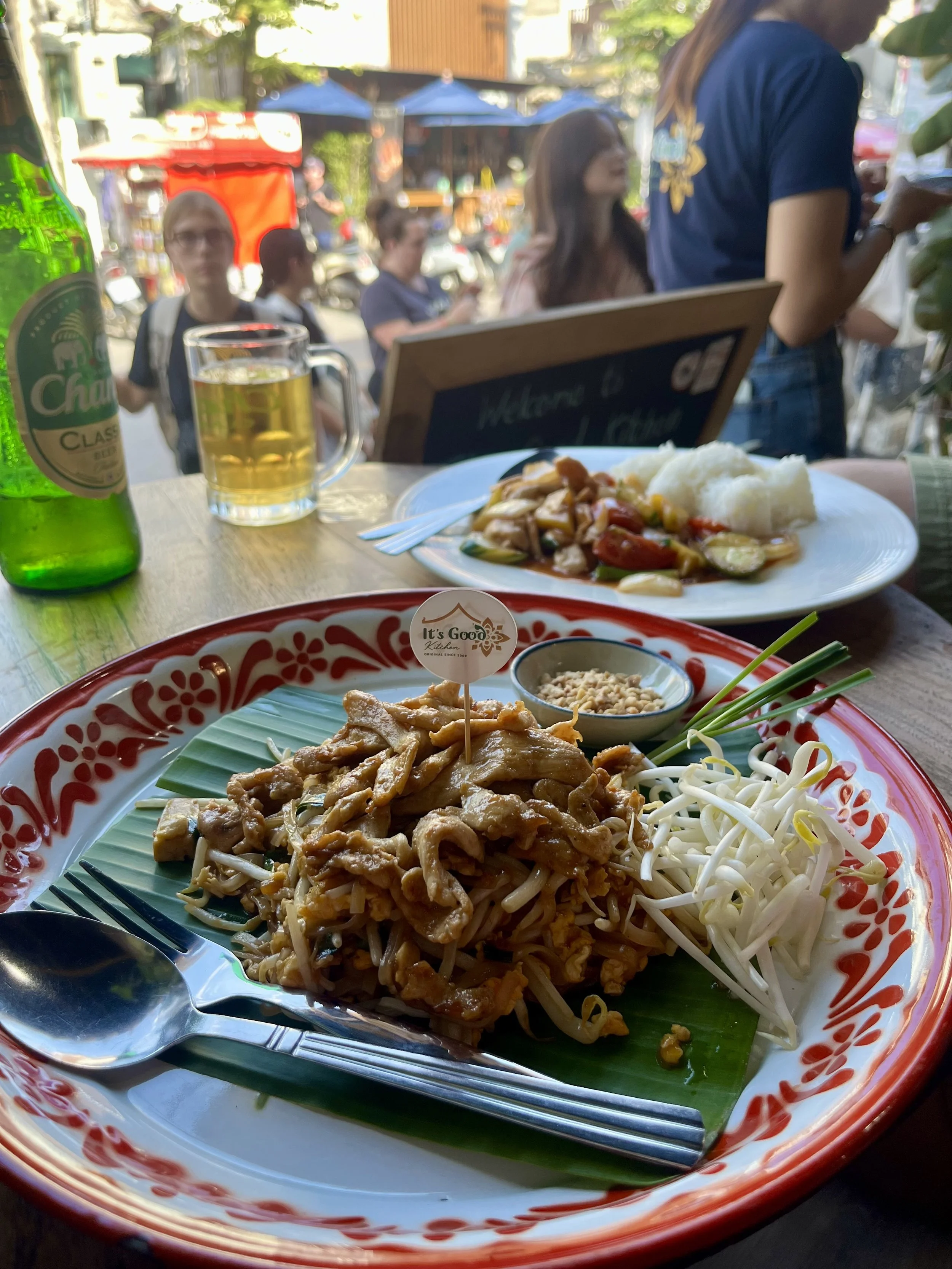
Pad Thai is widely regarded as Thailand’s unofficial national dish. You’ll find it everywhere in the country, because during the 1930s and 40s, the Thai government actively promoted the dish as a symbol of national identity and modernisation. It was cheap, nutritious, and used local ingredients, so it became a unifying dish during a period of economic hardship.
It’s a quick, vibrant noodle dish that’s cooked fresh in a hot wok and built around soft rice noodles, egg, and your choice of protein; usually chicken, prawns, or tofu. The flavour comes from a classic Thai balance of sweet tamarind, salty fish sauce, and a squeeze of lime for brightness. It’s finished with crunchy peanuts, fresh bean sprouts, and often a scattering of herbs, and sometimes dried chillies.
You’ll find small, unassuming restaurants serving this all over Thailand, complete with open fronts, plastic chairs, and, if you’d like, a cold local beer to accompany your dish. I ate a lot of Pad Thai on my recent 3-week itinerary in Southeast Asia, and my favourite was at It’s Good Kitchen inside the Old Town in Chiang Mai.
Khao Man Gai in Thailand
Shared by Doris from Doris Gone Diving
Khao Man Gai is one of those Thai dishes that looks simple at first glance, but once you’ve had it done well, you start craving it regularly. At its core, it’s poached chicken served over fragrant rice cooked in chicken broth with garlic and ginger, usually with a small bowl of soup and a punchy dipping sauce on the side: nothing fancy, no garnish overload, just honest, comforting food.
What makes Khao Man Gai special is its balance. The chicken is tender and mild, the rice is rich and aromatic thanks to the ginger, and the sauce brings everything together with saltiness, chilli, and a bit of tang. It’s filling without being heavy, which is why it’s such a popular everyday meal in Thailand.
Khao Man Gai is commonly eaten for lunch or as a quick, satisfying meal on busy days. You’ll find it everywhere from small street stalls to simple local restaurants, often run by vendors who focus on doing just this one dish really well. Some of my favourite food memories on the island revolve around simple Khao Man Gai lunches at small local spots, the kind of places you’d probably walk past if you didn’t know what to look for. I share a few of those places in my guide to restaurants on Koh Tao, where everyday Thai food plays a big role.
If you’re travelling through Thailand, Khao Man Gai is an absolute must-try. Skip the fancy versions and look for a place packed with locals. That’s usually where you’ll find it at its best.
Best Dishes in Vietnam
Bánh Xèo in Vietnam
Shared by Nofar Ronen from Travelling Outside the Box
One of the local dishes I most highly recommend trying when travelling in Vietnam is without a doubt Bánh Xèo - a crispy, colourful Vietnamese crepe full of flavour. I absolutely love Vietnamese food, and that is one of the main reasons I enjoyed travelling in Vietnam so much. The local cuisine is rich, diverse and full of wonderful aromas, but sometimes the soups and meat-heavy dishes felt a bit too heavy for me. That’s when I discovered the perfect dish - light, crispy and completely addictive.
The crepe is made from a batter of rice flour mixed with turmeric, which gives it its beautiful yellow colour, along with black pepper, salt, water and coconut cream. The batter is poured into a hot pan until it becomes thin and crispy, then filled with a delicious mixture of pork, shrimp, bean sprouts and spring onions. It is served hot alongside fresh lettuce leaves, aromatic herbs and a sweet-and-sour Vietnamese dipping sauce. You wrap everything together for the perfect bite.
I tried Bánh Xèo several times in Hanoi, but I truly became addicted to it in Hoi An, where I ate it almost regularly. One of the most fun experiences was joining a cooking class called Thuan Thun, where we learned how to make the dish ourselves. The class started with a visit to Hoi An’s local market to buy fresh ingredients, continued with a short boat ride through the green canals, and ended with a hands-on cooking session. The Bánh Xèo was the first dish we prepared and my personal favourite. At the end, we also received all the written recipes as a souvenir.
You can find this dish in many restaurants, but one place we especially loved was Vy’s Market Restaurant - a Vietnamese buffet restaurant where the crepes are prepared fresh right in front of you. It’s a must-stop when visiting Hoi An.
Pho in Vietnam
Shared by Gill from Yum Vegan Lunch Ideas
When I think of my all-time favourite Asian food, I pick pho time and time again. The flavours, layers and soul-nourishing elements of pho are absolutely unmatched. Pho can be found in various forms throughout Vietnam.
Pho is a famous Vietnamese noodle soup that consists of a deliciously brewed savoury broth (meat or vegetarian), rice noodles, lots of fresh herbs, and meat or tofu, alongside garnishes such as bean sprouts, lime, Thai basil, and chilli.
The key to pho is the hours-long-simmered broth, which soaks up the flavours of charred ginger, onions and spices (typically star anise, cinnamon and cloves). This gives pho a distinct, unmatched flavour that is just so memorable. Typically, it is brewed with chicken or beef bones; however, I have only tried the vegetarian version.
The best place to enjoy pho is among Vietnamese locals, at street food vendors in Hanoi. Pull up a plastic chair and soak up the delicious flavours and atmosphere.
You can learn how to cook your own pho at Holy Phở Cooking Class in Ho Chi Minh.
Vietnamese is probably my favourite Asian food; other notable dishes are summer rolls, morning glory, and, of course, the vegan bánh mì.
Bánh Mì from Hanoi in Vietnam
Shared by Tom Henty
Travelling through Vietnam introduced me to some authentic food, but despite all of the incredible dishes I tried, one meal that stands out was the beautiful bánh mì in Hanoi. So simple, very affordable, and an absolute taste sensation, the famous Vietnamese sandwiches are packed with so much flavour.
Influenced by French colonial history, bánh mì uses a light, crispy baguette filled with meats, pickled vegetables, fresh herbs, and chilli. All of which I found to be a delight!
I found Hanoi to be the best place in Vietnam to try bánh mì, as there are so many local options in the city's most popular areas. Compared to my time in the south, I found Northern Vietnamese flavours to be more savoury than sweet, with a strong emphasis on pâté, pork, and crunchy pickled carrots and daikon.
One of the most popular places to try it is Banh Mi 25, located in the heart of the Old Quarter. This hidden gem is a small, no-frills spot that focuses on doing a few bánh mì fillings extremely well.
After many daily return visits, I found the classic pork bánh mì to be my favourite, with extra chilli obviously essential! The service is efficient, and there is adequate seating if you prefer to sit and enjoy the cultural classic.
Bánh mì is ideal at any time of day, but there was something extra special about my sandwich when I returned from my day trip to Ha Long Bay—a full day of beautiful nature followed by an evening of exceptional flavours. An amazing Vietnam experience everyone should enjoy.
Egg Coffee from Hanoi in Vietnam
Shared by Ulysse from Slow Sight Soul
I started drinking coffee while travelling around Asia. One day, in a hostel lobby, a friend I was travelling with told me how much this hot drink was appreciated in Vietnam and that they even had a kind of local speciality. Although I never became a huge coffee drinker, I had to give the Egg Coffee a try when I was in Vietnam, following my slow-travel approach.
So, the first egg coffee I tried was in Hanoi at Giang Café, where you can get the original one (apparently, this is the place the founder bought to start his business)
I found it really good at the first sip! To describe it, it is like a sweet coffee with a foam that tastes and feels like tiramisu. As I was with my friend, we had one hot and one ice. What makes it even more original is that the hot one is served in a cup that sits in a bowl of hot water to keep the coffee warm.
Being back home now, I sometimes try to make it on my own, but mine never turns out like theirs... even if it's still ‘okay’ in terms of taste.
Chè Chuối in Vietnam
Shared by Jessica Schmit from UprootedTraveler.com
Chè Chuối is a beloved dessert throughout Vietnam that literally means "banana sweet soup”. This dessert offers a pudding-like texture, with chunks of creamy banana, sweet coconut milk, and chewy tapioca bits that combine for a texture and flavour explosion.
This dish actually uses a special type of banana that’s found in Asia called a chuối xiêm banana (otherwise known as pisang awak), which is known for being short, stout and, more importantly, a bit more tangy and durable than other bananas—they can be cooked and reheated, without losing their firmness and flavour.
The dish is served warm and sprinkled with peanuts, adding the perfect bit of savoury crunch to the otherwise sweet and creamy dish.
It’s most popular in the southern part of the country, like around Ho Chi Minh City, but you can find it pretty much anywhere that you’re heading on your Vietnam itinerary. Chè chuối is available at certain restaurants, but the best way to get it is from a street vendor, dished into a plastic cup or a small styrofoam container to enjoy while you’re strolling around.
My husband and I travelled around Vietnam for about three weeks, and our favourite place to enjoy chè chuố was a food stall in the Old Quarter of Hanoi, in the northern part of the country, where we watched the hustle and bustle of Vietnam's second-largest city.
Best Dishes in South Asia
South Asia's culinary landscape is one of the most diverse in the world, spanning the rich, spiced curries of northern India to the coconut-forward coastal cooking of Goa, the crispy fermented crepes of Karnataka, the hearty, sustaining simplicity of a Nepali dal bhat, and the beloved street food of Sri Lanka. What the region shares is a mastery of spice — not simply heat, but the layering of flavour that comes from centuries of culinary tradition. Whether you're eating in a family kitchen, at a beach shack, or from a street stall, food in South Asia is rarely just a meal.
Best Dishes in India
Butter Chicken from Delhi in India
Shared by Ben Cross from BeyondBothShores
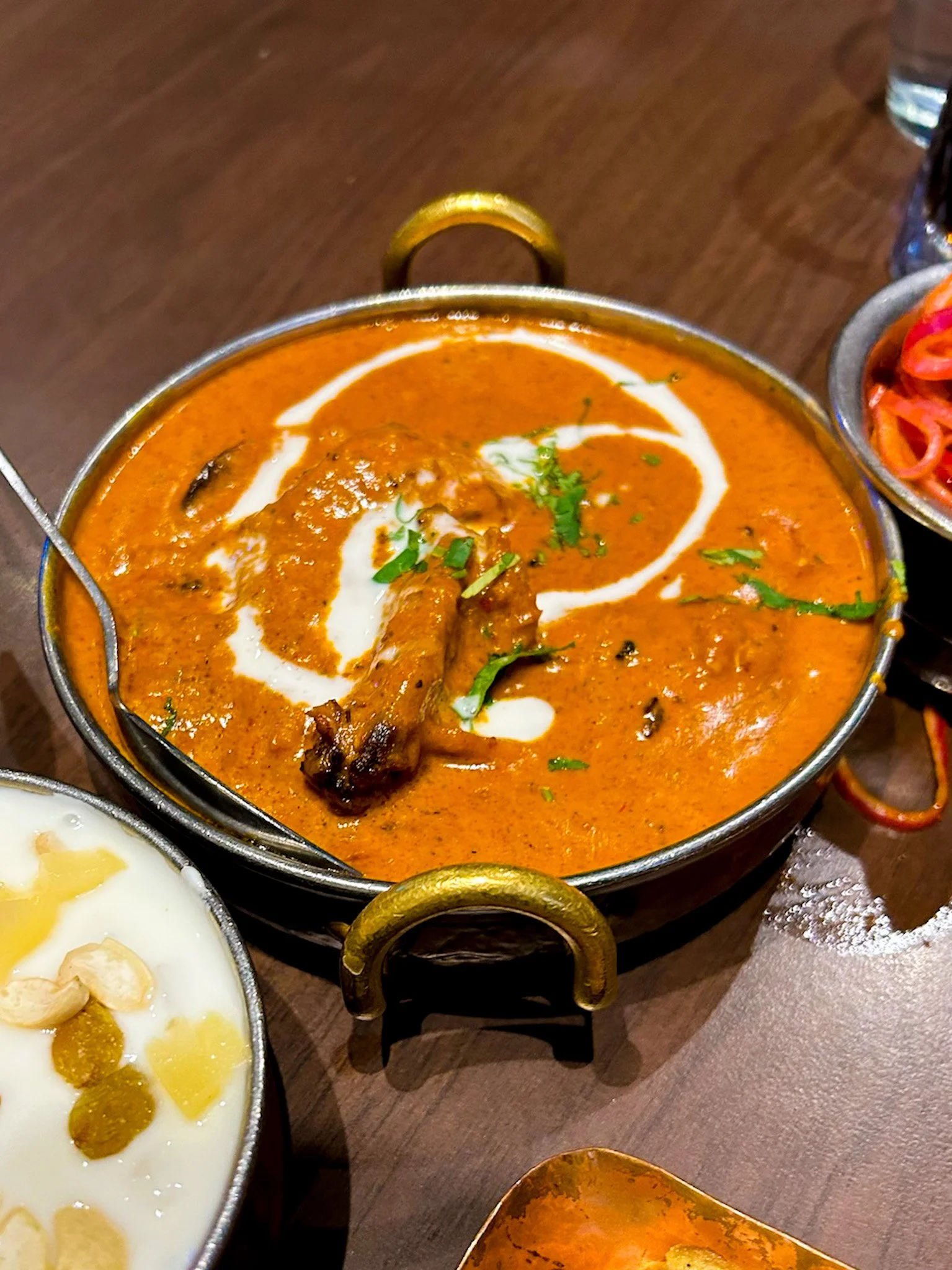
Butter Chicken is arguably India’s most iconic dish around the world, and for good reason. It was created in India’s capital, Delhi, at Moti Mahal restaurant in the 1950s. This rich, creamy curry with tender tandoori chicken in a buttery tomato-based sauce was originally designed to use leftover tandoori chicken, and it quickly became a national favourite.
While you’ll find it served in restaurants worldwide, nothing compares to tasting it in its birthplace. For the authentic experience, head to Gulati, a local’s favourite restaurant in Pandara Road Market. They do a range of popular Delhi dishes well, including kebabs and black daal, but the butter chicken is the standout.
From the first bite, you’ll be blown away by the sauce, which is super savoury and rich from the butter and far less sweet than many versions you find in the UK or other Western countries. The balance of spices is gentle yet complex, with a smoky depth from the tandoor-cooked chicken that makes every mouthful memorable. Its lack of intense chilli heat, as found in some Indian curries, makes it accessible to both foreigners and locals. Pair it with garlic naan and rice, and you’ve got a meal that defines Indian comfort food at its finest.
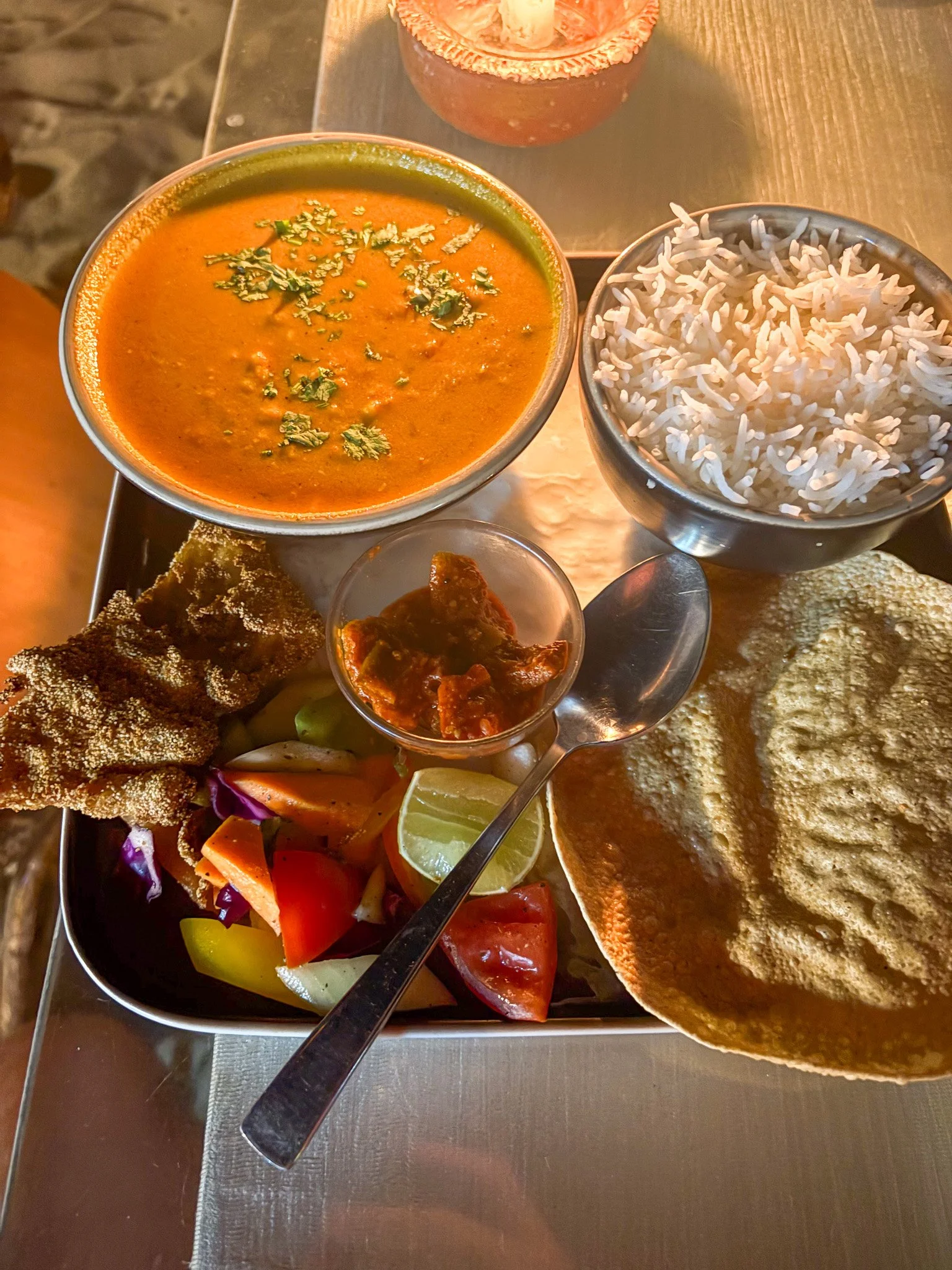
Fish Curry from Goa in India
Shared by Ben Cross from BeyondBothShores
Goa is India’s most popular beach destination, with parties in the north and a relaxing paradise in the south. It is also an incredibly underrated food destination. Many have only heard of one Goan origin curry: Vindaloo, but ‘fish curry’ is far more popular amongst regulars here.
Goan fish curry is one of India’s most distinctive curries, celebrated for its tangy, aromatic flavours that set it apart from the richer, creamier tomato curries of northern India. Its signature taste comes from a blend of coconut, tamarind, and a vibrant mix of spices, balancing tang, heat, and subtle sweetness.
Traditionally, the curry features generous chunks of fresh coastal fish such as sea bass, kingfish, or red snapper, simmered in the tangy sauce until perfectly tender. Each bite bursts with freshness, with the coconut lending creaminess and the tamarind providing a lively, slightly sour kick that cuts through the richness.
For the ultimate Goan experience, head to Namaste on Patnem Beach, a local favourite where the fish is displayed for you to be able to pick your own each evening. The curry here is also more authentic than most other beach shacks in Goa, so you can expect a subtle kick of pepper. Enjoy it with steamed rice and papad, and wash it down with one of Goa’s many popular beers, such as a Kingfisher, to complement the curry’s tang and spice.
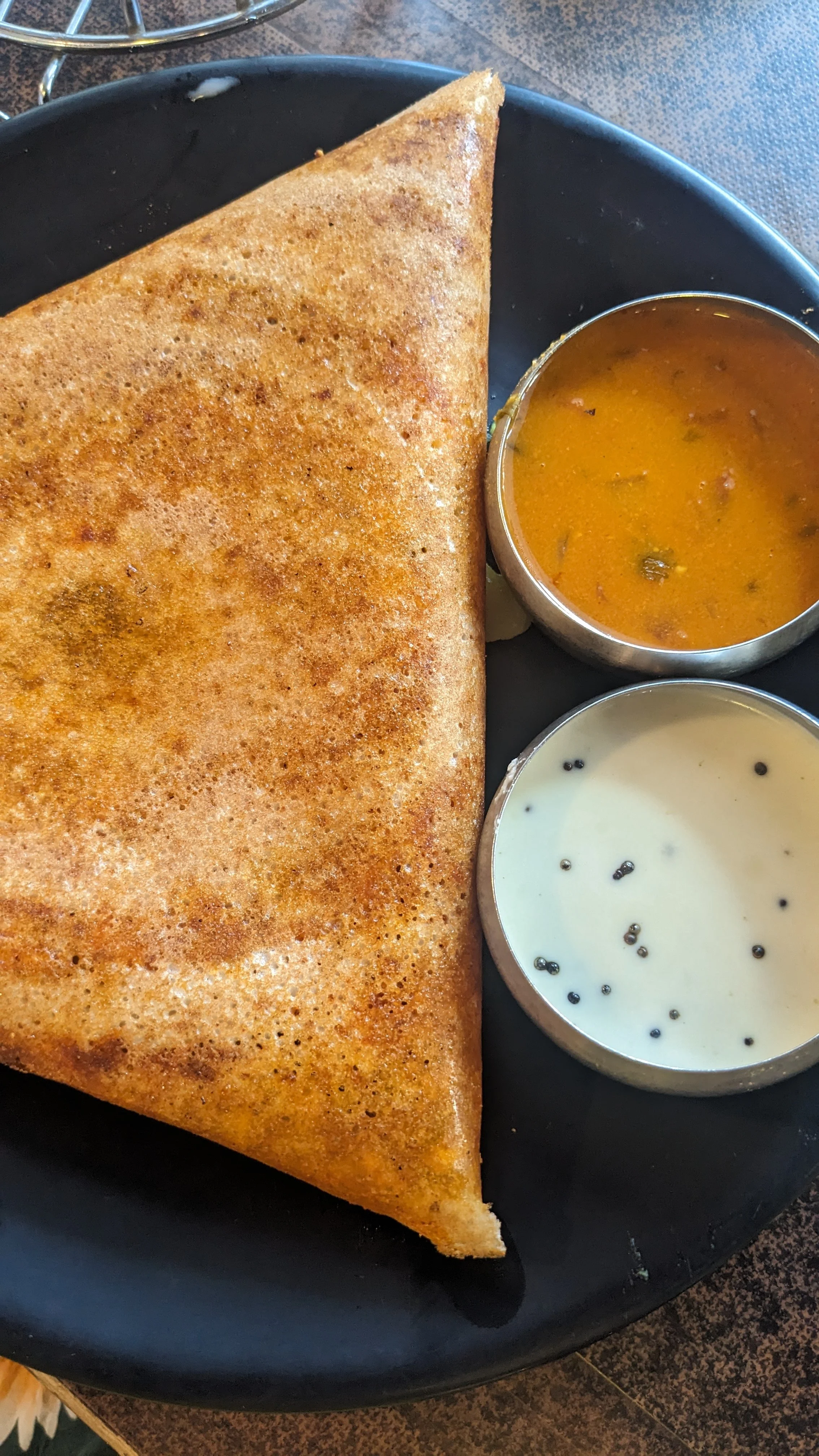
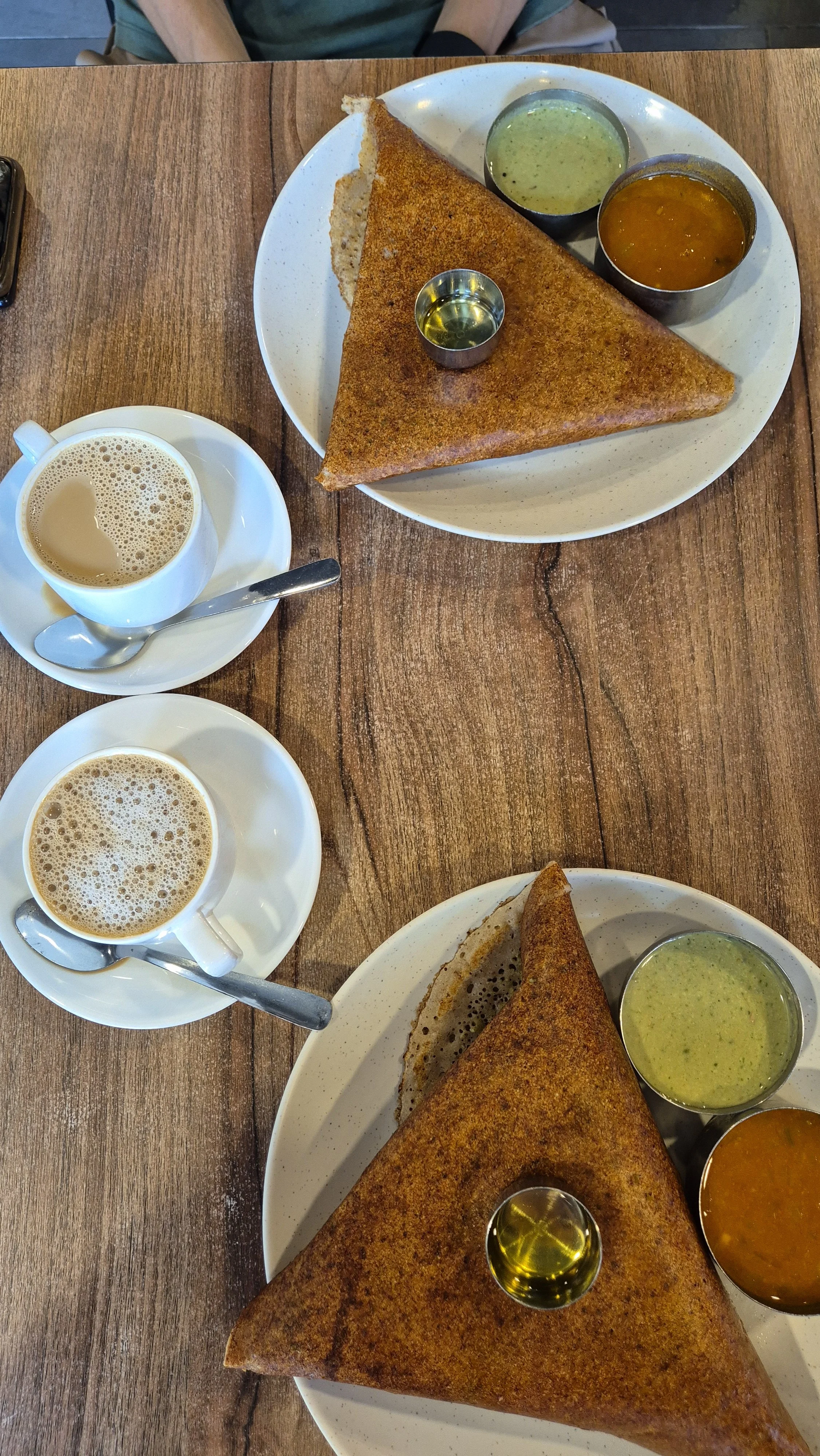
Masala Dosa in Southern India
Shared by Sam Dawson of Relentless Roaming
Masala dosa is the top reason that we keep travelling back to South India. It’s crisp, it’s chewy, it’s spicy, it’s creamy, it’s healthy too! And genuinely, we can’t get enough. Yes, we ate it every other day during our three-month adventure around South India because it was just too tasty to say no!
A thick batter is made by grinding fermented rice and lentils, then pouring the batter onto a hot griddle. While the underside is getting nice and crisp, a masala spice or paste is smeared all over, then a dollop of potato curry is added. It’s then folded and served alongside the ultimate Indian condiment (in my opinion anyway): coconut chutney! Green chilli, fresh coconut meat, toasted mustard seeds, fried curry leaves, sometimes garlic and ginger too. Stunning. I could drink the stuff, and always ended up going back to ask for more.
Rip off a bit of the beautifully crisp yet also soft dosa (with your right hand only), dunk it in as much of the fresh coconut chutney as it can physically hold, and I guarantee you’ll already be thinking about your next masala dosa fix.
If you want to get your hands on some real-deal masala dosa, head to South India, specifically Karnataka. The absolute best I have ever eaten was at Umesh Refreshments, a small, no-frills streetside eatery in the heart of Bangalore.
Best Dishes in Nepal
Dal Bhat in Nepal
Shared by Kris from Travelling Mandala
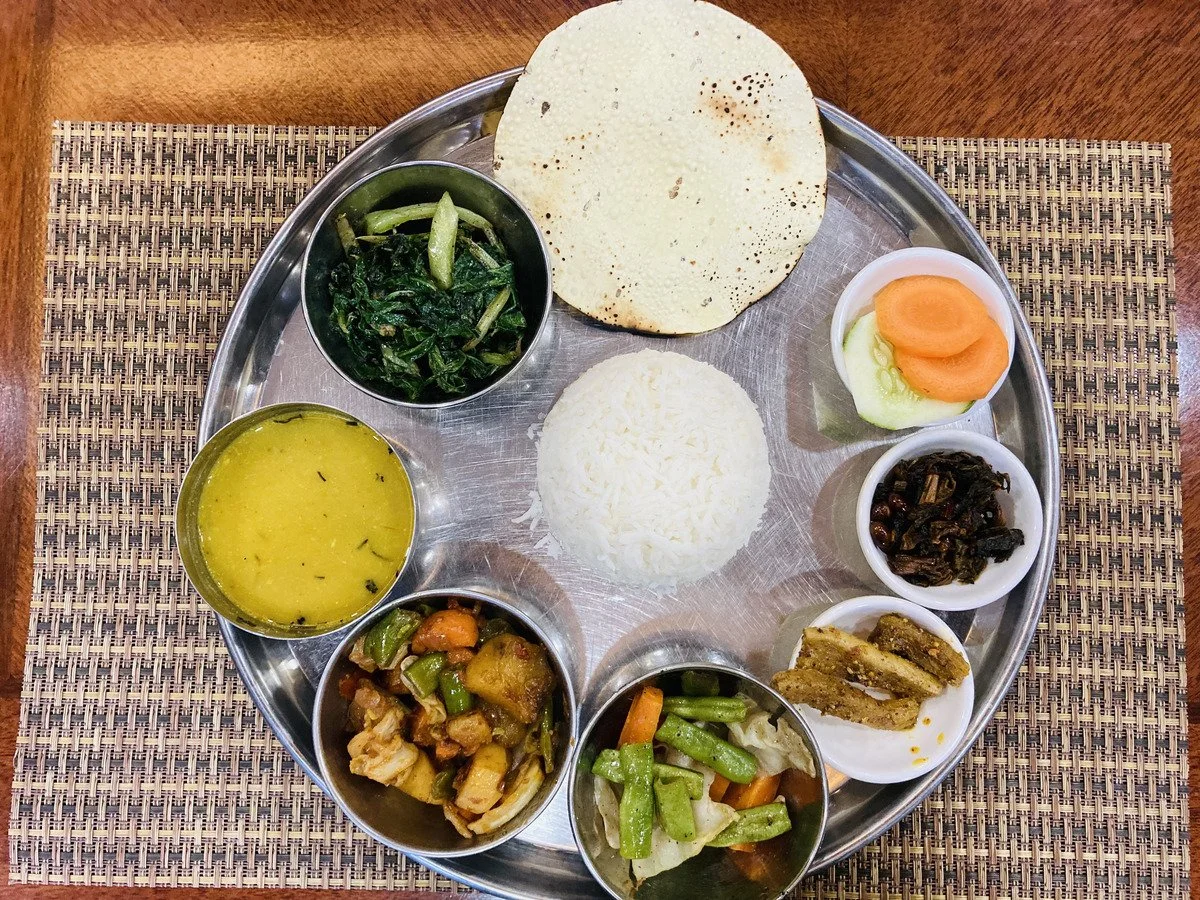
Dal Bhat is the national dish of Nepal, and locals eat it at least twice a day. It’s a dish made with rice and lentil soup (‘dal’ means ‘lentil’ and ‘bhat’ means ‘rice’), and it is served with vegetable curry, pickles, meat, greens and yoghurt.
When I first visited Nepal, I stayed in a remote village and dal bhat was all we ever ate. After a week, I felt like I had enough rice for the rest of my life, but the dal bhat just kept coming.
Dal Bhat is nutritious and provides a lot of energy. There is also a saying in Nepal: “Dal bhat power 24 hours,” meaning that whenever you feel tired and hungry, eating dal bhat will give you a lot of energy.
Dal Bhat is also great for trekking in Nepal, as it gives you energy. You might not want to eat dal bhat every day on a two-week Everest Base Camp trek, but one thing is for sure: if you visit Nepal, you won’t leave without having dal bhat a couple of times.
I once took a short cooking class in Kathmandu to learn how to make dal bhat. It was so much fun to learn how to prepare the dish and also to learn more about Nepali culture. Sometimes during the class, they also take you to the local market to buy the ingredients, so you get to see what a market in Nepal is like.
Dal bhat varies slightly across Nepal, but everyone agrees that the Thakali version is the best. When choosing a restaurant for dal bhat, I recommend a Thakali restaurant. One of my favourites is the Mantra Thakali Restaurant in Kathmandu – it can get busy, but it’s worth the wait.
Best Dishes in Sri Lanka
Kottu in Sri Lanka
Shared by Juan from planetofadventures.com
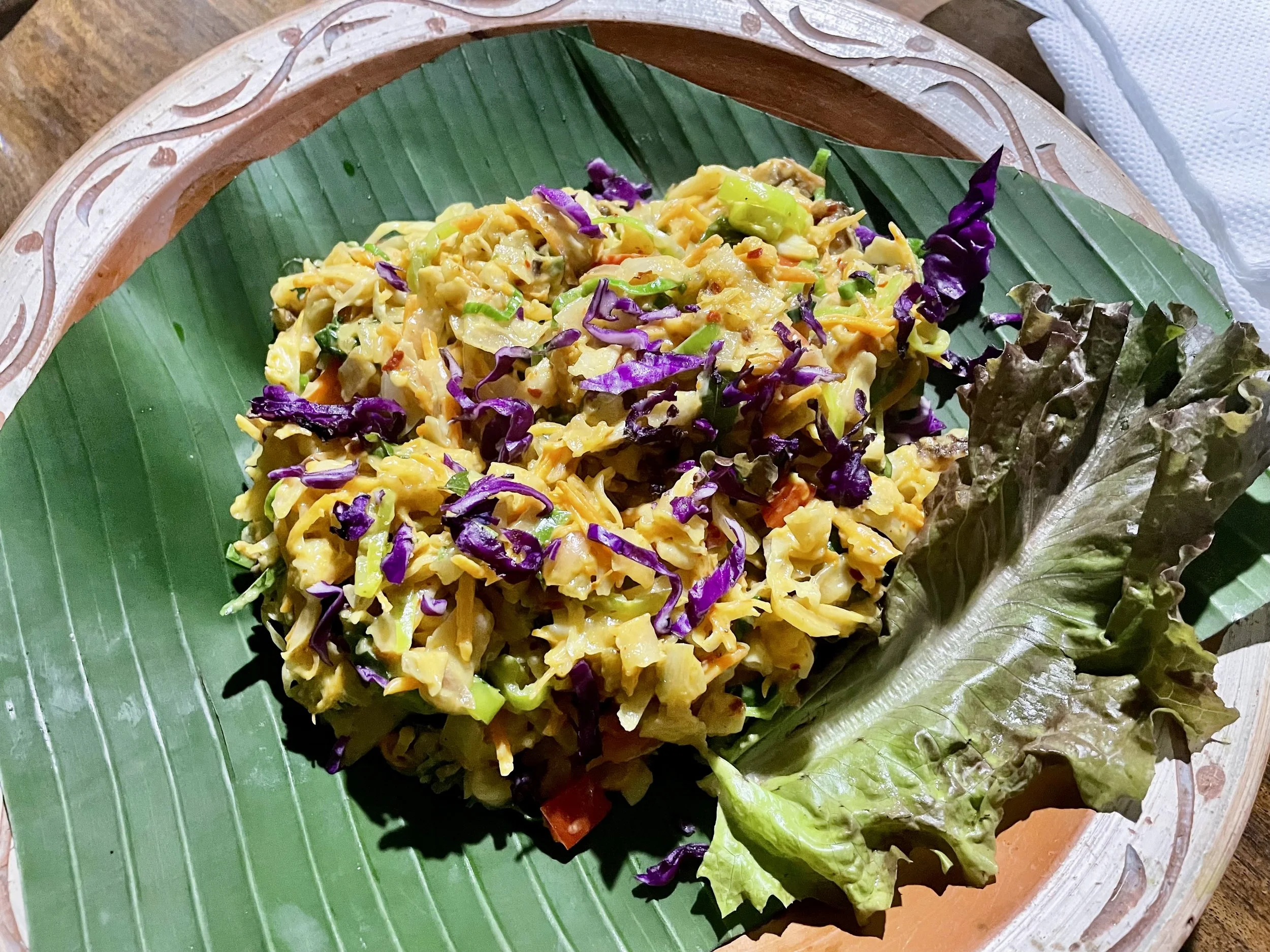
One of the most traditional dishes you can have when you’re enjoying your Sri Lanka itinerary is Kottu, aka Kottu roti.
This iconic Sri Lankan street food staple is delicious and comes in many forms, making it suitable for almost anyone regardless of dietary requirements.
The most distinctive ingredient of Kottu is that it’s a stir-fry made with chopped Godamba (flatbread), and it can be combined with veggies, meat, fish, etc.
The name Kottu actually means “chopped” in Tamil and derives from the traditional process of making this dish, in which two metal blades chop all the ingredients as they cook.
Among the several Kottus I had on my holidays, one I thoroughly recommend is at Cafe Mango Banana in Ella. This little family-run restaurant prepares an incredible, slightly creamy Kottu that I still dream about today! I pictured it below, you can see how colourful and pretty it looks!
Ella is also a great place to join a cooking class, as there are lots of places in town to join one with prices starting for as little as $10, super cheap!
Among Sri Lankan cuisine, Kottu tends to be one of the cheapest dishes you can try, and trust me, it will be one of the most delicious!
Hoppers in Sri Lanka
Shared by Larch from The Silver Nomad
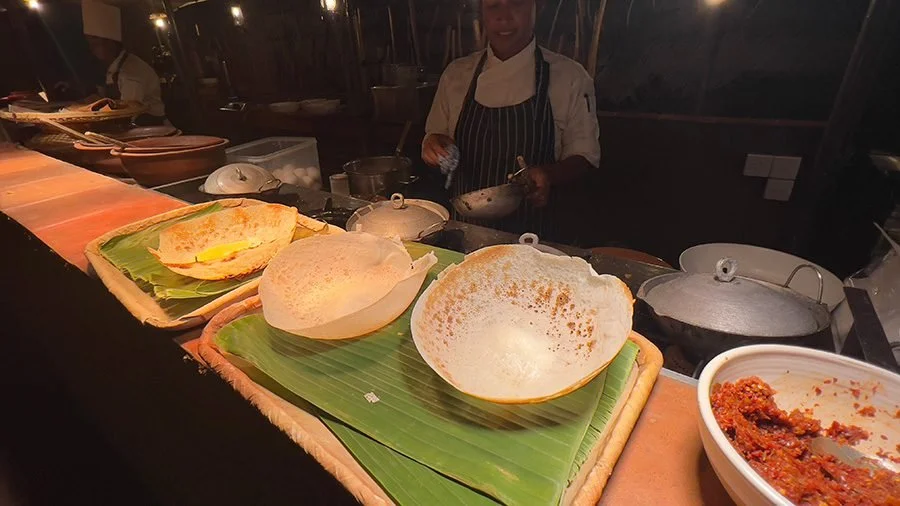
When you sit down to a meal in Sri Lanka, you will be treated to a selection of delicious curries served with a wide range of sambals, breads, and hoppers.
Hoppers come in two different types: string hoppers and appam hoppers.
Appam hoppers are made from coconut milk, raw rice and yeast, which has been fermented overnight. The resulting batter is swirled around a hot wok to create a bowl-shaped pancake. You can ask for an egg to be dropped into the bottom for extra taste.
The appam hoppers can be ripped and used to scoop up curry or sambal. They can also be rolled and dipped into curry. Sweet ones are served with jam or syrup.
String hoppers are fun to make and fun to eat. Rice flour is mixed with salt and water to form a dough. The dough is then pressed through a string hopper onto bamboo moulds. These are steamed, and the tangle of string noodles is served.
To eat the string hoppers, you break off a small bit and mix it with curry. They are light and perfect for soaking up sauces and dhal.
If you want to be authentic, use your right hand to eat, scoop up the various bits of curry, sambal, and hoppers, and pop them into your mouth!
Best Dishes in West Asia
West Asia is one of the most underrated food regions on earth. Stretching from the Eastern Mediterranean to the Caucasus, it's a part of the world where food is deeply tied to hospitality, family, and centuries of culinary tradition shaped by the Silk Road and the many civilisations that passed through it. Mezze, flatbreads, fragrant spiced meats, and herb-laden dishes are the backbone of a food culture that deserves far more attention from travellers than it typically gets. This section is just a starting point — there is a whole continent of flavour to explore here.
Best Dishes in Armenia
Jingalov Hats in Armenia
Shared by Annelies from Travels and Dreamers
Armenia is not on many travellers' bucket lists. But they couldn’t be more wrong. Landlocked between Georgia, Turkey, Iran, and Azerbaijan, this little country has so much to offer, from ancient monasteries to the longest non-stop double-track cable car in the world, and from natural sites like Dilijan National Park to an outstanding food culture.
One thing you can be sure of in Armenia is that you won’t go hungry. Meals are sacred in Armenia and are most often enjoyed with the whole family gathered around a big table full of food. Nevertheless, Armenia also boasts some great snacks, including Jingalov Hats. You might be wondering what the hell that is, and believe me, I did too!
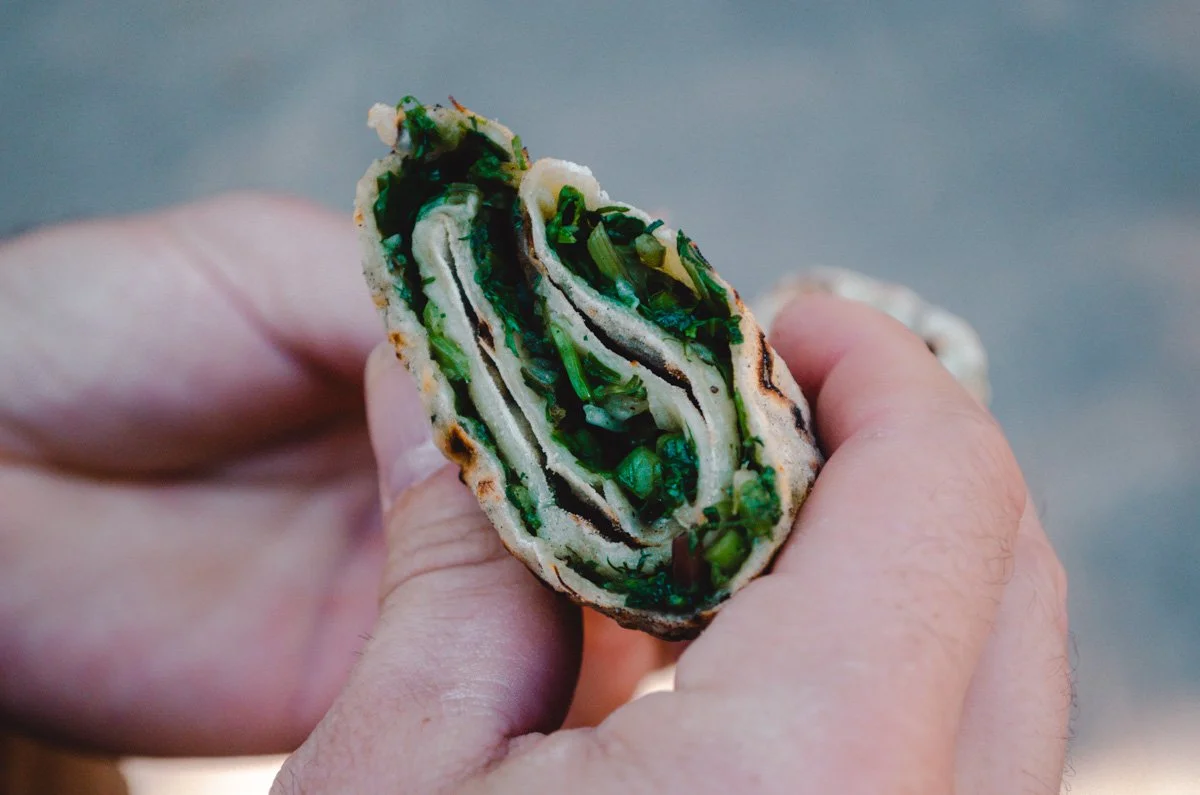
Jingalov Hats are traditional Armenian flatbreads filled with a mixture of fresh herbs and greens (cilantro, spinach, wild greens, etc.) and seasoned with salt and spicy oil (if you’re up for some heat). You can mostly find them at small snack stalls around the country, but they are sometimes served in restaurants as well.
I had a dozen of them during my travels through Armenia. They were all delicious, but I tried my personal favourites in Dilijan and Goris. In Dilijan, you can find a small snack stand near Tsiran Supermarket. In Goris, you can try great ones in a small wooden shack near the Town Hall.

Living in Kuta, Lombok, we’ve eaten our way through the town’s cafes, warungs, and restaurants, so you don’t have to guess. This regularly updated guide covers 30+ tried-and-tested spots, from cheap local eats to date-night dinners.