
Things to do in Siem Reap
This post may contain affiliate links, meaning we get a commission if you decide to purchase through our links at no cost to you. This helps fund Slower Travels without costing you a cent!
Siem Reap has been on my list for a long time, and we finally got to visit! I absolutely loved staying in this little gem of a town.
If you’re planning a trip, you’re most likely coming to see Angkor Wat. And you should make that your priority. It’s incredible and totally worth it. It’s not just a tourist trap.
But then, there’s this whole other side to Siem Reap. We met a few travellers who were just in town for a few days on a tour, but if you have the chance to stay longer in Siem Reap, you definitely should. Some digital nomads decide to make this their base long term. There is just so much to see and do here!
Of course, Siem Reap is only a tiny part of Cambodia. You could easily plan a 7-day trip or longer to this gorgeous country.
Here’s what else you need to include in your itinerary for Siem Reap. Take your time, slow down and enjoy this beautiful spot.
Temples of Angkor
Let’s be honest; this is why you’re in Siem Reap. And the temples are totally worth it.
Firstly, you need to get tickets. You can do a single, three-day or seven-day pass. The multi-day passes are valid for 30 days, so depending on your schedule, you can space out the days you spend at the temples. I’d strongly recommend this.
We got a three-day pass and have a day or two off between each day we spent at the temples. This gives you enough time to digest what you’ve seen, learn a bit about what you’re going to see and have a day where you’re not in the sun all day.
Next, you need to plan how to get around the temples. Most people will have the three-day pass and do the Small Loop first, then the Large Loop on the second day. On the third day, we chose to go to Kbal Spean. You could choose to use the third day to revisit your favourite places or see less well-known spots.
We had an excellent driver, Mr Kim (Whatsapp: +855 12 589 955). He picked us up from our hotel, helped us decide which temples to visit, dropped us off, and picked us up from each. He shared his knowledge and gave us helpful advice. He had a car so the journey to Kbal Spean was comfortable. He also had cold water and towels on board, which was a refreshing delight after the heat and dust of the ruins.
You could order Grab tuk-tuks to get you around, but you'll have to carry all your stuff for the day with you. I also prefer giving money directly to drivers rather than through a large corporation. You can also cycle the Small Loop from Siem Reap, but the Large Loop might be a stretch.

Angkor National Museum
If you’re only briefly in Siem Reap, you might be tempted to dive straight into the temples. But if you have time, you must check out the Angkor National Museum before you go.
The museum covers Buddhism, the ancient Angkor culture and more. If you’re not planning on getting a guide to take you around the temples, this museum will help you understand the different architectural styles, iconography and religious aspects of the temples. There are incredible artefacts here from the temples, kept away from the elements so they remain in good condition.
Pay a little extra and get the audio guide. It’ll help you dive deeper into the exhibits. Allow a few hours to visit the entire museum, especially if you listen to the audio guide. A cafe is handily placed about halfway through the tour so you can recharge yourself.
The museum is located on the outskirts of town, so you can get a tuk-tuk to and from it. The heat in Siem Reap can be relentless.
Cost: $12 USD


Phare Circus
I love heading to the theatre and was not expecting to include a live performance as part of our trip to Siem Reap.
Phare Circus performers are students and graduates from Phare Ponleu Selpak’s vocational training centre in Battambang. Young men who returned from camps after the Khmer Rouge set up the training school. The circus allows them to perform these new skills in front of a live audience.
The shows mix art, dance, circus techniques and storytelling. They usually perform a show for a few weeks before switching to something new. We watched a story about a young man learning to balance the demands of the modern world, community and Buddhist teachings of moderation.
Create a whole evening of the experience. A friendly open-air food court has a range of food available - from local food to burgers. There is also beer and cocktails available. There is also a gift shop with ethically made local crafts. Before the show begins, local children also perform some traditional Cambodian dances.
Cost: Tickets start from $18 USD. We purchased B Reserve seats with a better front-on view than C Reserve.

Made in Cambodia Market
Like most places in Southeast Asia, Siem Reap has plenty of places to pick up cheap souvenirs. However, most of these are made in Vietnam. There’s not enough capacity to manufacture within Cambodia.
However, you can directly support local artisans at the delightful Made in Cambodia Market. The market is small, and we were disappointed that there was no food there. So make sure you eat before you go!
The stalls include gorgeous jewellery, clothing, local photography, and Buddhist statues. This is the perfect place to buy souvenirs and gifts for loved ones, knowing that the money goes directly into the pockets of local Cambodians.


Riverside Dining
There is some really great food in Siem Reap. But if you’re also looking for a distinctly local atmosphere, you should head down to the riverfront at dusk. Here, local food trucks have plastic chairs and long tables set along the riverside. You can find classic dishes like fried rice and also noodle soup.
As a vegetarian, food carts aren’t always suitable. But I found vegetarian food to be readily available at nearly all the carts. Some even specialise in it!
Don’t forget your mosquito spray!

Pub Street
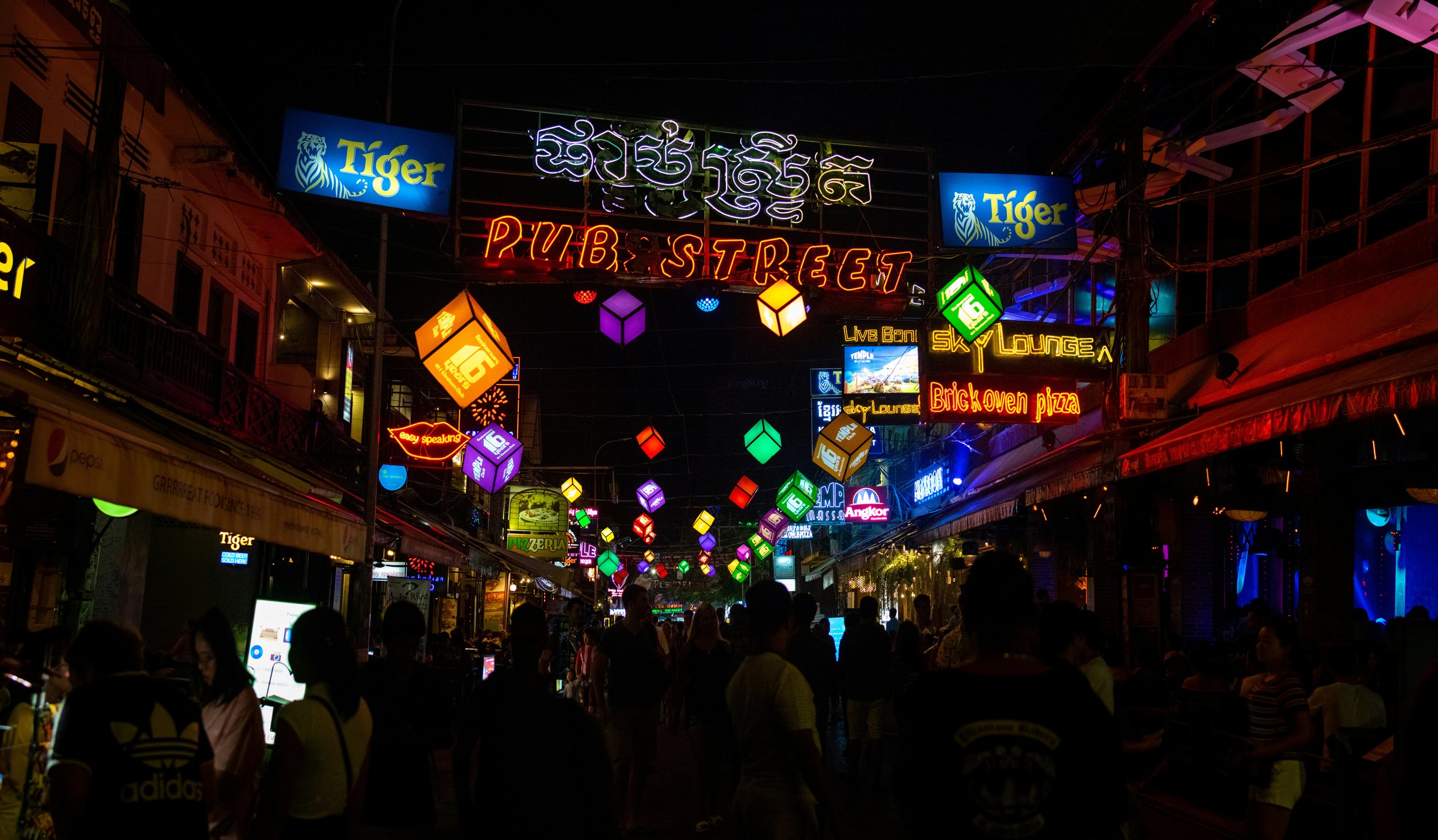
If you’re after a lively atmosphere as the sun sets (or well after it has), then you’ll want to head to Pub Street and the surrounding area. Here, you’ll find many restaurants and bars, massage parlours, trinket shops and market stalls.
It’s a great spot to sit, have a drink and watch the world go by. We found some great meals here - specifically Elia Greek Kitchen. The local food we ate on Pub Street wasn’t as good as what we had just outside of town. I guess the places here are a little more like tourist traps.
Main Street Market
The main market in Siem Reap is worth a visit. The stalls facing the streets are lined with knock-off football shirts, Buddha relics, and cheap souvenirs. As mentioned above, if you’re looking to buy items I would recommend buying them from stalls you know locals are creating the items. However, it’s always fun to visit these stalls and see what’s on offer.
Then, venture into the narrow walkways and you’ll discover the local fruit, vegetable and prepared food market. We visited the market several times before realising that inside was something completely different. So make sure you don’t just skirt the outside stalls here.

Support Local Social Enterprises
We stayed just across the river from the central part of town, and it was such a great decision. So many restaurants here were set up to run as social enterprises. This means they’re not only providing great food and coffee but also supporting local people.
Some of our favourite places are:
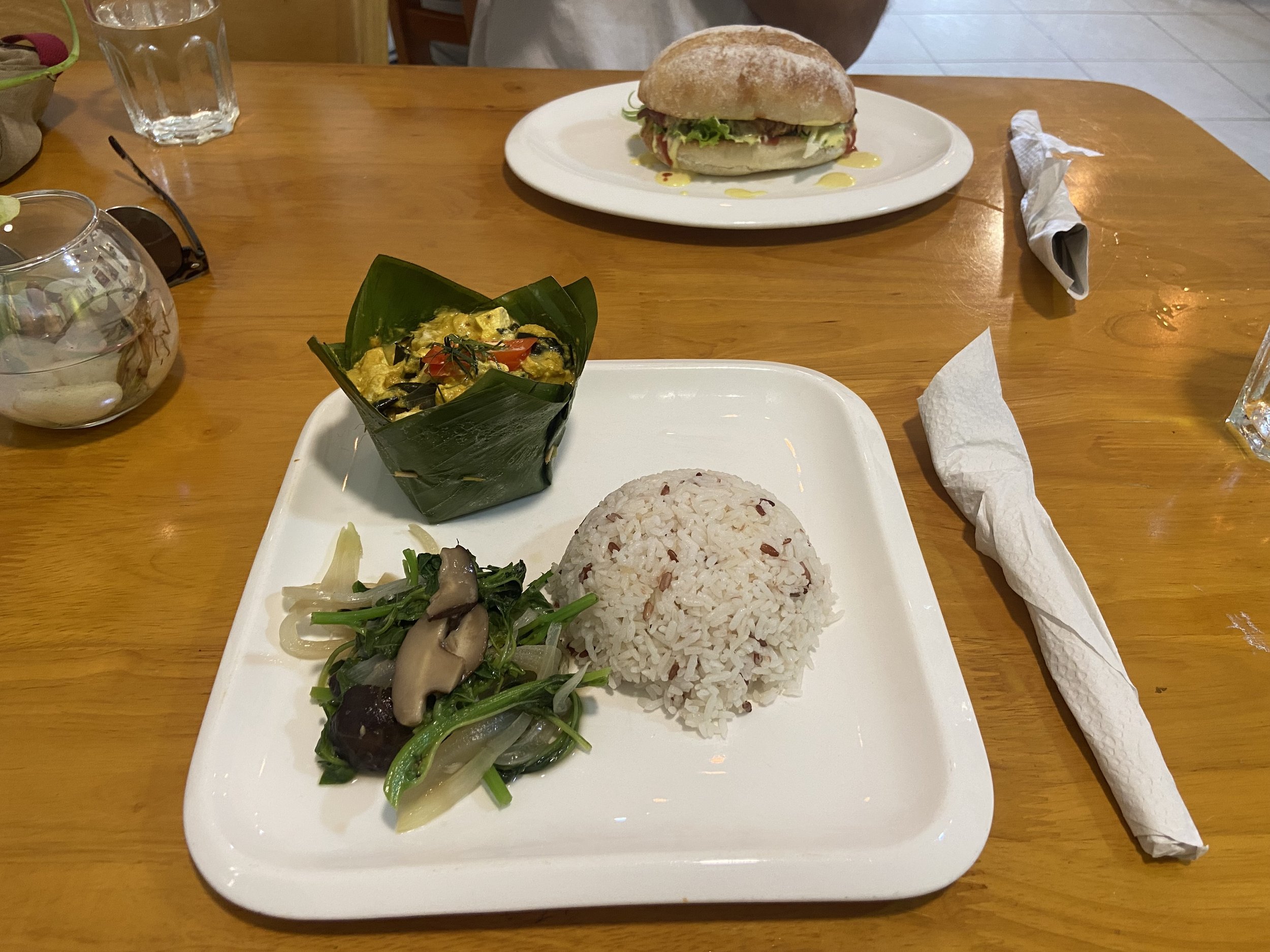
Tevy’s Place

New Leaf Eatery

Footprints Cafe
APOPO Visitor Centre
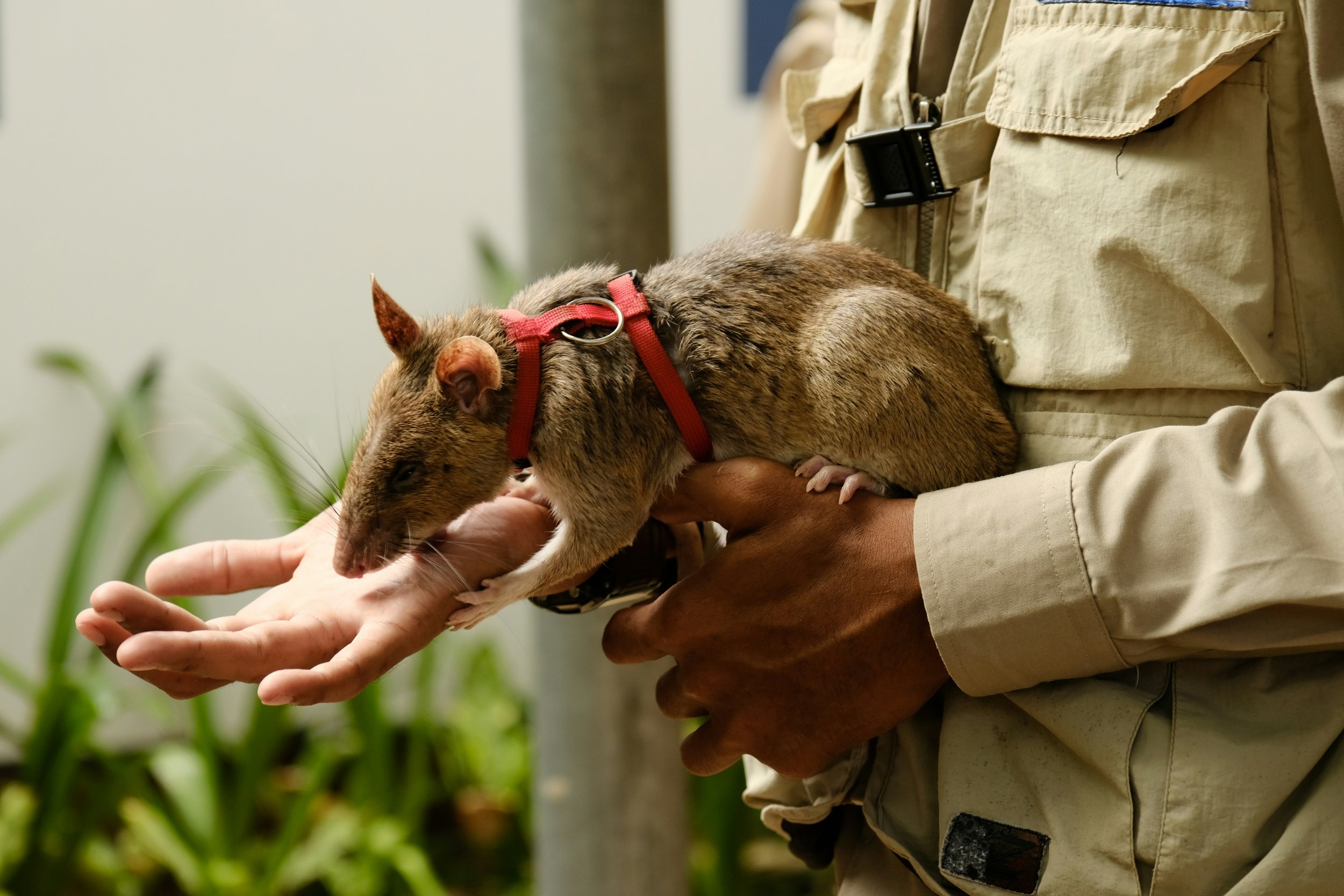
Cambodia’s history is dark and complicated. Their land is contaminated by unexploded landmines, making it dangerous and impossible to farm. Clearing the ground is a slow process.
However, the African Giant Pouched Rats can be trained to help with this process. It's a wild idea, but it is a project running worldwide to help with this challenging work.
At APOPO Visitor Centre, you can learn more about this work. Buy your ticket online in advance as you need to join a specific time for the tour.
Cost: $10 USD
Floating Villages
The floating villages are another popular activity in Siem Reap. There are four communities based on the nearby Tonle Sap Lake. The tour allows you to visit them and see the beautiful Cambodian countryside.
We didn’t have a chance to do this experience, but I wish we had.
First up is the drive, seeing the lotus farms, rice paddies and local farmers. Then you transfer onto a boat where you learn about the UNESCO Biosphere Reserve. The water here is home to so much flora and fauna. Then you reach the local villages to see how people live in this unique landscape.
Cost: $49 USD

Apsara Theatre
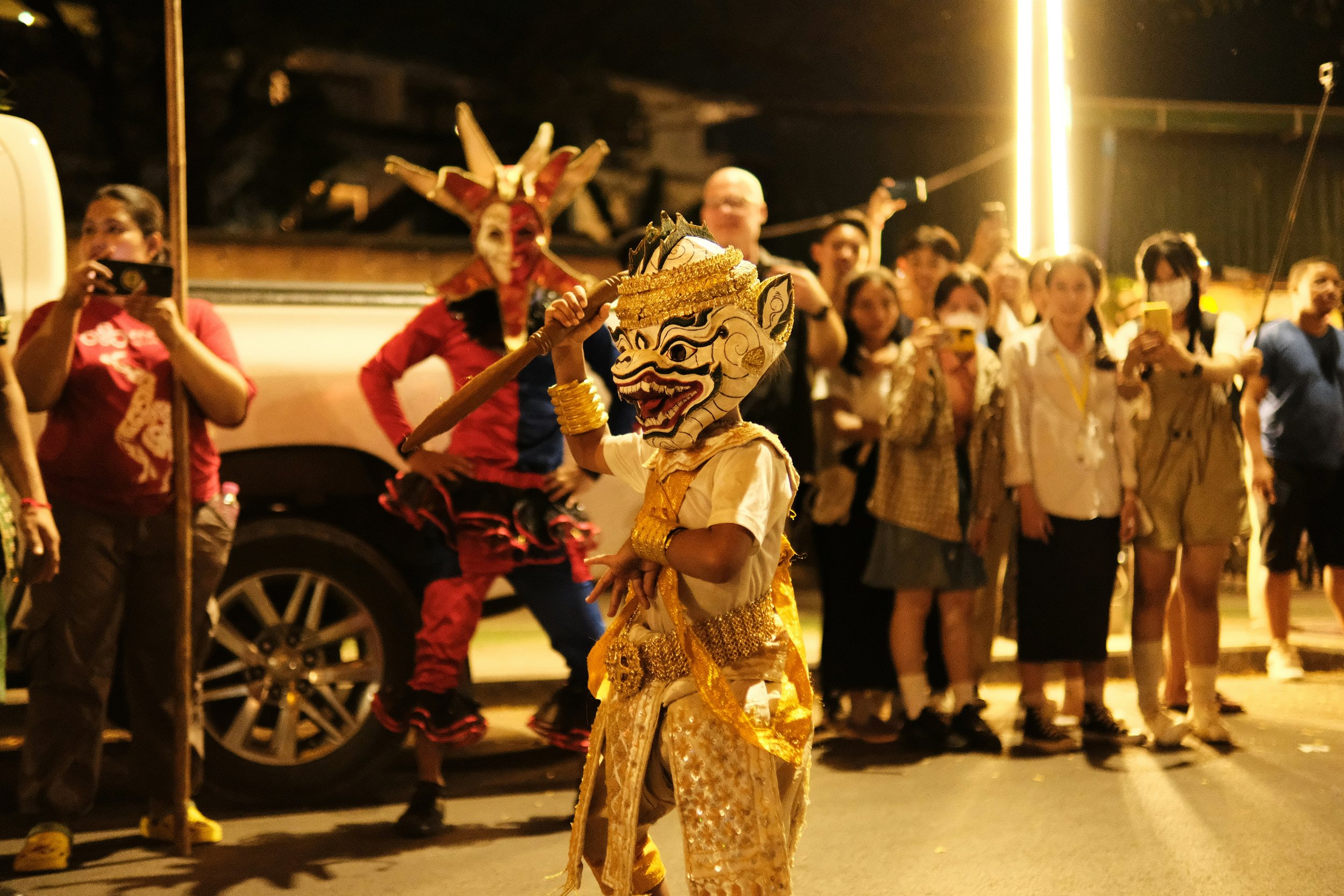
When visiting the temples, you’ll immediately notice how revered the apsaras are. These celestial nymphs are a big part of Cambodia's Hindu and Buddhist myths. This has led to the traditional Cambodian dance style, which you can see at the Apsara Theatre.
The theatre gives you a chance to eat fabulous food and delight in the culture of the Cambodian people.
How to Get To Siem Reap
By Air
Flying is the most straightforward option if you're coming from further afield. Siem Reap's new Angkor International Airport (SAI) opened in late 2023 and is a significant upgrade on its predecessor — though it now sits around 45km from the town centre, so factor in roughly an hour to get into town. It has international connections from Bangkok, Singapore, Kuala Lumpur, Ho Chi Minh City, and beyond. If you're already in Cambodia and based in Phnom Penh, domestic flights take around 45 minutes — convenient if time is short, though you'll miss the countryside.
We'd recommend arranging your airport transfer before you travel. Mr Kim is your man — he can pick you up directly from the airport and, if you're planning to visit the temples, he's the perfect person to have in your corner from day one. Reach him on WhatsApp: +855 12 589 955.
By Bus from Bangkok
If you're coming from Bangkok, do yourself a favour and skip the airport — the bus is straightforward, well-priced, and the border crossing is far less of an ordeal than its reputation might suggest. We did it this way and wouldn't hesitate to recommend it. Direct buses run between Bangkok and Siem Reap, allowing you to cross the border at Poipet without switching vehicles. The journey takes around 8–9 hours in total, but it's comfortable, affordable, and frankly a much more interesting way to arrive.
By Bus from Phnom Penh
If you're coming from the capital, the bus is again your best bet for value and ease. The journey covers around 320km and takes 5–6 hours, depending on the company and stops. Giant Ibis is the most highly regarded operator — their buses have Wi-Fi, power outlets, seat belts, and GPS-enabled driver monitoring, which gives you peace of mind on Cambodian roads. Tickets run around $15. If you're on a tight budget, companies like Mekong Express and Sorya Bus offer lower fares, though comfort levels vary.
By Minivan
Minivans are faster than buses—sometimes cutting the Phnom Penh journey to 4–5 hours—and cheaper, at around $10. The trade-off is space. They're packed, the driving can be spirited, and you may arrive feeling like you've aged a little. Fine for the adventurous, perhaps not for those with long legs or delicate constitutions.
By Boat
There is a boat service between Phnom Penh and Siem Reap along the Tonlé Sap river and lake, and it's a genuinely scenic way to travel — particularly during the wet season when water levels are high. The journey takes 5–6 hours and costs around $35. That said, during the dry season, boats may be smaller and slower, so it's worth checking current conditions before committing. It's more of an experience than an efficient transfer, but if that appeals, it's memorable.
Once You Arrive
However you get in, getting from the airport or bus drop-off into town is easy. Tuk-tuks (known locally as remorks) are everywhere and are the classic Siem Reap way to get around — expect to pay around $9 from the airport, or $3–5 for shorter hops in town. Taxis are also available from the airport at a fixed rate of $10. Many hotels will arrange a pick-up if you ask in advance, which takes all the guesswork out of arrival day.
Frequently Asked Questions
Do I need a visa for Cambodia?
Most nationalities can get a visa on arrival at Siem Reap airport, which costs $30 USD and takes around 15 minutes — just make sure you have cash. Alternatively, you can apply for an e-Visa online before you travel for $36, which lets you skip the queue. Either way, your passport needs to be valid for at least six months beyond your entry date. You'll also need to complete a Cambodia e-Arrival Card (CeA) — this can be done online before you fly, or on your phone when you land.
What currency should I bring?
Cambodia uses both the US Dollar and the Cambodian Riel, and USD is widely accepted almost everywhere. Most transactions in Siem Reap — tuk-tuks, restaurants, hotels — can be paid in dollars. Change is often given back in Riel, at a rate of around 4,000 Riel to $1. Cards are increasingly accepted, but it's always worth having cash for smaller purchases and street food.
Is the tap water safe to drink?
No — stick to bottled or filtered water. Most hotels and cafés use filtered water, but it's worth bringing a reusable bottle and asking for refills where you can, both to save money and reduce plastic waste. When it comes to ice, look for cubes with a hole through the centre — that means they've been made in a filtered facility.
How many days do I need?
Three days is the minimum if Angkor Wat is your main reason for visiting, but it's easy to fill five or more if you want to explore the wider temple complex at a relaxed pace, take a day trip to Beng Mealea or Banteay Srei, and spend some time in the town itself. Some people pop into town just for a day, but I’d recommend slowing down and really experiencing this little gem of a town.
Is it safe?
Siem Reap is generally safe and well-set-up for tourists. I never felt unsafe walking after dark or running alone.
That said, the usual precautions apply—keep an eye on your belongings and be wary of bag snatchers in busy areas.
One important note if you're travelling overland from Bangkok: as of early 2025, there is an active armed conflict along parts of the Cambodia-Thailand border. Check your government's latest travel advice before you go, and ensure your bus route uses an established, safe crossing.
What's the best time to visit?
The dry season from November to April is peak time, with cooler temperatures and clear skies making it ideal for temple-hopping. We visited in January, and it was a delightful temperature most of the time.
December to February is the most popular (and most expensive) window. The wet season from May to October brings lush greenery and fewer crowds. While afternoon downpours are common, mornings are usually fine for sightseeing. The temples look spectacular in the rain if you don't mind getting a bit damp.
Where to Stay in Siem Reap
Siem Reap has accommodation for every budget, from guesthouses tucked down quiet lanes to genuinely world-class luxury hotels. It’s not just about which accommodation you stay in, but also the suburb. The town is compact enough that most areas are walkable or a short tuk-tuk ride from the temples, so it's worth thinking about atmosphere and neighbourhood as much as price.
Here are some excellent options, depending on what you're after.
For the Smart Independent Traveller: VIHARA The City of Temples
This is where we stayed, and it earned its place on this list. What won us over wasn't just the room — it was the location. VIHARA sits in a genuinely local neighbourhood, away from the more touristy strips, with excellent food options nearby that feel like proper finds rather than tourist traps. Breakfast is good, the staff are helpful, and the Wi-Fi was strong enough to work from comfortably — always a bonus if you're travelling and need to stay connected.
Best for: independent travellers, digital nomads, anyone who wants to feel part of the neighbourhood rather than passing through it.
For the Luxury Traveller: HARI Residence & Spa
If you're looking to treat yourself, HARI Residence & Spa is where we'd point you. The rooftop pool and restaurant look genuinely divine — the kind of place that makes a long-haul journey feel immediately worth it. It combines the intimacy of a boutique property with the polish of a high-end hotel, and in a town where luxury options can feel generic, HARI stands out.
Best for: couples, special occasions, travellers who want to arrive somewhere and feel properly looked after.
For the Budget-Conscious Traveller: Sala Bai Hotel & Restaurant
Sala Bai is one of those rare budget options that comes with a genuinely good reason to stay. It's a hospitality training school — which means the staff are students learning their craft, the service is attentive, the rooms are clean and comfortable, and your money goes directly towards supporting young Cambodians building a future in the industry. It's excellent value, centrally located, and the kind of place you feel good about choosing.
Best for: budget travellers, conscious travellers, anyone who likes their accommodation to have a story.
Final Note
Siem Reap has a way of surprising you. Most people arrive for the temples and leave having fallen a little in love with the town itself — the food, the people, the quiet streets just beyond the tourist strip. If you can, slow down and give it more time than you think you need. You won't regret it.
If you've been and have a recommendation I've missed, drop it in the comments below — I'd love to keep building this guide. And if you're still planning your trip, I hope this helps you find your feet a little more easily.
Have a wonderful time.




Maricla left Tuscany for Cambodia and never looked back. A freelance writer on what real freedom means, why location doesn't change you — and what does.