
Last Updated October 2026
This post may contain affiliate links, meaning we get a commission if you decide to purchase through our links at no cost to you. This helps fund Slower Travels without costing you a cent!
Bangkok is a sprawling metropolis filled with temples and shopping malls that gleam under the hot sun. But even with only a quick stopover in the city, you can maximise your time to see the highlights and skip past the tourist traps.
This 24-hour Bangkok itinerary covers the essential temples, markets, and street food you can actually fit into one day, whether you're on a stopover, waiting for an overnight train, or squeezing Bangkok into a longer Southeast Asia trip.
We spent a month in Bangkok and had a fantastic time. We shopped, ate, and gazed at all the beautiful temples. We also sweated under the hot sun at disappointing sites, ate mediocre meals, and spent too long stuck in traffic. So let me save you the hassle.
Staying a little longer? Check out this guide to a week in Bangkok.

How do you spend one day in Bangkok?
The best way to spend one day in Bangkok is to start early at the Golden Mount, see the great temples (some from a distance), then head indoors to the museums to escape the afternoon heat, and finish with street food on Soi Rambuttri. I’ve built this 24-hour itinerary around understanding Thai culture, so you get the temples, the museums that explain them, and still plenty of the city's buzz, all while keeping your cool.
| Time | Stop | Good to know |
|---|---|---|
| 7:00am | Golden Mount (Wat Saket) | Opens at 7am. Go early for the views before the heat builds. ฿100. |
| 8:00am | Coffee at Annie's Coffee Roastery | A proper coffee stop before the main sights. |
| 9:00am | Wat Pho | Opens at 8:30am. Home of the Reclining Buddha. ฿300. |
| Weekend swap | Chatuchak Market | Weekends only. Swap it in for part of the morning. |
| 12:00pm | Lunch with a view of Wat Arun | See the temple from across the river rather than queueing to go in. |
| 2:00pm | National Museum, MOCA or Museum Siam | Pick one. Air-conditioned and ideal for the hottest part of the day. |
| 5:00pm | Talad Noi street art (optional) | A relaxed wander through the old Chinese quarter. |
| 7:00pm | Dinner on Soi Rambuttri | Easy street food and a lively atmosphere. |
| Friday evening | Muay Thai at Rajadamnern Stadium | Swap it in for dinner or follow it. |
Here’s a map of all the stops, including the optional extras pinned on it, to make it super simple for you to navigate to each one.
Morning: Temples, Golden Views or Shopping at the Ultimate Market
Golden Mount (Wat Saket)
Start your day with a climb up the Golden Mount. This ancient temple sits atop a leafy hill and offers panoramic views over the old city. It opens at 7am, so consider heading here straight after breakfast at your hotel.

You’ll get warm climbing the steps, so it's best to start early. Also, you’ll want to give yourself enough time to sit on the top level, taking in the giant stupa and views. If you leave it too late, the sun will be scorching.
Refuel your caffeine levels at Annie’s on the way back down. We visited the outlet on street level, and it’s gorgeous. I love the small cafes in Thailand and could spend all day just hopping between them.

Wat Pho (Wat Phra Chetuphon Wimon Mangkhalaram)
Just a 10-minute drive away is Wat Pho, home to the famous Reclining Buddha. It’s a sprawling complex with beautiful, intricate architecture, peaceful courtyards, and fewer crowds at this early hour. It opens at 8.30am.
This temple overwhelmed me when I first visited. There are so many beautiful structures and statues. Give yourself enough time to explore, sit quietly and take in the atmosphere.

Pro Tip
While walking in the touristy area of Bangkok, many tuk-tuk drivers will approach you. They’ll often say that the Grand Palace (or whatever site you’re heading for) is closed. They’ll offer to take you elsewhere. It’s a scam. The Palace is open. Ignore them and keep walking (or order a Grab taxi).
Weekend alternative: Chatuchak Weekend Market
If it’s Saturday or Sunday, you might want to skip the temples and go straight to Chatuchak Market, one of the largest weekend markets in the world. It’s a maze of vintage clothing, handmade crafts, street food, and everything in between.
Go early to avoid the heat and crowds. Enter by Gate One here for the most interesting stalls.
Cross the road to Bangsue Junction for even more vintage finds. We also bought some beautiful homewares at this market. It’s next door, but you can find alleyways that connect the two.

Midday: Lunch Overlooking Wat Arun
Head back toward the river for lunch with a view of Wat Arun (Temple of Dawn). Several rooftop restaurants and cafes offer Thai cuisine with a postcard-perfect view. We had a great meal at The View.
Most guides will advise you to visit here at dinner time to see the temple all lit up. Yes, it’s a beautiful thing to see it at this time of day. But we’re trying to maximise your 24 hours in Bangkok, so we’re sacrificing some things for efficiency here.
Personally, I’d skip visiting the temple itself, unless you’re interested in dressing up in traditional Thai clothing for a photoshoot or are particularly fond of ancient architecture. It’s mostly outdoors and in the full sun. Again, you can’t do everything in 24 hours. I think you’re better off seeing Wat Pho if you’ve only got time for one, or head to Wat Suthat if you’re looking for another temple to visit.

Afternoon: Art, History & Air-Con
By now, the heat is beginning to set in. In Bangkok, that’s no joke. My recommendation for the afternoon is to retreat to air conditioning and get a cultural fix. Here are three great options:
National Museum Bangkok
A great option if you want to stay central and avoid Bangkok's notorious traffic. This museum is a deep dive into Thai history and royal artefacts in a shaded complex near Sanam Luang. We spent so long here that the guards kicked us out. If you’ve seen the temples of Angkor and want to learn more about the history of this entire region or Buddhism in general, give yourself plenty of time. You’ll delve into Lanna culture, exploring its connections to the Angkor period and more.

MOCA (Museum of Contemporary Art)
For something a little different, take a Grab to this well-curated gallery outside the city centre. Or if it’s the weekend, it’s quite close to Chatuchuk Market.
It’s spacious, peaceful, and packed with thought-provoking works by Thai artists. There’s a great mix of traditional artefacts, such as masks, and modern pieces by local artists. Again, we spent several hours wandering through the gallery. I liked that it was a mix of styles, featuring both contemporary and more traditional pieces.

Museum Siam
If you’re not a museum person, this is not your average museum. Most museums are about history. You know, a battle that happened 500 years ago or something. But Museum Siam is more about understanding Thainess and what shapes Thai people.
Its focus is on the history of cultural symbols in Thailand, including the tuk-tuk, architecture, the smile, food, and education. It’s also super interactive. You can sit in a Thai classroom, pick up plates and see what they’re eating. If you want to gain a deeper understanding of the Thai people, this museum is a must-visit.
Optional Stop: Talad Noi Street Art (Morning or Evening)
If you love photography or slow exploration, make time for Talad Noi, a riverfront neighbourhood full of vibrant street art, crumbling shophouses, and hip cafes. You can visit early in the morning before the temples open, or save it for pre-dinner wandering.
Evening: Lively without the Chaos
To round off your day in Bangkok, I prefer something lively but more laid-back than Khao San Road. Instead, head to Soi Rambuttri. It’s often described as Khao San’s quieter, prettier neighbour. Lined with leafy trees, fairy lights, market stalls, and open-air restaurants, it’s an excellent place for a relaxed evening.
You’ve got plenty of options for dinner here, from casual Thai eateries and Western cafes to street food vendors dishing up pad thai, fresh fruit shakes, and grilled skewers. All washed down with a cold Chang beer.
After dinner, you can wander the street and browse market stalls for souvenirs, jewellery, and clothes, or settle into a bar for live music and people-watching.
It’s a fun place to spend time without the full chaos of Khao San.
Friday Night Alternative: Muay Thai Fight at Rajadamnern Stadium
If you're in Bangkok on a Friday, don’t miss a Muay Thai fight. It’s a cultural experience like no other. The best spot to see a fight is Rajadamnern Stadium. It’s centrally located and easily accessible.
The cheapest seats are over by the gamblers. Sitting near these guys will bring noise and excitement to your night. It’ll be an authentic Thai experience like no other.
You can buy drinks, beer, or even surprisingly good popcorn from sellers who come right to your seat.
How to book: Rather than buying tickets from touts on the street, get one step ahead with pre-booked tickets.
Optional Add-Ons (If You Have Extra Time)
If you’re looking to dive deep into ancient Thailand, then you should take the short train ride up to Ayutthaya. You’ll be able to walk around ancient temples from the kingdom that emerged as a superpower, as the Khmer Kingdom of Angkor Wat was crumbling. Or if you’d prefer, you can book a tour that will take you up and show you around, so you don’t need to worry about managing everything yourself.

We never made it there, but the Jim Thompson House Museum looks incredible. If you’re interested in architecture, crafts or textiles, there’s a lot to learn from this museum.
Chinatown is a great spot to spend an early morning or evening. You can wander around the stalls, eat incredible food or sit and watch the world go by. The golden light of early morning makes the workings of this neighbourhood gleam.
Best Time to Visit Bangkok
Bangkok has three seasons: Cool (November to February), Hot (March to May) and Rainy (July to October). Here’s a breakdown of each.
Cool Season (November – February)
This is peak tourist season for Bangkok. The heat hasn’t risen yet, and the rain hasn’t begun. You’ll find places more crowded, and hotels will likely be more expensive.
But it’s a lovely time if you want to be out strolling temple grounds or perusing outdoor markets. Hit the hot spots early in the day to avoid the swarms of other tourists.
Hot Season (March – May)
This is when you’ll really appreciate those afternoon visits to museums (and their air-conditioning). Temperatures can reach 35°C+ making outdoor adventures tough. Buy a small, rechargeable hand-held fan to keep your cool.
Or come for Songkran Festival (Thai New Year, mid-April) and enjoy the city-wide water fight as a way to cool down. Sure, it’s busy but you’ll be cleansed and ready for the year ahead.
Rainy Season (June – October)
Eventually, the rains do begin. In Bangkok, this usually means afternoon downpours to release the pent-up heat and humidity. We spent a month here in July and managed to stay mostly dry by making the most of the mornings and tucking ourselves in for the afternoons.
It’s less busy at this time of year, which can make the attractions much more enjoyable. But be prepared with an umbrella or rain poncho.
Festivals & Events
Songkran
This festival marks the Thai New Year and is one of the most unique festivals you can experience in Bangkok. Traditionally, it was a time for cleansing and paying respect, but today it’s become a city-wide water fight. Expect locals and tourists armed with water pistols, buckets, and hoses, and trucks driving past ready to drench anyone in sight. We visited during Songkran one year, and it was a ridiculous amount of fun — yes, this is the same festival shown in The White Lotus. That said, it comes with a few caveats: the temples are packed, traffic is even more chaotic than usual, and many streets (especially around Khao San Road) are closed for the celebrations. If you don’t mind being soaked head to toe, it’s an unforgettable way to experience Thai culture.

Before Songkran adventures

After Songkran adventures
Loy Krathong (November)
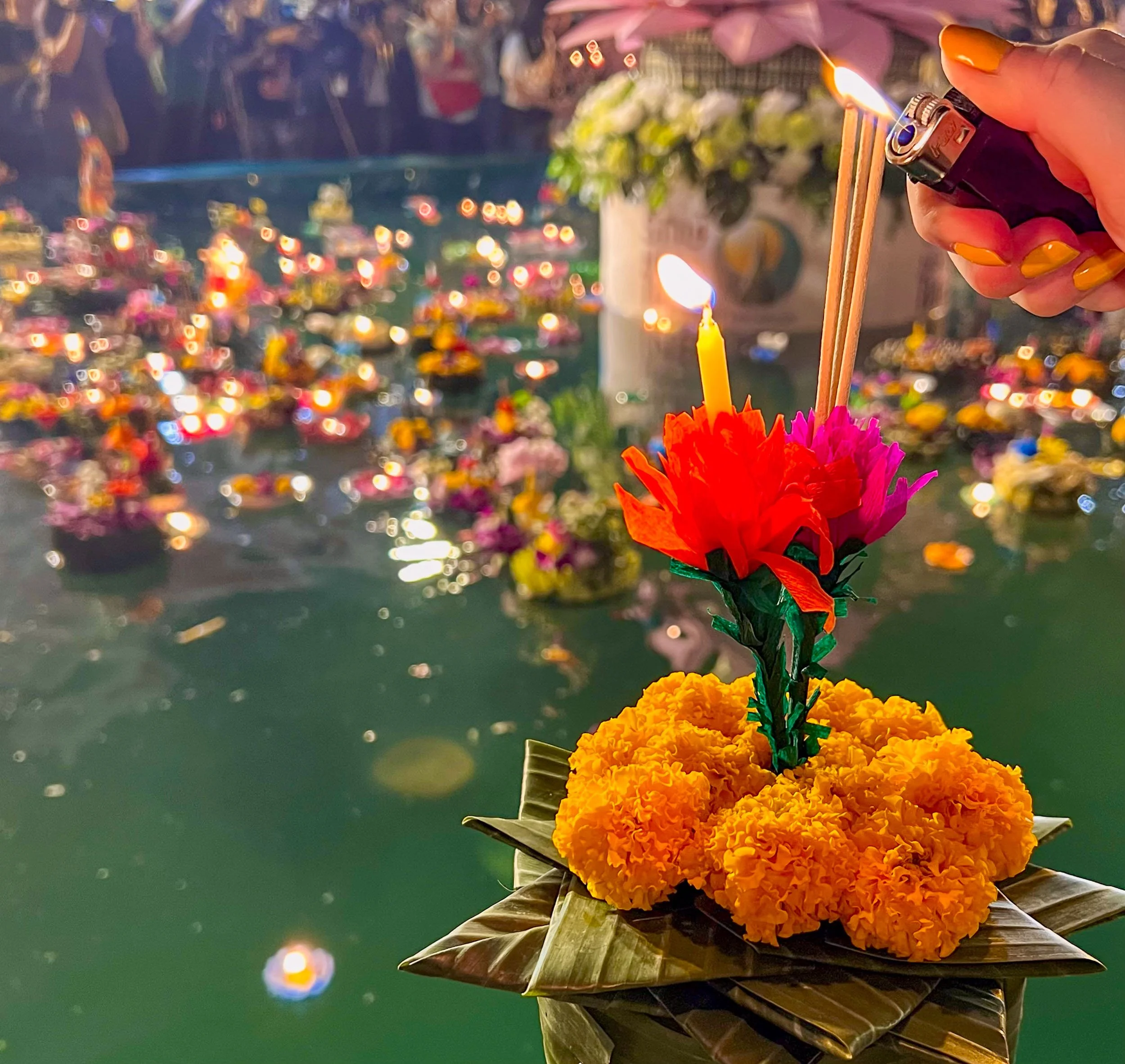
Often called the “Festival of Lights,” Loy Krathong takes place on the full moon of the 12th lunar month (usually November). People gather along rivers, canals, and lakes to float small decorated baskets (krathongs) with candles and incense. In Bangkok, popular spots include the Chao Phraya River, Lumphini Park, and Asiatique. It’s one of the most beautiful festivals to witness — the sight of thousands of glowing candles drifting across the water feels magical. Crowds are heavy, but the atmosphere is calm and reflective compared to the wild energy of Songkran.
King’s Birthday & Royal Ceremonies
Thailand’s monarchy is deeply respected, and royal birthdays or ceremonies bring the whole city together. The King’s Birthday (July 28) and the late King Bhumibol’s Birthday (December 5, now Father’s Day) are especially important. Roads around the Grand Palace, Sanam Luang, and major temples may close, and large public gatherings take place with parades, performances, and fireworks. It’s worth checking dates before your trip, as these events can make sightseeing trickier, but if you happen to be in town, it’s a powerful cultural moment to witness.
Bangkok Safety Tips for First-Time Visitors
Be prepared for scams in Bangkok. The classic “The temple is closed” scam by tuk-tuk drivers around peak tourist attractions is easy to fall for. Please verify with the security guards or at the ticket booth to determine what’s open or closed.
If you do end up with a tuk-tuk driver offering to take you somewhere else, be polite but firm in your refusal. Better yet, if you do want to experience the classic Thai transportation, book through an app (like you would a Grab or Uber).
I’ve never experienced it, but you’ll also want to keep an eye out for pickpockets, especially on public transport and in crowded places like markets. Keep your bags zipped up and even on your front so you can keep your belongings safe.
Finally, even if you’re coming to Bangkok during the “cooler” season, it will still be hot. Pick up a small, handheld rechargeable fan. It’ll be a lifesaver in so many instances. Keep yourself hydrated, too. There are 7-Eleven stores everywhere that are air-conditioned and can be your go-to for cold drinks. Or grab fresh orange juice from the street sellers.
Editorial Picks
If Bangkok is just one stop on a longer trip, these guides can help you plan the rest of your trip.
Thinking of staying a little longer in the capital? This breakdown of costs in Bangkok offers a realistic view of day-to-day expenses beyond a short visit.
And if you’re continuing overland, travelling from Bangkok to Siem Reap, you’ll want to read our guide to taking the bus. It’s a popular and surprisingly straightforward route and this guide walks through the journey step by step.
Frequently Asked Questions
Is One Day in Bangkok Enough?
To be honest, no. Bangkok is a big city with a deep history, and it’s full of things to do. It’s also plagued by awful traffic, making it difficult to get around and explore different parts of the city.
But if you only have one day in the city, you can see a lot of it with good planning. And make a list of things to see next time you’re in town.
There are also plenty of day trips you can take from Bangkok. Head to Ayutthaya for a dive into the region’s history if you have more time. Or book a tour to the floating markets, situated not far from Bangkok.
What Should I Wear for One Day in Bangkok?
You want something breathable and light. Think natural fibres that drape across your body rather than tight-fitting synthetics. For women, you’ll need to cover your shoulders and knees for the temples. I usually bring something I can easily drape across myself but take off again when we leave. The heat of this city is no joke.
Where to Stay in Bangkok for One Night?
Bangkok’s traffic is notorious. So if you can, stay close to the action.
We stayed at Lamphu Tree House Boutique Hotel for a short stay, and it was great. It’s away from Khao San Road on the canal, but right next to the action.
They have a pool and an on-site restaurant serving well-cooked local delicacies. You can wander along the canal any time of day to see a slice of local life, too.

The welcome sign

A very photogenic hotel
How Much Money Do You Need for a One Day in Bangkok?
We’re pretty independent travellers, opting to make our own way around the tourist sights rather than book a private tour. The activities on this list range from $3 USD (Golden Mount) to $9 USD (Wat Pho and the museums). So for two of you to see a couple of temples and a museum, and eat out for lunch and dinner, your budget is likely to be around $60 USD. But if you want to shop, see Muay Thai, or cruise the river, you’ll need a little more.
Is it Worth Going to Bangkok Just for a Layover?
Yes! As a rough rule, I’d want at least eight hours between landing and your next check-in, which leaves room for immigration, the trip into the city, a few hours out and the trip back. With less than that, stay at the airport. If you do have the time, the first two stops of the itinerary above, the Golden Mount and Wat Pho, make a good shortlist.
The Airport Rail Link is the cheapest and most reliable way in, taking about 30 minutes to Phaya Thai for around ฿35, with the BTS from there. A metered taxi or Grab is easier with bags and costs roughly ฿350–500 including tolls, depending on traffic. Leave the city at least four hours before check-in closes, as the traffic is unpredictable. Ask your airline whether your bags are checked through, so you only need a daypack, and if you’re leaving the transit area, complete your Thailand Digital Arrival Card online first. The rules have changed recently, so check the official TDAC site.
Landing in Bangkok for just a day, or stopping over on the way somewhere else? An eSIM saves you from queuing for a local SIM at the airport, and a multi-country plan will cover your next stop too. We tested Saily in Indonesia, and it’s our go-to when travelling. It sells Thailand and regional plans, so you can buy for just here or include it as part of a broader SE Asia package.

What’s the Best Way to Get Around Bangkok?
From walking to scooters, from tuk-tuks to Skytrains, there are plenty of options for getting around Bangkok. The best way depends on your budget, time, and comfort with the city’s energy.
For speed and reliability, consider using public transportation. The MRT Blue and Purple Lines now accept only contactless bank cards: tap a Visa, Mastercard, or UnionPay card at the gate. Old stored-value cards were discontinued on 1 June 2026, and single-journey tokens are due to be replaced by QR tickets in January 2027. The BTS Skytrain still isn’t on the same system. You’ll need a single-journey ticket from the machines, which take coins and notes, or a Rabbit card. Contactless payment BTS is expected to be introduced with the unified ticketing system planned for 2027. Grab and metered taxis remain easy alternatives, and the Chao Phraya ferries offer a scenic way to cover the river stretch.
For short hops, Grab (the local rideshare app) and metered taxis are convenient, while tuk tuks are fun for quick journeys if you agree on the fare first. If you’re feeling adventurous, you can also get on the back of Grab Mototaxis.

Ferries along the Chao Phraya River are scenic and affordable, making them ideal for visiting temples and exploring riverside neighbourhoods.
Generally, walking in Bangkok’s heat and humidity is best reserved for shorter periods. There is an elevated walkway along much of Sukhumvit Road, which was our lifesaver when we stayed in Bangkok for a month. I do tend to think I tackle any short walks in hot, humid climates and regret it halfway through. Be prepared to be humbled by the heat.
Is there vegetarian food in Bangkok?
Sometimes I find it hard to find vegetarian food in Thailand. They love fish sauce. Here’s the breakdown of everything that we ate in Bangkok (and loved) while we were there.
Final Thoughts
Spending just one day in Bangkok will give you a whirlwind taste of why this city is one of Southeast Asia’s most fascinating capitals. From golden temples and buzzing markets to riverside dinners and lively nightlife, you can experience an incredible amount in only 24 hours if you plan it well.
Of course, a single day only scratches the surface. Bangkok has layers — of history, food, culture, and chaos — that could keep you busy for weeks. But if you’re here on a stopover before heading to Siem Reap or passing through on your way to the islands or northern Thailand, this itinerary will help you capture the city’s essence without feeling overwhelmed.
Save this guide for your trip, and when you fall in love with Bangkok (because you will), come back for longer to explore the hidden neighbourhoods, floating markets, and nearby historical sites like Ayutthaya. Until then, enjoy every moment of your day in the Thai capital.


Maximise 24 hours in Bangkok with this one-day itinerary. Temples, markets, riverside views, museums, and street food — the best of Bangkok in a day.